
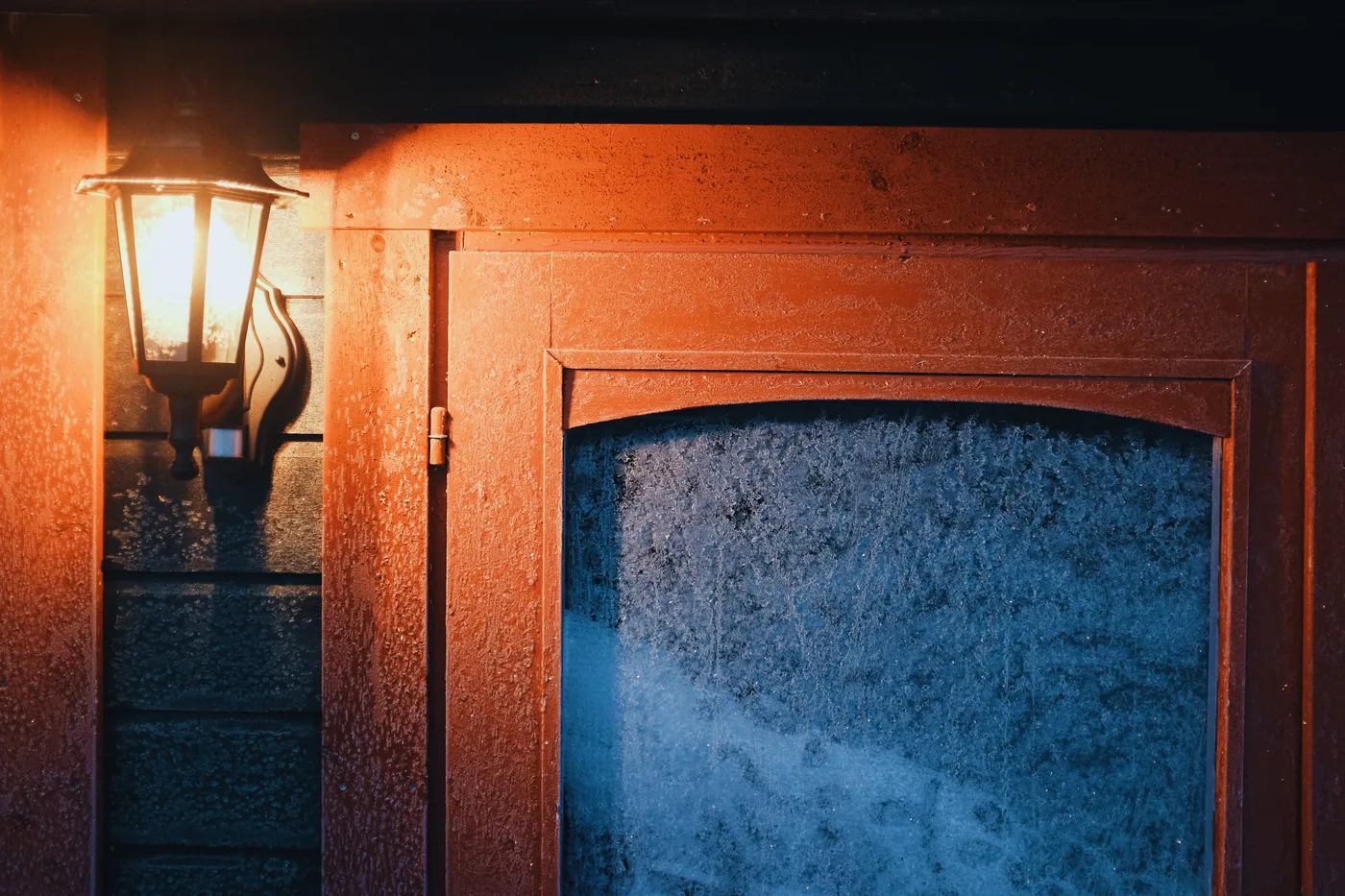
Walk to the end of your driveway some evening after dark and turn around. Look at your house the way a stranger would, or a neighbor, or a moth. Count the lights. The one by the front door. The one over the garage. The floodlight on the corner that clicks on when a cat crosses the yard, or the one that has simply been on, every night from dusk to dawn, for longer than you can remember. Ask of each one a question that most of us never ask: who is this light for?
The porch light is one of the oldest signals a home can send. It says someone is expected. It says come in, or welcome back, or we are still up. That meaning is worth keeping. But somewhere along the way, a lot of outdoor lighting stopped saying anything to anyone. It just stays on.
Who else is out there
Night is not empty. Long Island's yards, marsh edges and woodlots are busy after dark with moths, beetles, bats, owls, frogs and, in their seasons, fireflies. Overhead, in spring and fall, songbirds migrate in great numbers, many of them flying at night and navigating partly by the sky.
For a lot of these animals, artificial light at night is a problem they did not evolve to handle. You have seen the most familiar version on a summer evening: insects circling a bulb, unable to leave. For a long time people assumed they were simply attracted to it. More recent work using high-speed cameras suggests something stranger. Many flying insects keep their backs turned toward the brightest part of their surroundings, which in nature is the sky. A bulb becomes a false sky, and they keep tilting toward it, orbiting until they are exhausted or eaten.
Birds face a version of the same trouble. Migrants flying at night can be drawn off course by bright lights, especially in fog or low cloud, and end up circling or colliding with buildings. This is why many cities now run lights out campaigns during migration seasons, asking tall buildings to dim their upper floors. A single house is not a skyscraper. But a neighborhood is a lot of houses.
Fireflies, meanwhile, find each other by flashing. A yard flooded with light is a harder place to have that conversation.
The person inside, too
It is not only wildlife. Outdoor light comes through bedroom windows, and bright, blue-rich light at night is the kind most likely to nudge your body clock in the wrong direction. A fixture that glares into your neighbor's bedroom does the same to them. Most of us would never shine a flashlight through someone's window at midnight. A badly aimed floodlight does it every night.
There is also the night sky. On much of Long Island, the stars are faint because the sky glows, and a meaningful share of that glow comes from ordinary lighting pointed up or out instead of down.
What about safety?
This is usually the first question, and it deserves an honest answer. People leave lights on because they want to feel safe, and that is reasonable. But more light is not always more safety. The research on outdoor lighting and crime is genuinely mixed. Glare can also work against you: a bright, bare bulb makes deep shadows right beside it, and it dazzles the eyes of anyone trying to see past it, including you, looking out your window.
What tends to help is light that is aimed, steady, not too bright, and present when there is actually someone to see. A motion-activated light that switches on when someone approaches gets noticed far more than one that has been glowing unremarked all night.
Five changes worth making
Dark-sky advocates and lighting engineers have boiled good outdoor lighting down to a handful of principles. Translated for a house, they look like this.
Light only what has a purpose. Walk the house and ask what each light is for. Steps that need to be seen, a door someone needs to unlock, a path from the car. A light that lights nothing in particular can usually go.
Point it down. Use fixtures that shield the bulb so the light falls on the ground, not into the sky or across the street. Many decorative fixtures are open on all sides; a shielded or downward-facing one does the same job with less spill. Even an existing fixture can sometimes be improved with a frosted or shaded globe.
Make it warmer. Bulb packaging lists a color temperature in kelvins. Lower numbers are warmer and more amber. A bulb at 3000K or below is a good outdoor choice, and amber bulbs are gentler still. They are easier on wildlife, easier on sleep, and frankly more pleasant to come home to than the blue-white of a parking lot.
Make it dimmer. Modern LED bulbs are so efficient that people often install far more light than they need. Try a lower brightness rating than you think, then live with it for a week. Your eyes adjust to darkness quickly, and a soft light is often all a step needs.
Put it on a schedule. A timer that turns the porch light off at midnight, or a motion sensor on the garage, keeps the welcome and loses the waste. Many smart bulbs can do both.
Giving the porch light its meaning back
Here is the part of this that is not technical. There is an old custom in many families of leaving the porch light on for someone who is out late: a teenager driving home, a spouse on a late shift, a guest coming in after dinner. The light is a message, and the person it is meant for knows it. When they come in, someone turns it off. The house goes dark, and that darkness means everyone is home.
A light that is on all the time cannot say that. It has become furniture.
So try this. For one week, leave the outdoor lights off unless someone is expected, or let the motion sensor do the work. When someone is coming, turn the porch light on for them, on purpose. When they arrive, turn it off.
Notice how it feels. Most people find the yard more interesting in the dark than they expected. The eyes adjust and the shapes come back: the outline of the maple, the roofline next door, a few more stars than usual. You might hear something rustle in the leaves that would have stayed hidden in the glare.
Something to carry
Tonight, or this weekend, take the walk to the end of the driveway. Count your lights. For each one, ask who it is for. Keep the ones that have an answer. Shield them, warm them, dim them, put them on a timer. Turn the rest off.
And the next time you see a neighbor's porch light come on in the evening, you will read it the way it was meant to be read: somebody over there is waiting for someone to come home.



Loading comments…