
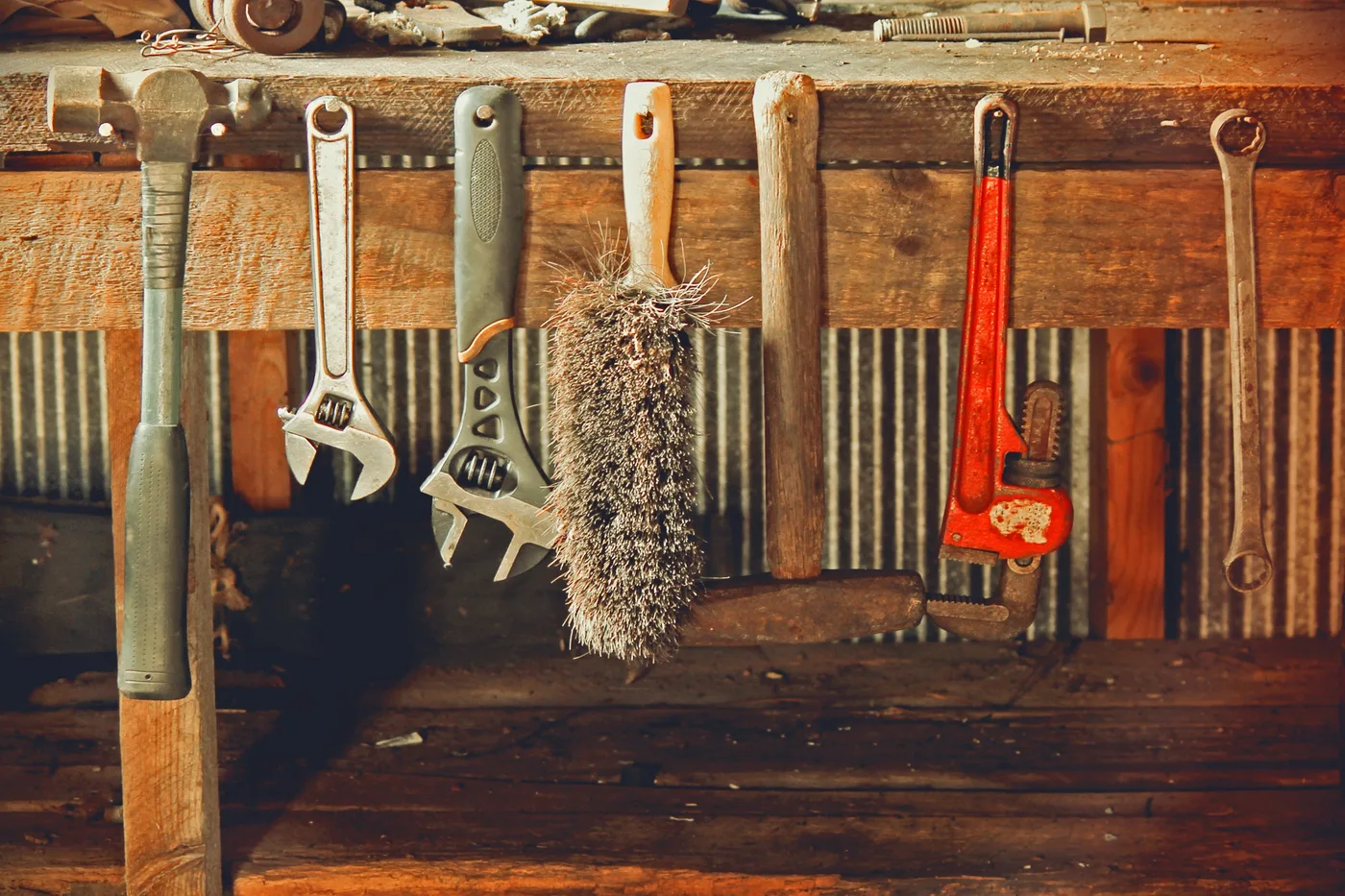
Somewhere in your house there is a tool you have used exactly once. A tile saw, a carpet cleaner, a post-hole digger, a second ladder bought because the first one was in the shed and the shed was locked. It cost real money, it takes up real space, and it has spent most of its life waiting. Now picture the houses on either side of yours. There is a good chance each of them holds the same collection, waiting just as patiently, thirty feet away.
The arithmetic of the idle garage
Most household tools are bought for a job, not for a life. You need a pipe wrench on a Saturday in February when the sink backs up, and then you need it again in four years. In between, it is storage. Multiply that by the drill, the hedge trimmer, the pressure washer, the extension ladder, the stud finder and the folding tables for the one party a year, and a typical garage becomes a warehouse of things that work perfectly and almost never move.
Nobody planned it this way. It happened because buying is easy and asking feels awkward. A tool arrives in two days with no conversation required. Borrowing one means knocking on a door, admitting you need something, and taking on a small obligation. For a lot of people that small social cost is enough to tip the decision, even when the purchase is fifty times the trouble in money and space.
The cost does not stop at the register. Every object you own asks for something back: a place to live, a little maintenance, a moment of attention when you move house or clean out the basement. Owning less is not only about spending less. It is about having fewer things that need you.
What borrowing actually builds
Here is the part that the arithmetic leaves out. When you borrow your neighbor's wrench, you do not just get a wrench. You get a reason to talk to them, a reason to come back, and a small thread of trust that did not exist the day before.
Psychologists have noticed something counterintuitive about favors: doing one for someone tends to make you like them more, not less. The person who lends is not drained by the request. Often they are quietly pleased to be useful, to have the thing that solves the problem, to be the kind of neighbor who has it. The asking, which feels like an imposition from your side, can feel like a compliment from theirs.
Then the wrench comes back, ideally a little cleaner than it left, and the thread gets a second knot. The next time, either of you can ask more easily. Over a few years a street where people borrow and lend becomes a street where people know who is good with electrical work, who has the truck, who will water the plants, and who might need a hand after a surgery. The tools are the excuse. The network is the point.
Why it feels harder than it is
If borrowing is so useful, why do so few of us do it? A few reasons tend to come up.
We do not know what anyone has. The ladder next door is invisible. Unless you have seen it leaning against their house, you have no idea it exists, and you are not going to knock on doors to take an inventory.
We worry about breaking it. The fear of returning something damaged, and the conversation that would follow, is enough to send a lot of people to the hardware store instead.
We do not want to owe. Some people were raised to believe that needing things from others is a weakness, or that every favor must be repaid at once and in full. It makes asking feel heavier than it is.
None of these is a reason to keep buying. Each one has a simple answer.
How to start lending on your street
Offer first. The easiest way into a borrowing culture is to make yourself the lender. Mention to the neighbor who is raking that you have a leaf blower they are welcome to. Put a note in a shared group chat that your folding tables are available for anyone's party. Offering lowers the bar for everyone else, because now there is a precedent, and you have shown that asking is welcome.
Make a short list of what you would lend. Walk through the garage and basement and note the things you own that you would be glad to see used. Ladders, drills, tile cutters, wet vacuums, loppers, a canning pot, a camping stove, a spare cooler. Seeing it written down tends to surprise people. It is usually a long list.
Return things better than you got them. Clean the tool. Charge the battery. Replace the blade if you dulled it, or the bag if you filled it. If something breaks, say so the same day and offer to repair or replace it. Handled plainly, a broken tool rarely damages a friendship; hiding it almost always does.
Keep favors loose. You do not have to settle every exchange. A plate of cookies, a hand with a heavy couch, or simply lending something of your own the next time is plenty. The goal is a long, uneven give and take between people who trust each other, not a ledger.
Look for the shared shelf near you. Many towns and libraries now run tool libraries or "library of things" collections, where members borrow sewing machines, power tools, telescopes and even cake pans the way they borrow books. If yours has one, use it. If it does not, the library staff are often the people who would like to start one.
Before you buy
The simplest practice here is a pause. The next time you are about to order something you will use once or twice a year, wait a day and ask instead. Ask the neighbor, ask the street's group chat, ask the friend who seems to own one of everything. You may be told no, and that is fine. More often you will be told yes, along with a story about the last time they used it and a tip about the tricky part.
Some things you will still buy, and should. The tools you use every week earn their place. But for the long tail of occasional jobs, the borrowing habit pays three ways at once: less money spent, less clutter kept, and more people around you who know your name and are glad to see you at the door.
The wrench next door is not just a wrench. It is an invitation that has been hanging on the wall for years, waiting for someone to knock.


Loading comments…