
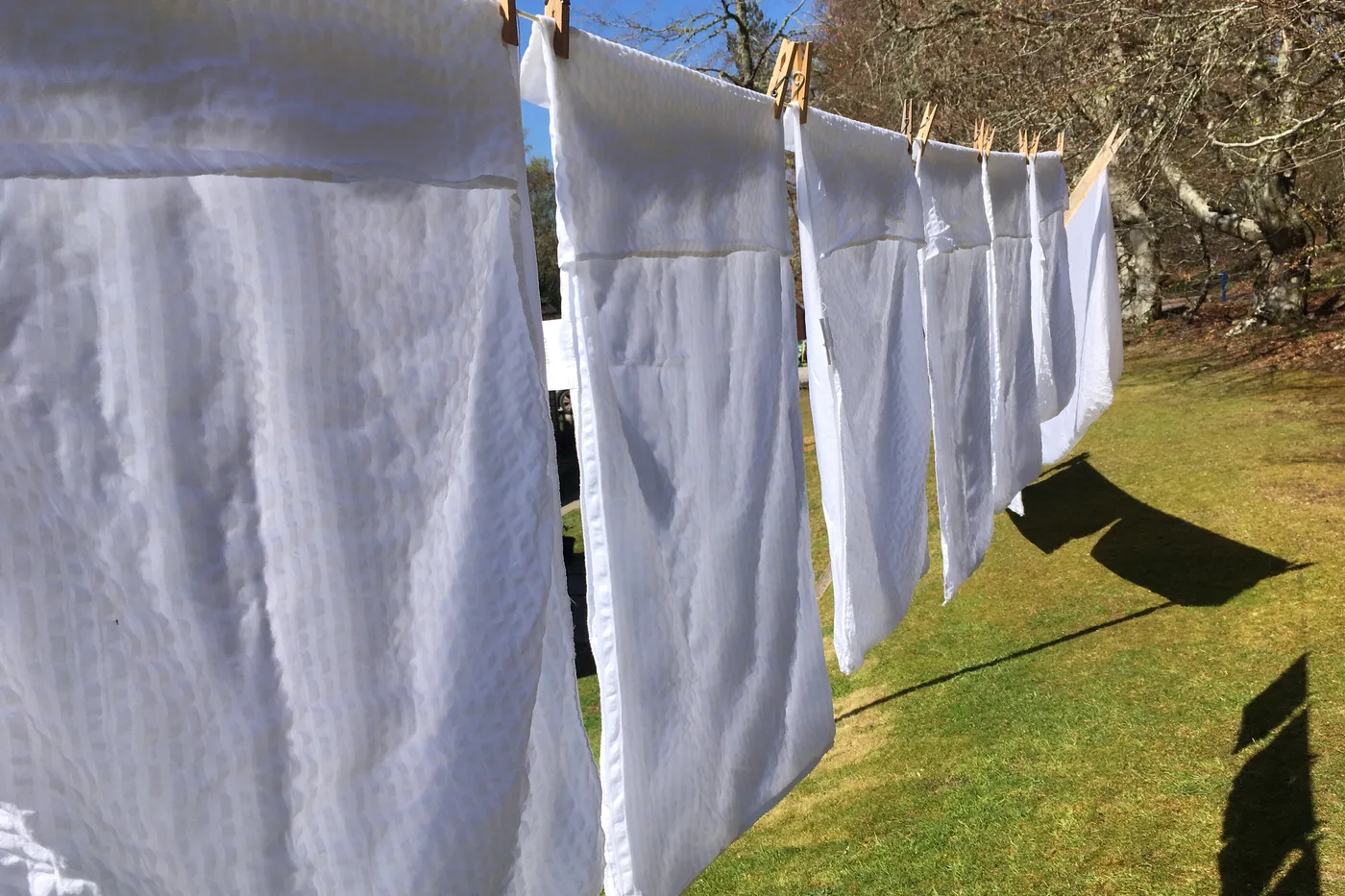
There is a particular sound a bedsheet makes on a line when the wind gets under it, a soft crack and then a long ripple, and if you grew up with a clothesline in the yard you probably have not heard it in years. The dryer took over, and with good reason: it is fast, it does not care about the weather, and it hands everything back warm. But the line never stopped working. It is still there, in a way, waiting for the days when you are not in a hurry.
What the dryer actually costs
A clothes dryer is one of the more energy-hungry machines in most homes. It has to heat a lot of air and push it through wet fabric for the better part of an hour, and it does this several times a week in a busy household. On an electric bill, it usually sits near the top of the list of appliances, along with heating, cooling and the water heater.
The other cost is quieter, and it is in the lint trap. Every one of those gray, felted sheets you peel off the screen is fabric. It is fiber that used to be part of your towels, your shirts and your sheets, worn away by heat and tumbling. A garment that loses a little of itself every wash ages faster than one that does not, which is why so many care labels quietly suggest a low setting or none at all. Elastic in particular tends to give out sooner under high heat.
None of this makes the dryer a villain. It makes it a tool with a price, and the line a way to pay that price less often.
What the line gives back
Line drying is free, silent and gentle on fabric. Sunlight has a mild bleaching effect, which is good news for whites and not such good news for dark colors, so hang darks inside out or in the shade. A breeze does much of the work, and on a dry, windy day a load can be ready in a couple of hours.
There is also the smell, which people who line dry tend to describe with something close to devotion. It is hard to pin down and impossible to bottle, though plenty of detergent makers have tried. Sheets dried outside and put straight back on the bed are one of the small, honest luxuries still available to almost anyone.
And there is the time itself. Hanging a load takes perhaps ten minutes, with your hands busy and your mind free, outside, in whatever weather the day has. It is one of the few household chores that puts you in the yard, under the sky, doing something slow. Many people who take it up for the savings keep it up for that.
Doing it well
A few habits make the difference between laundry that dries soft and laundry that dries stiff and creased.
Shake everything out. Give each item a sharp snap before you hang it. This loosens the fibers and gets rid of most wrinkles before they set. Towels in particular benefit; a few hard shakes leave them noticeably softer.
Hang by the strongest edge. Shirts by the hem or on hangers, so the shoulders do not end up with clothespin marks. Pants by the waistband or the cuffs. Sheets folded once over the line and pinned at intervals, so they catch the wind like a sail and dry fast.
Give things space. Air needs to move between pieces. A crowded line dries slowly and unevenly, and the item in the middle stays damp long after the rest.
Mind the season. In spring, when pollen is heavy, laundry on the line can collect it, so anyone with allergies may want to keep bedding indoors for those weeks. In fall and early winter, pick dry, breezy days and hang early so things have the full afternoon.
If towels come in stiff, five minutes in the dryer on low will soften them, at a fraction of the cost of a full cycle. Some people also like to shake them out again before folding.
Through the cold months
It is easy to assume the line is a summer thing, but laundry dries outdoors in surprisingly cold weather. On a clear, windy day it dries almost as it would in fall. Even below freezing, clothes will eventually dry: the water freezes, then slowly turns straight to vapor in the dry air, which is why a frozen, stiff shirt can come in dry by evening. It is slower, and a gray, damp day is not worth the attempt.
When the weather does not cooperate, bring the line indoors. A folding wooden drying rack in a spare room, a bathroom or near (not on) a heat source will handle most of a load overnight. Keep the room ventilated, with a window cracked or a fan running, because a load of wet laundry releases a lot of water into the air, and in a closed room that moisture can settle on cold windows and walls. Sweaters and knits are best dried flat on a towel, wherever you are, so they keep their shape.
Not all or nothing
You do not have to give up the dryer to get most of what the line offers. A good place to start is one load a week, the sheets, on the first dry day. Or hang everything except towels and socks. Or keep the dryer for the weeks when life is too full and let the line take over when it is not.
If you have no yard, a retractable line across a porch or a balcony works, and so does the rack. If you have a yard and no line, a simple one between two posts, or a rotary line on a stake, is a weekend job with a small cost that pays itself back quietly over years.
The first dry day
Check the forecast this week for a day with sun and some wind. Wash the sheets that morning. Take the basket outside, shake each one hard, fold it over the line and pin it. Then leave it, and go about your day.
When you bring them in that afternoon, they will be cool and a little crisp, and they will smell like the outside. Put them on the bed. That night, when you get in, you will know exactly what the dryer was never able to give you, and why so many people never stopped hanging the wash.



Loading comments…