
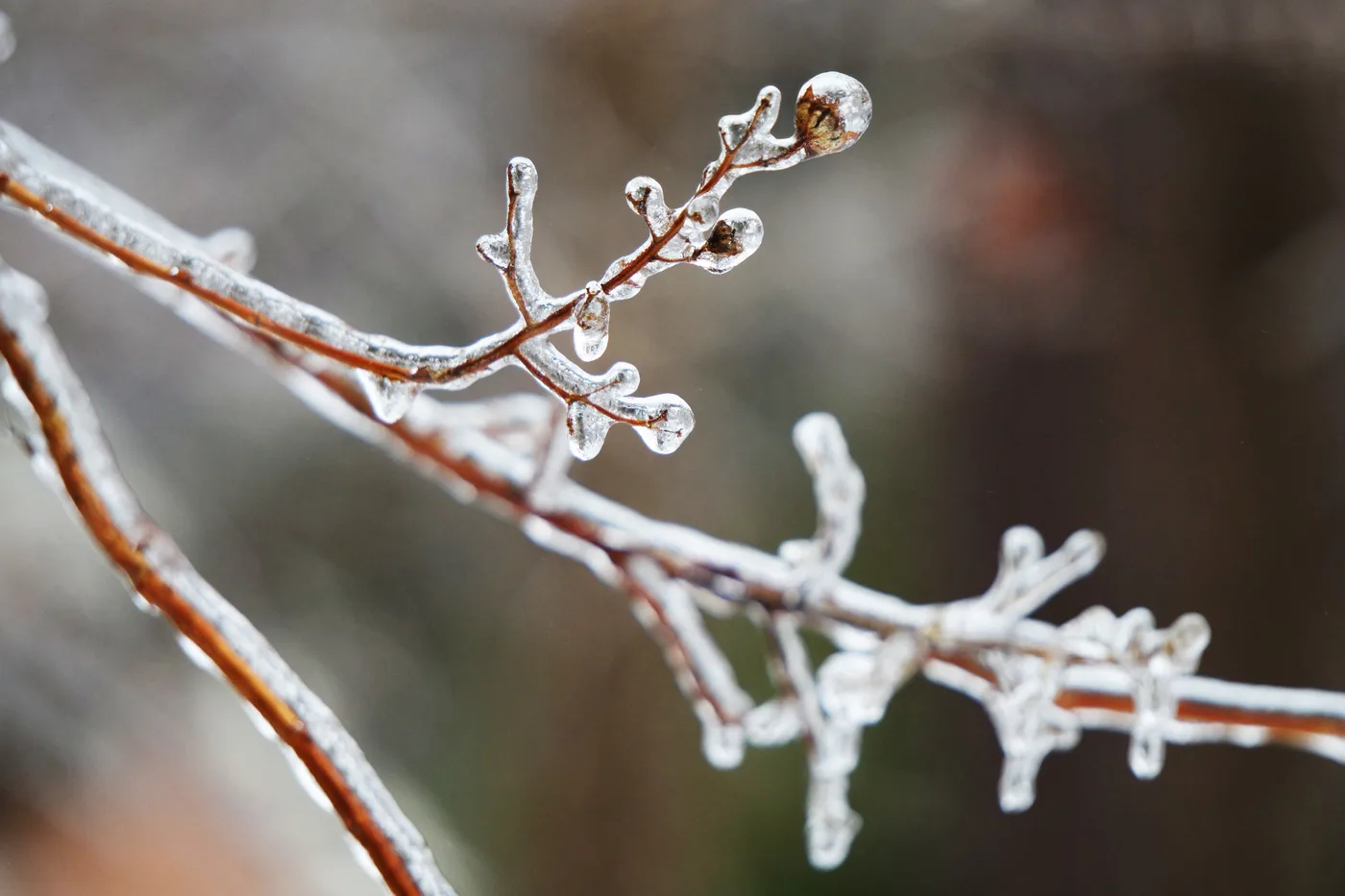
Go out to the nearest tree this week and pull one branch down to eye level. It looks finished for the year: bare, gray, a little brittle in the cold. Look closer, at the tips and along the sides of the twig, and you will see small, tight shapes, each one sealed and pointed or round. Those are buds, and inside them, folded down to almost nothing, are next spring's leaves and flowers. The tree is not resting empty. It packed for April months ago.
Made last summer
Most of us think of buds as a spring event, something that appears when the weather turns. In fact, the trees of Long Island and the rest of the temperate world form next year's buds during the previous growing season. Through late summer, while the leaves were still green and working, the tree was already building the miniature shoots that will open next year. By the time the leaves fell, the buds were complete and in place.
Each bud is a tiny, compressed shoot. Inside are leaves folded and stacked like a parachute in its pack, sometimes with flowers among them, waiting. A bud at the very end of a twig, the terminal bud, will usually carry the twig's growth forward next year. The buds along the sides, the lateral buds, become side shoots, leaves or flowers.
Outside, most buds are wrapped in bud scales, tough, overlapping little shields that are really modified leaves. They keep the contents from drying out in winter wind, which is a bigger danger to a dormant bud than cold itself, and they hold everything tight until it is time.
Waiting for enough cold
A bud does not open just because a warm week comes along. Many trees need to pass through a certain amount of winter chill before their buds will respond to warmth at all. Gardeners and growers call this the chilling requirement, and it is why a warm spell in January does not usually fool a maple into leafing out. The tree has a sort of internal tally. Only after enough cold hours have been counted does the bud begin listening for spring.
That is a fine piece of patience, built into wood. The tree has done the work. Now it waits for the conditions to be right, and it will not be talked into hurrying.
Reading a twig
Winter is the best time of year to learn trees by their twigs, because nothing is in the way. With a little attention, the buds and the marks around them tell you who the tree is and a surprising amount about its life.
Look at how the buds are arranged. On most trees the buds alternate, one on one side of the twig and the next a little higher on the other side. On a few, they sit in matched pairs directly across from each other. Maples, ashes, dogwoods and horse chestnuts are among the common trees with paired buds, and once you know that, half the bare trees on your street sort themselves.
Look at the buds themselves. American beech has long, slender, sharply pointed buds, coppery brown, unlike almost anything else in the woods. Oaks gather several buds in a cluster at the tip of the twig. Flowering dogwood carries its flower buds at the branch ends, round and button shaped, easy to tell from its slimmer leaf buds. Magnolias wrap their big flower buds in soft, furry scales you can see from across a yard.
Look just below each bud. You will find a small mark where last year's leaf was attached: the leaf scar. Inside it, if you look closely, are tiny dots, the bundle scars, where the leaf's veins once connected to the twig. Their shape and pattern differ from species to species, and some people find faces in them.
Look back along the twig. Every spring, when the terminal bud opens, its scales fall away and leave a ring of tight little scars around the twig. Find that ring, and the length of twig between it and the tip is last year's growth. Find the next ring back and you have the year before. On a single branch you can often read three or four years of the tree's life: a long stretch for a good year, a short one for a dry summer.
A practice for the winter
Here is something to do between now and spring, and it takes a minute a week.
Choose one tree you pass regularly, in your yard, on your walk, outside your office window. Choose one twig on it that you can reach. Look at it closely today: the buds, their color, their shape, the scars beneath them. If you like, take a photograph from the same spot.
Then visit it once a week. For a long time, nothing will seem to change. That is part of the lesson. Then, some week in late winter or early spring, the buds will start to swell. The scales will loosen and shift color. And one day you will find the first green showing at the tip, the leaves that have been folded up in there since last summer, beginning to come out.
You will see it on that twig before most people notice anything on any tree, because you will have been watching.
What the branch is holding
It is easy, in the bare months, to look at a tree and see only what it has lost. The leaves are on the ground, the color is gone, the branches are gray against a gray sky. But that is not an accurate picture. Every twig is carrying, in sealed and careful packages, everything it needs for the next season. The hard work happened when no one was paying attention, in the long light of August, while the tree still looked busy with this year.
Some people find that comforting in a season of their own. A stretch of life that looks bare from the outside may already be holding what comes next, made earlier, waiting for its moment. The tree does not rush it. It does not doubt it either.
So go pull that branch down to eye level this week, gently, and look. The buds are there. Next spring is already on the tree.

Loading comments…