
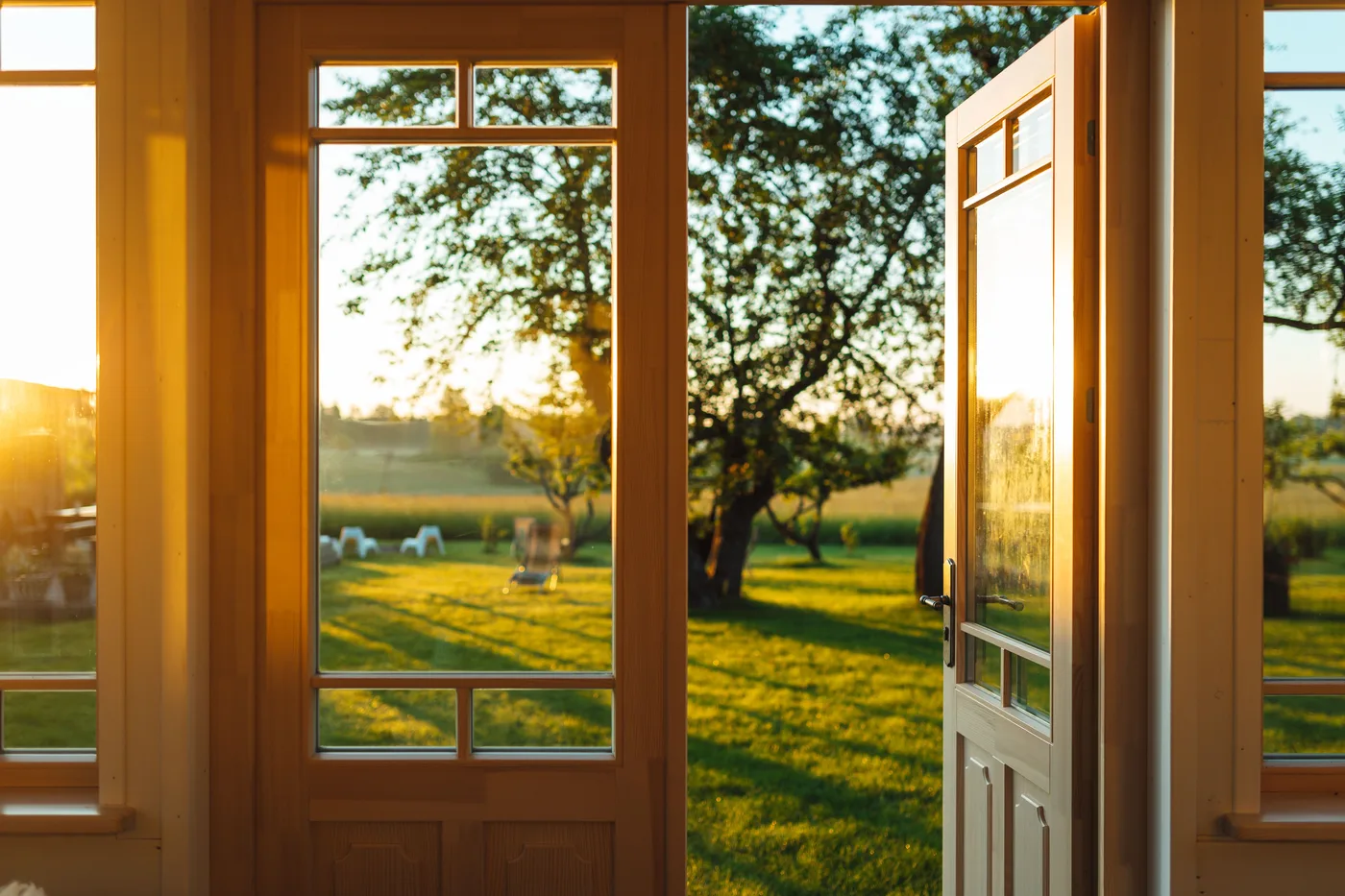
You walked in here for something. You were sure of it in the hallway, where the errand sat bright and specific in your mind, and now you are standing in the bedroom holding nothing but the question. Whatever it was dissolved somewhere between one room and the next. It happens to everyone, it gets blamed on age or on distraction, and it is mostly neither. It is a doorway doing what doorways do to a mind. And the interesting part is that the same mechanism the hallway just used to embarrass you is one that people have been building rituals around for thousands of years, deliberately, at the entrance to nearly every holy place and a great many homes. The door erases. The old traditions noticed, and they put the erasing to work.
The Forgetting Machine
Memory researchers have chased the kitchen-errand experience into the lab, and it turns out to be real, repeatable, and stranger than absentmindedness. In the experiments, people carry an object from place to place, sometimes across a large room, sometimes through a doorway into the next one, and are quizzed along the way on what they are carrying. The distances are the same. The results are not. Passing through a doorway reliably worsens memory for the thing just picked up, and the effect shows up whether the rooms are physical or simulated on a screen. The door itself, not the distance, does the forgetting.
The explanation most researchers favor is that memory does not record your day as one continuous reel. It files experience in episodes, the way a book is divided into chapters, and it needs signals for where one episode ends and the next begins. A doorway is exactly that signal. Cross the threshold and the mind quietly closes the file on the room behind you, archives it, and clears the desk for whatever the new room holds. The errand you formed in the hallway was part of the hallway's chapter. You left it there when the chapter closed.
Which reframes the whole embarrassment. This is not your memory failing. It is your memory tidying, with a diligence you never asked for. And like most involuntary tidying, it can work against you or for you, depending on whether you know it is happening.
A God With Two Faces
Long before anyone ran the experiments, people treated thresholds as if they knew.
The Romans assigned doorways a god of their own, Janus, pictured with two faces because a door looks both ways, and they gave him beginnings, endings, and transitions along with the hinges and the frame. The month that opens the year still carries his name. A Jewish home fixes a mezuzah to the doorpost, a small case holding verses, and many people touch it as they pass, a fingertip acknowledgment that this crossing is not nothing. Shoes come off at the door of a mosque, a temple, a Japanese home, and what gets left with them is understood to be more than dirt. A student bows at the door of the dojo, in both directions, entering and leaving. Old European folk custom warned against greeting a guest across the threshold, as if the doorway were a seam where ordinary rules paused.
Different centuries, different continents, different theologies, and the same instinct underneath: the threshold is a real boundary, the person who crosses it is in some small way starting over, and the crossing goes better when it is marked rather than sleepwalked. The traditions did not have the event-boundary research. They had the experience, and they kept it.
What the Pause Is For
Consider what happens without one. You have an argument in the car and carry it through the front door into the kitchen, where it does not belong, and hand it to people who were not in the car. You leave the office, or close the laptop, and the workday follows you to the dinner table like a dog that was never told to stay. The day's transitions happen to you, unmarked, and every room inherits the residue of the last one.
The body already respects the seam; the research says the mind half-clears the slate at every doorway whether you cooperate or not. A threshold ritual is simply cooperation. It takes the boundary the mind is already drawing and makes it deliberate, so that what crosses with you is chosen instead of dragged.
This is, in the oldest sense, a spiritual act, and it needs no theology to work. Attention, brought to a boundary, on purpose. That is most of what ritual has ever been.
The Practice
Pick two doors and give them one breath each. Not every door, or the practice dies of administration. The front door of your home and one other, the office, the bedroom, the car. At those two, pause for a single unhurried breath before crossing. That is the entire mechanic.
Arriving home, name what stays outside. On the doorstep, one honest sentence to yourself about what you are carrying, the meeting, the traffic, the worry, and a decision about whether it comes in. Some things must. Most were going to walk in unexamined.
If you work where you live, end the day through a door. The old commute, whatever it cost, was a long threshold, and closing a laptop is not one. Walk out the front door, go around the block, and come back in as the person who is home now. The mind takes the hint with surprising literalness.
Use the frame before hard rooms. The hospital corridor, the meeting you are dreading, the conversation that has been waiting a week. The doorframe is a ready-made cue standing exactly where you need it: one breath, shoulders down, then cross.
And when the errand vanishes, go back. The lost intention is filed in the room where you formed it. Return to that room, or even picture it clearly where you stand, and the chapter reopens; the errand is usually sitting inside. The trick works because retracing is not superstition. It is a filing request, made in the mind's own system.
Both Directions
Janus faced both ways because that is what a door honestly is: an ending on one side, a beginning on the other, hung on the same hinge. You cross dozens of them a day, and each one quietly closes a chapter whether you notice or not. The old traditions and the new research agree on the essential point, which is that the crossing is never nothing. The next door you reach will do what doors do. The only question is whether you walk through it asleep, or pause at the seam for one breath and decide what comes with you.

Loading comments…