
You have done it a hundred times: tied the knot, made the sauce, set up the spreadsheet, fixed the running toilet. Then someone asks you to show them how, and somewhere in the second step you stop. Your hands know what comes next. Your mouth does not. That small stall, the moment you discover you cannot quite explain the thing you can do, is one of the most useful feelings in learning, and almost everyone treats it as an embarrassment instead.
Knowing it and being able to say it
Cognitive scientists have studied this gap with a pleasingly simple test. They ask people how well they understand everyday objects: a zipper, a flush toilet, a bicycle, a lock. People rate their understanding fairly high. Then they are asked to write out, step by step, exactly how the thing works. Faced with the blank page, most discover they understand far less than they thought, and when asked to rate themselves again, their confidence drops. Researchers call this the illusion of explanatory depth.
The illusion is not a flaw in any particular person. It is how a mind saves effort. We keep a working sense of how things go, enough to use them, and we mistake familiarity for understanding. It works perfectly until somebody asks a question, and then the gaps appear all at once.
Teaching is the most reliable way to find those gaps on purpose, while the stakes are low.
Why the teacher learns most
Anyone who has taught knows the old joke that the teacher learns more than the class. There is research behind it. In studies of what is sometimes called learning by teaching, students who are told they will have to teach a passage to someone else learn it better than students who are told they will be tested on it, even when nobody ends up teaching at all. Simply expecting to explain changes how people read. They organize the material, look for the main thread, and notice what they do not yet understand.
Actually explaining goes further. When you say something out loud to another person, you have to put it in order. You have to choose words. You have to decide what matters and what can be skipped. And the listener, without trying, keeps testing you: a puzzled face, a question you did not expect, a "wait, why?" Every one of those is a small examination you could not have set yourself.
There is a second, slower benefit. Experts tend to forget what it was like not to know. The steps they once worked through become automatic and invisible, so they skip them when explaining, which is why so much expert instruction is baffling. Teaching a real beginner forces you back through the steps you stopped seeing. Often, in the process, you discover why you do something that you had been doing for years purely out of habit, or find that one of your habits was never necessary at all.
How to use it
Pick one thing you are learning right now. A language, an instrument, a subject you are reading about, a new system at work. Choose a single piece of it, small enough to explain in five minutes.
Explain it to a willing person. A partner, a friend, a teenager who will humor you, a colleague over coffee. Tell them you are practicing, so they feel free to ask questions. The rule is that you do not look at notes. Say it as clearly as you can, from beginning to end.
Mark where you stall. You will stall. You will reach a step and find yourself waving your hands or saying "and then it just sort of works." That is the map. Afterward, write down each place you stalled, go back to the source, and fill in only those gaps. This is far more efficient than rereading the whole thing.
If nobody is around, explain it anyway. Say it aloud to an empty room, or write it as if for a bright twelve-year-old. Programmers have a long-standing habit of explaining a stubborn bug, line by line, to a rubber duck on the desk, and finding the problem halfway through the explanation. The listener does not need to understand. You do.
Teach a beginner something you already know well. This is the other direction, and it is just as valuable. Show a child how to cast a line, a new colleague how you run a meeting, a neighbor how you prune roses. Watch for the moment they get lost; it will be at a step you no longer notice taking. You will come away understanding your own skill better than you did that morning.
Keep it short and kind. Teaching is not lecturing. Five minutes, one idea, and then let the other person try. The best teachers talk less than you would expect and ask more. If they cannot do it after you explain it, that is information about the explanation, not about them.
What to expect
The first few attempts are humbling. Things you thought you had down turn out to have holes in them. That is not evidence that you are a poor learner; it is the method working. Over a few weeks most people notice two changes. They retain what they explain far better than what they only read. And they become more patient with other people's confusion, because they have so recently watched their own.
You may also find that your sense of your own competence becomes more accurate, in both directions. Some things you were confident about turn out to be shaky, and that is worth knowing before it matters. But other things you had quietly filed under "not really my area" turn out to be things you can explain well, start to finish, to someone who did not know them an hour ago. That is a pleasant discovery, and a more reliable measure of what you know than any feeling of familiarity.
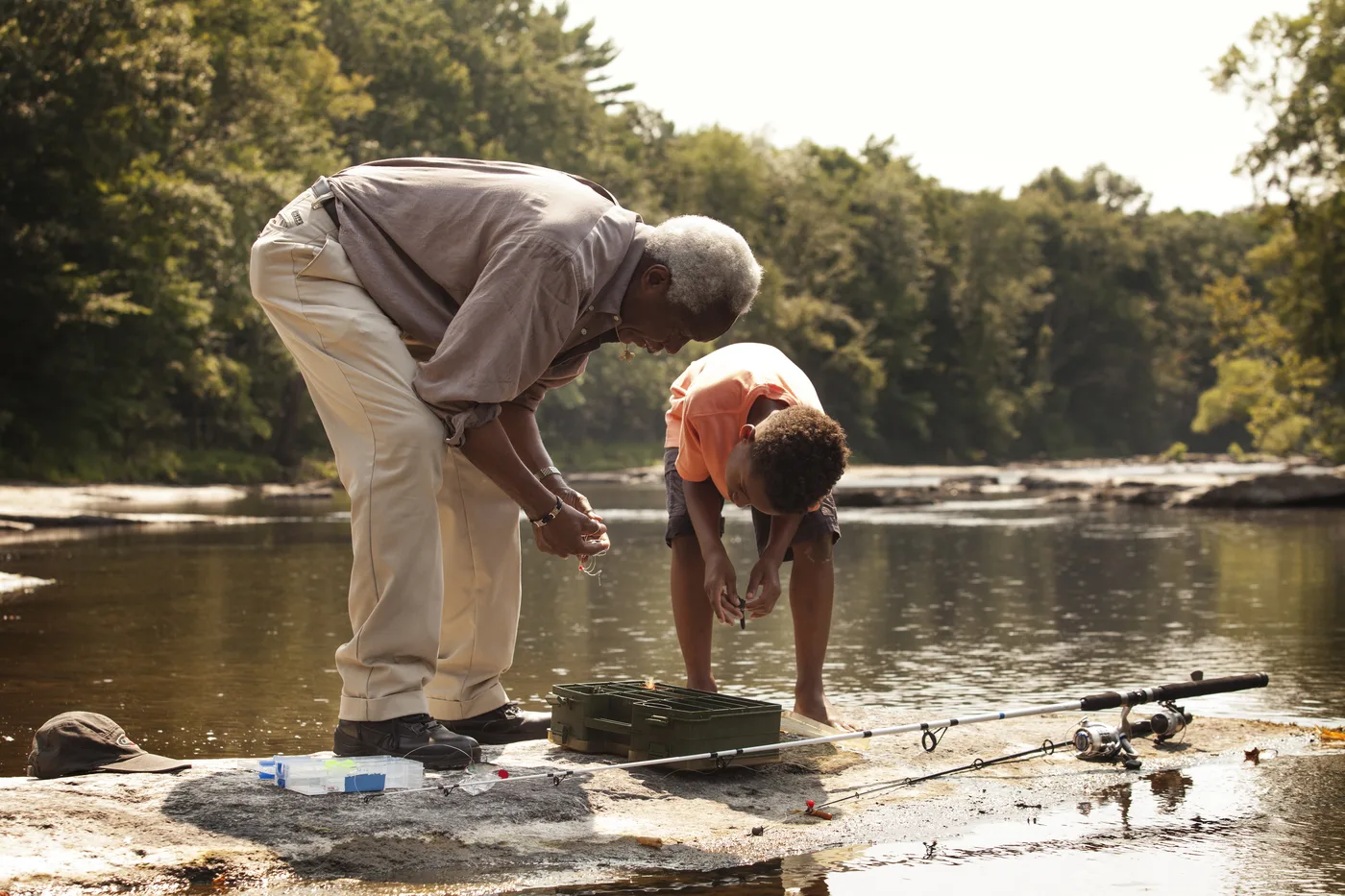
There is a quieter reward, too. Teaching is a form of generosity, and it binds people. The man at the river showing a boy how to thread a hook is not only passing on a knot. He is spending an afternoon with someone, and he is remembering, as his fingers slow down to show each step, who once slowed down to show him.
One thing this week
Choose a single thing you know, or are trying to know, and explain it to someone before Sunday. Notice where you stop. Go back and learn that part properly. Then, if they are willing, let them explain it back to you.
The fastest way to find out what you understand is to try to give it away.



Loading comments…