
The first cold morning arrives and the radiator ticks awake, or the furnace kicks on with its familiar rush, and the whole house begins the long work of warming every corner of every room. You are sitting in one chair. You are going to sit in it for the next two hours. And most of that heat is going to the hallway, the empty guest room, and the air near the ceiling.
Heating the house or heating you
There are two ways to be warm in winter. One is to raise the temperature of the entire building until a person in a T-shirt is comfortable anywhere in it. The other is to make the person warm first and let the house be a little cooler around them. For most of human history the second approach was the only one available. Central heating made the first one effortless, and over a few generations it quietly became the default.
Nothing is wrong with a warm house. But it helps to notice that warming the air is a roundabout way to warm a body. Heat leaves through windows, walls and drafts. A room with a high ceiling stores its warmest air above your head. And the thermostat setting that feels right while you are sitting still feels too warm the moment you start cooking or cleaning.
Warming the person first is cheaper, uses less energy, and often feels better. It is also one of the more satisfying small shifts you can make in how you live through a season.
Start with what you wear
The simplest lever is clothing, and the most effective version of it is not one heavy sweater but layers. A thin base layer close to the skin, wool if you can manage it, holds warmth far better than its weight suggests. Wool stays warm when slightly damp and does not hold odor the way synthetics can, which is why people who work outdoors in winter so often swear by it.
Pay attention to the parts of you that lose heat fastest or feel cold first: feet, hands, neck. Wool socks or slippers with real soles make a bigger difference than an extra degree on the thermostat, partly because cold floors pull heat steadily from bare feet. A light scarf or a high collar indoors may feel odd at first. It stops feeling odd quickly.
Dress for the room you are in, not the room you wish you were in. If the plan is a long evening of reading, put the sweater on before you sit down rather than after you notice you are cold.
Warm the spot, not the space
The next lever is to concentrate warmth where you actually are. A throw on the chair you use. A rug under your feet if your floors are bare. A hot water bottle in your lap or at your back, which costs nothing to run and holds warmth for an hour or more. If you use a small space heater for the one room you occupy, follow its safety guidance closely: clear space around it, plugged directly into the wall, and never left running when you leave the room or go to sleep.
The bed is the clearest example of the principle. Warm the bed rather than the bedroom. Flannel sheets, a heavier blanket, a hot water bottle slipped between the sheets ten minutes before you get in. Many people sleep better in a cool room anyway. Sleep researchers generally find that a bedroom somewhere in the low to mid sixties suits most adults, and the drop in temperature is part of how the body settles into sleep.
Keep the heat you already have
A great deal of comfort comes from stopping small losses. Draw the curtains when the sun goes down, since even ordinary curtains slow the cold coming off the glass at night, then open them in the morning to let any sun do its work. Lay a rolled towel or a draft stopper along the bottom of a door that whistles. Close the doors to rooms nobody is using.
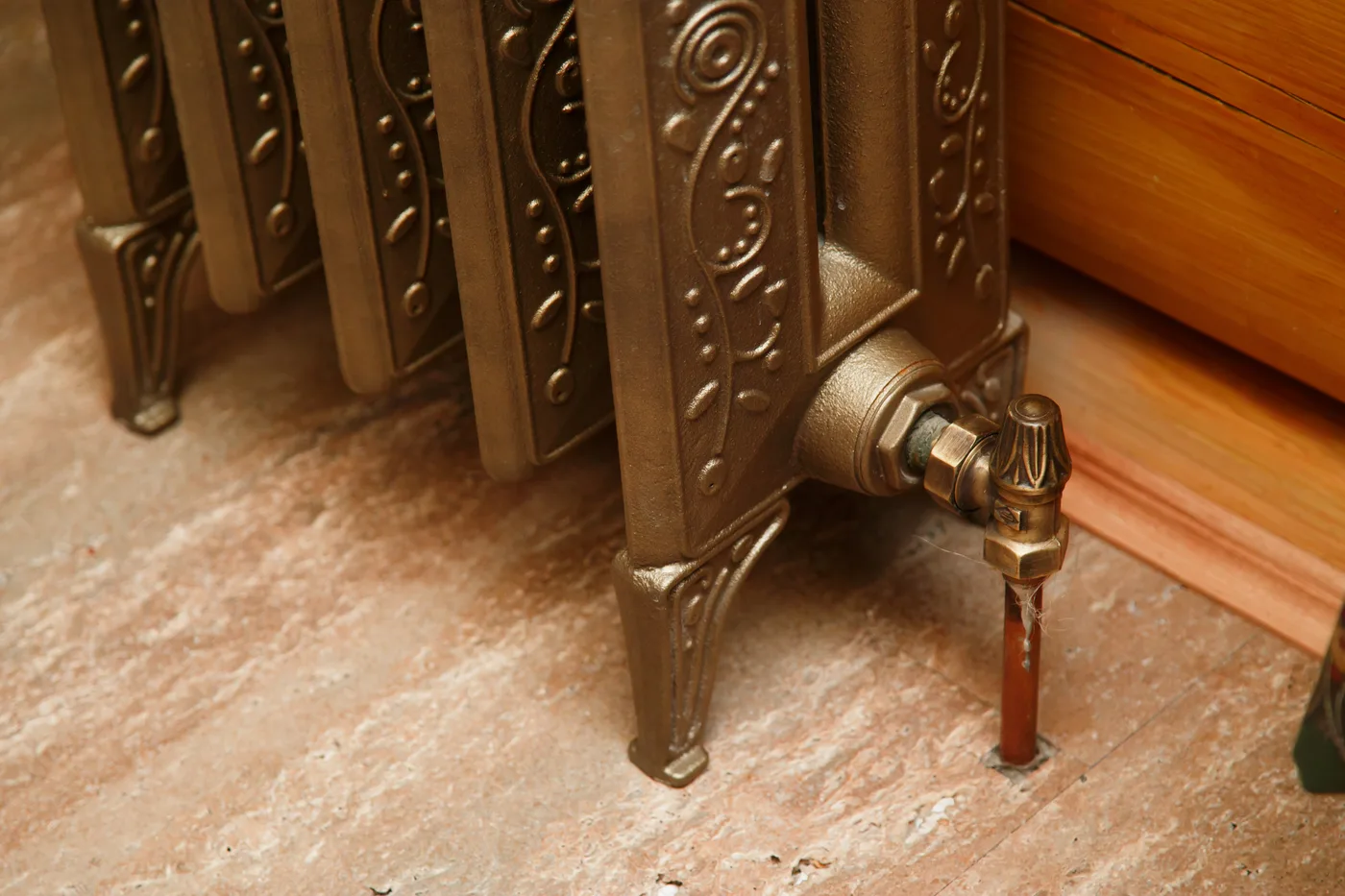
If you have radiators, look at them. Furniture pushed against a radiator, or a heavy curtain hanging in front of one, traps the warmth it produces. Many older radiators have a valve at the side that lets you turn a single room down. That small brass knob is one of the most underused controls in an old house.
Then turn the thermostat down
Once you are warm in your body and the heat you have is staying put, the thermostat can come down a little without anyone suffering. Do it gradually, a degree at a time, over a week or two. Most people adapt without noticing.
The savings are real. The U.S. Department of Energy estimates that setting the thermostat back seven to ten degrees for eight hours a day, overnight or while you are out, can trim heating and cooling costs by as much as ten percent a year. A programmable or smart thermostat makes this automatic, so the house is cooler while you sleep and warm again before you get up.
A word of care. Not everyone can safely live in a cooler house. Older adults, infants, and people with certain heart, lung or circulation conditions can lose body heat more easily and may not feel it happening. If that describes anyone in your household, keep the rooms they use warm, and ask their doctor what range is right for them. The goal is comfort and a lighter footprint, never a cold person enduring it.
What it changes
People who make this shift often describe it as a change in how the season feels, not just in what it costs. A warm sweater, a hot water bottle, a pot of soup on the stove: these are small acts of tending yourself, and they make winter something you live with rather than something the furnace holds back.
It also changes your relationship with the house. You start to know which rooms run cold, which window leaks, which hour of the afternoon the sun comes through the kitchen. The house stops being a box kept at one temperature and becomes a place with seasons of its own.
Tomorrow morning, before you touch the thermostat, put on your wool socks. Pull on a layer. Then see how warm the house really needs to be.



Loading comments…