
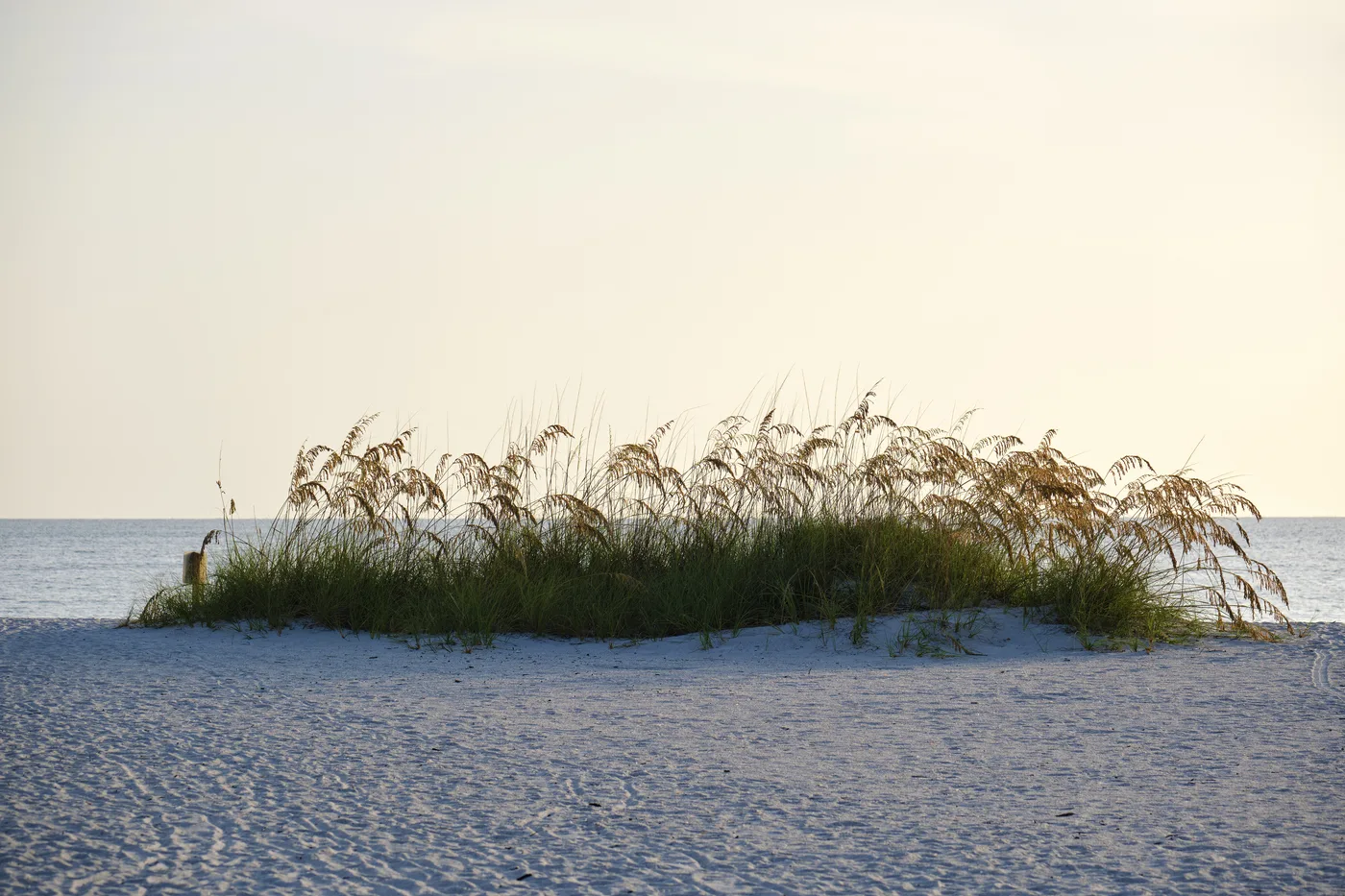
There is a secret that belongs to whoever stays. In a few weeks the parking lots at the ocean beaches will empty out, the lifeguard chairs will come down, and the boardwalk crowds will thin to dog walkers and surf casters. The calendar will say summer is over, and nearly everyone will act accordingly. And the ocean, which does not read the calendar, will be at the warmest it has been all year. The best swimming on Long Island is not in June, when the crowds arrive. It is in the weeks around Labor Day, when they leave. The reason is a piece of physics worth carrying around, because once you see it in the ocean you start seeing it everywhere.
The Lag
Begin with a puzzle hiding in plain sight. The longest day of the year, the day this hemisphere receives its maximum dose of sun, falls in late June. If heat arrived and left instantly, late June would be the peak of warmth, and the year would cool from there. It does not work that way, and everyone knows it without quite noticing: the hottest days of the year come in the second half of July and into August, weeks after the sun has already begun its retreat.
The reason is that the question is not how much heat is arriving today. It is whether more heat is arriving than leaving. Through July and into August, even as the days shorten, the land and sea are still taking in more warmth each day than they lose each night, so the total keeps climbing. The peak comes only when income and spending finally balance. Warmth, in other words, is a savings account, not a paycheck, and the account keeps growing for weeks after the deposits start shrinking.
The land runs several weeks behind the sun. The ocean, which is the deeper account by far, runs a month or more behind the land.
Why Water Holds the Heat
Water is stubborn about temperature in a way land is not, for two compounding reasons.
The first is what water is made of. Gram for gram, it takes several times more energy to warm water than to warm dry earth or air, and water surrenders that energy just as slowly. This is why a pot takes so long to boil and why a hot water bottle stays warm until morning. The sand at Jones Beach on an August afternoon can scald your feet by eleven and be cool by nine that night; the ocean beside it barely registers a single day at all.
The second is depth. Sunlight warms only the top skin of the land, a few inches of sand or soil. The sea, stirred constantly by wind and waves, mixes its warmth downward through tens of feet of water, so the summer's heat is banked in an enormous volume rather than a thin surface. Warming that much water takes months, and cooling it takes just as long. The ocean is the slowest clock in the neighborhood, and it is always running behind.
The Ocean's Year, Off This Shore
Put numbers to it and the lag becomes vivid. The Atlantic off Long Island's south shore is punishing in June, often still in the low sixties while the air insists it is summer, which is why the season's first brave swims are so short. Through July the water climbs steadily, and it keeps climbing after the air has peaked, reaching the low seventies in the weeks around Labor Day. The sea's summer peaks just as the human one is being packed away.
The same lag runs through winter. The coldest air of the year comes in January, but the ocean does not reach its low, near forty degrees, until the end of February or the beginning of March, still spending its summer savings long after the season that made them. The sea is always living in the season before this one: coldest at winter's end, warmest at summer's end, a permanent month behind the sky.
The shore's life is organized around that delayed clock. The southbound shorebird migration is already moving along the barrier beaches in August, sandpipers and plovers that nested in the Arctic riding the coast while the water is warm and the flats are full of food. And the fall run, the autumn event surf casters wait all year for, happens because cooling water in September and October sends baitfish streaming along the beaches with striped bass and bluefish behind them. None of it follows the calendar summer. All of it follows the water.
The Same Lag, Everywhere You Look
Once you have the pattern, it shows up at every scale. The warmest hour of a summer day is not noon, when the sun is highest, but the middle of the afternoon, because the air keeps banking heat past the peak just as the year does. The warmest room in the house at bedtime is the one that faced the afternoon sun, hours after the sun left it. A stone bench in the garden holds the day into the dark.
It is hard not to notice that lives run on thermal lag too, though it deserves a light touch. The effects of a good season in a life, like a good season in the sea, arrive after the season itself: the strength from a summer of swimming shows up in October, the friendships planted in one year warm the next. Momentum, in a body or a bay, outlives its cause. The physics does not prove any of that, but it gives you a picture for something you already suspected: that what has been steadily warmed does not go cold the moment the light turns.
September's Invitation
Which brings the argument back to the beach, because the practical payoff here is real and it is coming quickly.
The weeks after Labor Day are, by the ocean's own accounting, the finest swimming of the year on this coast: the warmest water, the emptiest sand, the low golden light that photographers plan around. Guarded swimming gets scarce as the towns wind down their seasons, so it asks a little more of you: swim where and when lifeguards remain, or keep to the shallows, never swim alone, and give the surf the respect the empty beach makes easy to forget. But an afternoon at the ocean in mid-September, warm water and a hundred yards of sand to yourself, is one of the great quiet luxuries of living here, and most people drive past it on the way to the pumpkin farm.
So this year, let the calendar empty the beach and then disbelieve it. Some September Saturday, go stand in the water the summer left behind. It will hold the season a while longer, the way water holds everything, patiently and a little past the end. The sea remembers summer. It is happy to remind you.


Loading comments…