
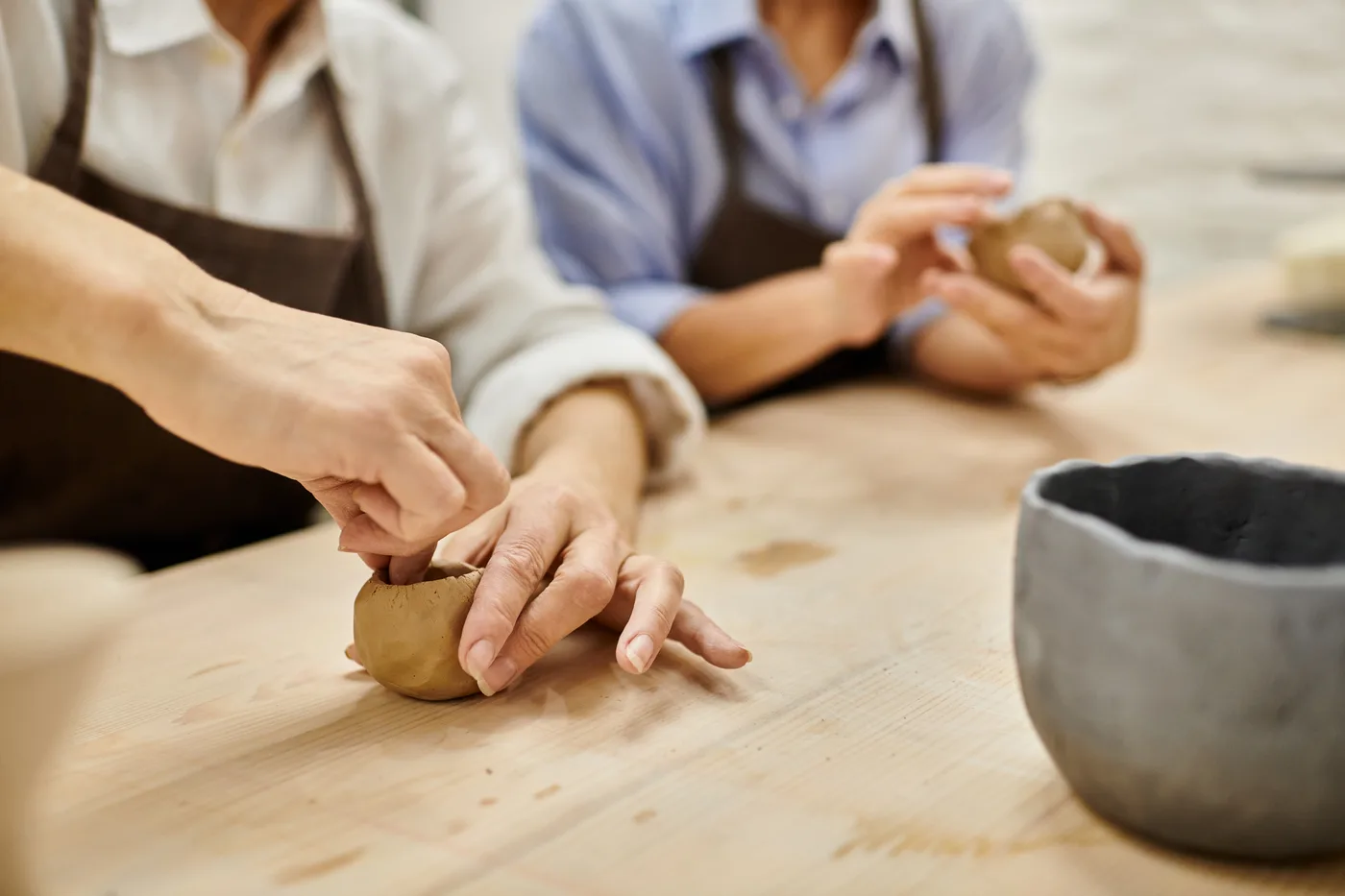
The class starts at seven and you arrive at ten to, which leaves just enough time to notice that everyone else seems to know where to put their coat. You are holding a borrowed guitar, or a pair of new swim goggles, or a lump of clay in a studio you drove past for two years before finally coming in. You are, by a comfortable margin, the oldest beginner in the room. And somewhere between the door and the folding chair, a familiar voice asks what exactly you thought you were doing here.
When did you stop being new?
There was a stretch of your life when you were a beginner at almost everything, almost all the time. Reading, swimming, riding a bike, long division, driving: each one arrived as a wall of incompetence you simply walked at, because that was what life was. Nobody asked whether you had a talent for walking before you took your first step.
Then, quietly, the ratio flipped. Work rewards what you are already good at, so you did more of it. The calendar filled with obligations that use your existing skills, not ones that would require new ones. And slowly, without a decision ever being made, the list of things you were willing to be seen doing narrowed to the things you already do well.
It is worth asking the question directly: when was the last time you were a true novice at something, in front of other people? For many adults the honest answer is measured in decades. That is not a character flaw. It is what happens when competence becomes part of your identity, because from then on, every first attempt feels like it puts the identity at risk.
The gap that feels like a verdict
Here is the mechanism worth understanding before you sign up for anything, because it explains almost all of the misery of the first month.
Your taste is decades ahead of your hands. You have spent a lifetime absorbing what good looks like: you know a beautiful bowl when you hold one, a clean stroke when you watch one, a phrase of music played the way it was meant to go. That knowledge took forty or fifty years to build and it does not switch off when you sit down at the wheel. So the first things you make will be judged by the most educated critic you know, which is you, and they will lose.
Everything you make will disappoint you for a while. That is not a verdict on your talent. It is the gap between a developed eye and an undeveloped hand, and it is evidence that your eye is good. A child is spared this because a child's taste and skill grow up together. An adult starts with the critic fully formed and the hands at day one, and mistakes the distance between them for proof they should not have come.
The other half of the misery is the feeling of being watched. Psychologists call it the spotlight effect: we consistently overestimate how much attention other people are paying to us. The woman two wheels over is not cataloging your collapsed cylinder. She is staring at her own, wondering if anyone noticed. A room full of beginners is a room full of people looking at their own hands.
What an adult beginner actually has
The story adults tell themselves is that they have missed the window, that the learning years are behind them. What is actually true is more interesting: an adult learns differently, not worse, and brings things to the table no eight-year-old has.
You know how learning feels. You have been through the arc before, in whatever you are now good at, and you know from experience that the wall at week three is a stage and not a ceiling. You can practice deliberately, aiming at the specific thing that is failing, rather than just repeating what is comfortable. You ask better questions. And you are there entirely by choice, which is its own kind of fuel; nobody assigns pottery to a fifty-year-old.
People who take up an instrument or a language in midlife tend to report the same shape of experience: progress comes slower in the fingers and faster in the understanding. The scales resist longer than they did at ten, but the sense of why the music is built the way it is arrives years sooner.
There is one more thing the new thing gives you, and it may be the best of the lot. Memory feeds on novelty. Seasons made entirely of routine compress in the rearview mirror, which is a large part of why the years feel like they are speeding up. A season with a genuinely new thing in it, new people, a new room, a new vocabulary of mistakes, is a season your memory keeps. It reads back longer and fuller than the months on either side of it. Being a beginner does not just add a skill. It slows the tape.
A season, not a mastery plan
If any of this is pulling at something you have circled for years, here is a way in that does not require courage so much as a calendar.
Pick the thing you keep walking past. Not the strategic thing, not the skill that would look good at work. The one you find yourself reading about at eleven at night, the studio you slow down in front of, the instrument in the closet. The pull is the qualification.
Commit to a season, not to mastery. Ten or twelve weeks, and then a decision. Mastery framing kills beginnings, because from the first day you are measuring yourself against an endpoint years away. A season is finishable. Anyone can be bad at something for twelve weeks on purpose.
Be bad in company. A class beats an app, and not mainly for the instruction. The room normalizes newness, puts a time in your week that someone expects you to keep, and surrounds you with people who are also making terrible first bowls. Solitary beginnings die quietly; nobody notices when you stop.
Keep the first thing you make. Date it and put it somewhere you will find it again. Its job is not to be good. Its job is to be worse than everything that comes after it, which is a job it will do faithfully for the rest of your life.
And for the whole first season, measure only one thing: whether you kept showing up. Not the objects, not the sound, not the stroke count. Return rate is the only honest metric a beginner has, and it is the one that predicts everything else.
Brave twice
Somewhere around week five or six, something shifts that is worth knowing about in advance. The voice from the doorway, the one that asked what you thought you were doing here, gets quieter. Not because you have gotten good; twelve weeks does not make anyone good. It gets quieter because you stop needing to be good, and once that requirement drops away, the hour becomes what it actually is: a room, a teacher, your own hands slowly learning something, and nobody keeping score.
The oldest beginner in the room is doing the thing everyone else there quietly respects, and doing it twice. Brave once for starting, at an age when nothing required it. Brave again every week for staying, through the stretch where the work is still losing to the eye. If you have been circling something for years, this is the season to walk in and hang up your coat like you know where it goes. By the third week, you will.



Loading comments…