
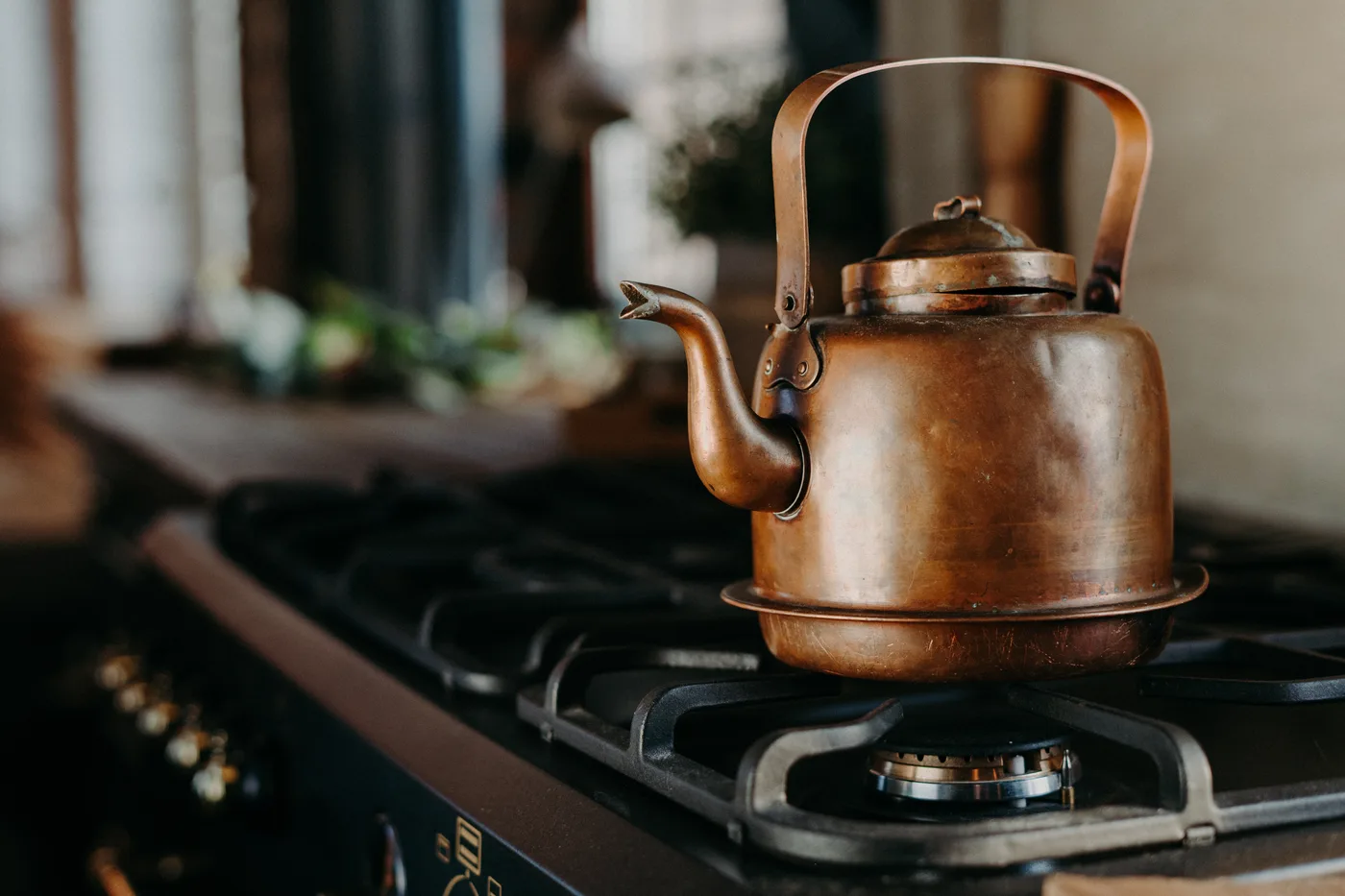
The kettle is beginning to murmur. In a minute it will build to its low rolling boil, and you will hear it the way you hear most of your life: not at all, or just enough to act, crossing the kitchen with your mind already at the third thing after tea. The refrigerator has been humming this whole time; you will notice it only if it stops. The train passes at the same hour it always does. Somewhere a phone chimes with the sound you chose years ago and have not heard since. Your day is full of bells. Nobody appointed them, so nobody hears them. Monasteries figured out a long time ago what to do about exactly this, and their solution requires no cushion, no app, and no extra minute in your day. It requires one sound, promoted on purpose.
The Sounds You Stopped Hearing
The disappearing is not carelessness; it is design. A nervous system that gave equal attention to every repeated sound would drown, so it does the sensible thing and files the unchanging ones under safe to ignore. The hum, the traffic, the clock, your own name said by the person who says it most: repetition wears the edges off all of it. This tuning-out has a name, habituation, and it is one of the oldest and most necessary tricks the brain performs. You could not read a page or hold a conversation without it.
But the filing system has no taste. It archives noise, and it archives the day itself. The commute you cannot remember driving, the shower spent in a meeting that has not happened yet, the kettle heard and not heard: the same efficiency that protects attention also lets whole hours pass unattended. The machinery cannot tell the difference between a sound not worth hearing and a life not being noticed. That part is left to you.
What a Bell Is For
In the monasteries of several Buddhist traditions, a great bell structures the day, and the instruction attached to it is strikingly simple. When the bell sounds, you stop. Not finish the sentence, not reach a sensible pausing point: stop, return to the breath, and only then continue. The bell is not information, the way a doorbell is. It is interruption as a discipline, a sound whose entire job is to break the trance of momentum a few times a day, on a schedule nobody in the middle of a task would ever choose.
The Vietnamese Zen teacher Thich Nhat Hanh, who did more than anyone to carry this practice out of the monastery, told his students that the sounds of ordinary life could serve as the bell, and he was fond of assigning the least contemplative sound in the house: the ringing telephone. Let it ring, breathe once, answer changed. His point survives him, and it scales. The practice was never about bronze. It was about consenting, in advance, to be interrupted into the present.
Notice what this does to the usual complaint about mindfulness, which is that there is no time for it. The bell asks for no time. The kettle was going to boil anyway. The train was coming regardless. The practice is carried entirely by sounds already embedded in your day, which means the day itself becomes the reminder, and forgetting becomes harder than remembering. That is the reverse of how resolutions usually work, and it is the whole genius of the form.
Choosing Yours
Pick one sound. One, not several; a day of wall-to-wall bells is just a new noise to sleep through. The good candidates share a few traits. The sound recurs a handful of times a day, two to six is the sweet spot. It arrives on its own authority, outside your control, because a reminder you schedule is an alarm, and alarms get negotiated with. And it is short, with a clear beginning: a chime, not a drone.
The kettle coming to a boil. The train that runs past the office. Church bells, if you live within reach of some. The neighbor's dog shaking its collar. The phone ringing, in honor of the tradition. The school bus wheezing to its stop across the street. The first notification after you sit down at your desk. Ordinary, local, slightly absurd: all fine. The absurdity is even useful, because nobody else can hear that your bell is a dog collar, and a private practice is easier to keep than a performed one.
The Whole Practice Is One Breath
When the bell sounds: stop, take one full breath, and notice where you are. Feet on the floor, weight in the chair, the actual room. Then go on with exactly what you were doing.
That is the complete instruction. Resist the urge to upgrade it. One breath feels too small to count, and that feeling is worth examining, because the size is the point. A practice that costs four seconds cannot be postponed to a calmer week, and what it trains is not relaxation but a skill: the interrupting of momentum, the finding of the ground, done so often it becomes a reflex you own. A person who can genuinely stop for one breath while the kettle rolls has the essential move, and can bring it, unadvertised, into the meeting, the argument, the waiting room.
Missing It Is Part of It
You will miss it, most of the time at first. The kettle will boil, the tea will be made and drunk, and only in the afternoon will you remember you had a bell at all. This is not failure; it is the practice showing you its own subject. Every time you notice, hours late, that the bell rang unheard, you are catching the machinery of habituation red-handed, and the catch itself is a moment of exactly the awareness you were training. Count it. Keep no other score, set no streaks, and do not move the bell to a louder sound, which only teaches the system to sleep through the new one. Just let the next ring be the next chance, which it reliably is.
After a while, something quietly reverses. The sound stops being a trigger you obey and becomes something closer to a companion, a seam of stillness that runs through the day at kettle-height. People who keep the practice report that the bell eventually seems to arrive at the right moments, which of course it does not. There are no right moments. There is only a mind, more often awake, meeting an ordinary sound it has finally decided to hear.
Already Ringing
Somewhere in your day, probably within the hour, your bell will sound. It has been sounding for years, faithful as a sexton, waiting out your inattention. The kettle will climb toward its boil, the train will come through, the phone will ring. You will not need to add a single thing to your life to begin. Stop once. Breathe once. The world, it turns out, has been calling you to attention all along, in the plainest voice imaginable, and it costs almost nothing to start answering.


Loading comments…