
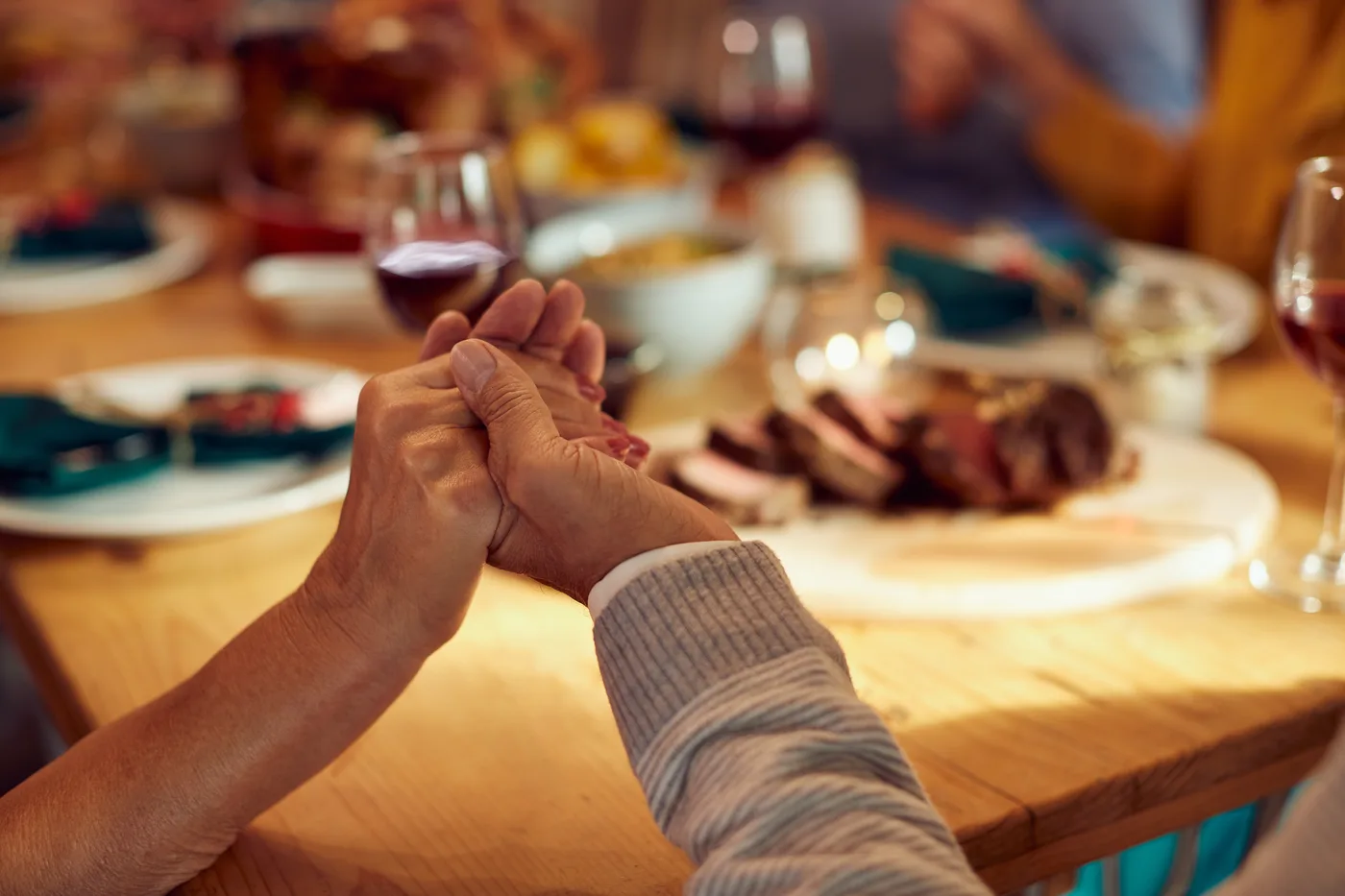
The food arrives, and the forks are moving before the plates have settled. Somebody is finishing a story, somebody is checking a phone, and the meal begins the way most things begin now, which is to say without beginning at all. It simply becomes the case that everyone is eating. Nothing marks the seam between the day and the table. And yet for most of human history, in nearly every place we know anything about, people did not let that seam pass unmarked. They stopped, for a breath or a sentence, before the first bite. The pause had a hundred forms and a hundred names. In the English of a certain generation, it was called saying grace.
The Oldest Pause
It is worth noticing how strange the agreement is. Traditions that share almost nothing else share this. Jewish practice surrounds eating with blessings, distinct ones for bread and wine and fruit, so that the table becomes a place where attention is paid in detail. Many Muslims begin a meal by invoking the name of God, a phrase small enough to travel with every plate. Christian households have bowed heads over supper in every century and every denomination. In Zen monasteries the meal is among the most choreographed acts of the day, opened with recitations that reckon up where the food came from and whether the eater has earned it. And in millions of entirely secular Japanese households, hands come together before eating for a word that acknowledges receiving, spoken by atheists and grandmothers alike, taught to children with their first chopsticks. When practices this different converge on the same gesture, the gesture is probably not decoration. Something about eating seems to ask for a threshold, and something in us seems to know it.
What the traditions understood, each in its own vocabulary, is that a meal is a dependency made visible. Every plate is the end of a long chain: soil, rain, the labor of strangers, the lives of plants and animals, the hands that cooked. To eat without a pause is not wrong; it is just to let all of that pass unacknowledged, three times a day, for a lifetime. The grace was the moment the chain was allowed to be seen.
What the Pause Interrupts
Consider what is actually happening in the ten seconds before an unmarked meal. You are still inside the day's momentum: the drive home, the last email, the argument you are rehearsing for later. The food enters that stream and becomes part of it, fuel taken on at speed. Most of us know the experience of looking down at an empty plate with no memory of the meal that was on it. Nothing scandalous has occurred. But something has been consumed without ever quite being received, and a day built of such moments starts to feel like it happened to someone else.
The pause is a seam ripper. It stops the momentum for just long enough that the meal can begin on purpose. This is the same work a doorway does for a room or a ring does for a promise: a small formality that separates one thing from another so that each can be itself. Thirty seconds is enough. The day is set down. The table begins.
The body, it should be said, has its own stake in the seam. Fullness is slow news; the signals that say enough take time to arrive, which is one reason meals eaten at full speed so often end past the point anyone intended. A pause at the start, and the slightly slower gait a meal tends to keep once it has begun deliberately, gives the news time to catch up. This is not a diet, and no outcome is promised. It is only the observation that a meal that begins with attention tends to proceed with some, and the body is on the list of beneficiaries.
Gratitude Without a Creed
Here is where a modern reader may feel the door closing: the old pause came wrapped in theologies, and perhaps you subscribe to none of them. But the pause does not require the wrapping. What grace does, at its plainest, is state a fact: this did not come from me. The bread involved rain you did not schedule and hands you will never shake. You can name the giver as God, as providence, as the whole improbable web of soil and labor and luck, or you can name nothing at all and simply let the fact stand in the room for a moment. The fact is true in every vocabulary. Gratitude researchers keep finding that people who regularly pause to register what they have received report more contentment than people who do not, but you knew that before there was research; nobody has ever risen from a table gladder for having skipped the noticing.
There is humility in it too, of a very usable kind. A person who eats three unmarked meals a day can come to feel self-supplied. The pause quietly corrects the ledger. It is difficult to feel entirely self-made with your head bowed over food that other beings became and other people carried. The correction takes ten seconds and costs nothing, and its effects on how you treat waiters, cashiers and farm stands are not nothing.
A Grace of Your Own
If a practice appeals, build a small one, and build it plain enough to survive a weeknight.
Start with one breath. Before the first bite, one full breath with your hands still. That is the entire minimum viable grace, and done at lunch alone over a desk it already changes the meal's opening key.
Or say one true sentence. Name a thing on the table and one link in its chain: the tomatoes were somebody's August. The corn came from a farm stand you could bike to. Said aloud with family or silently over takeout, it does the pause's whole work, which is to make the meal briefly visible before it disappears.
Let the household find its form. With children, a one-line round of what was good today is a grace in everything but name. With guests of mixed convictions, a host can simply say, let's take a breath before we eat, and no one at the table has been asked to borrow a creed. The forms are endlessly adjustable. The only essential is the seam: a marked difference between not yet eating and eating.
Keep it short enough to keep. The old table blessings survived centuries partly by being brief. A grace that takes ten seconds happens daily for decades. A beautiful five-minute practice happens twice. In ritual, as in seeds, the small and hardy outlives the ornamental.
The Meal, Received
No one needs another obligation, and this is not one. Skip it and dinner is still dinner. But three times a day, life sets a threshold in front of you and asks, very quietly, whether anything marks it. The oldest answer we have is a breath, a bowed head, a sentence half worn out with use, and then, only then, the first bite. Tonight the food will arrive and the forks will want to move. Wait one breath. Notice what is on the table and what it took. Then eat, having, for once, actually begun.



Loading comments…