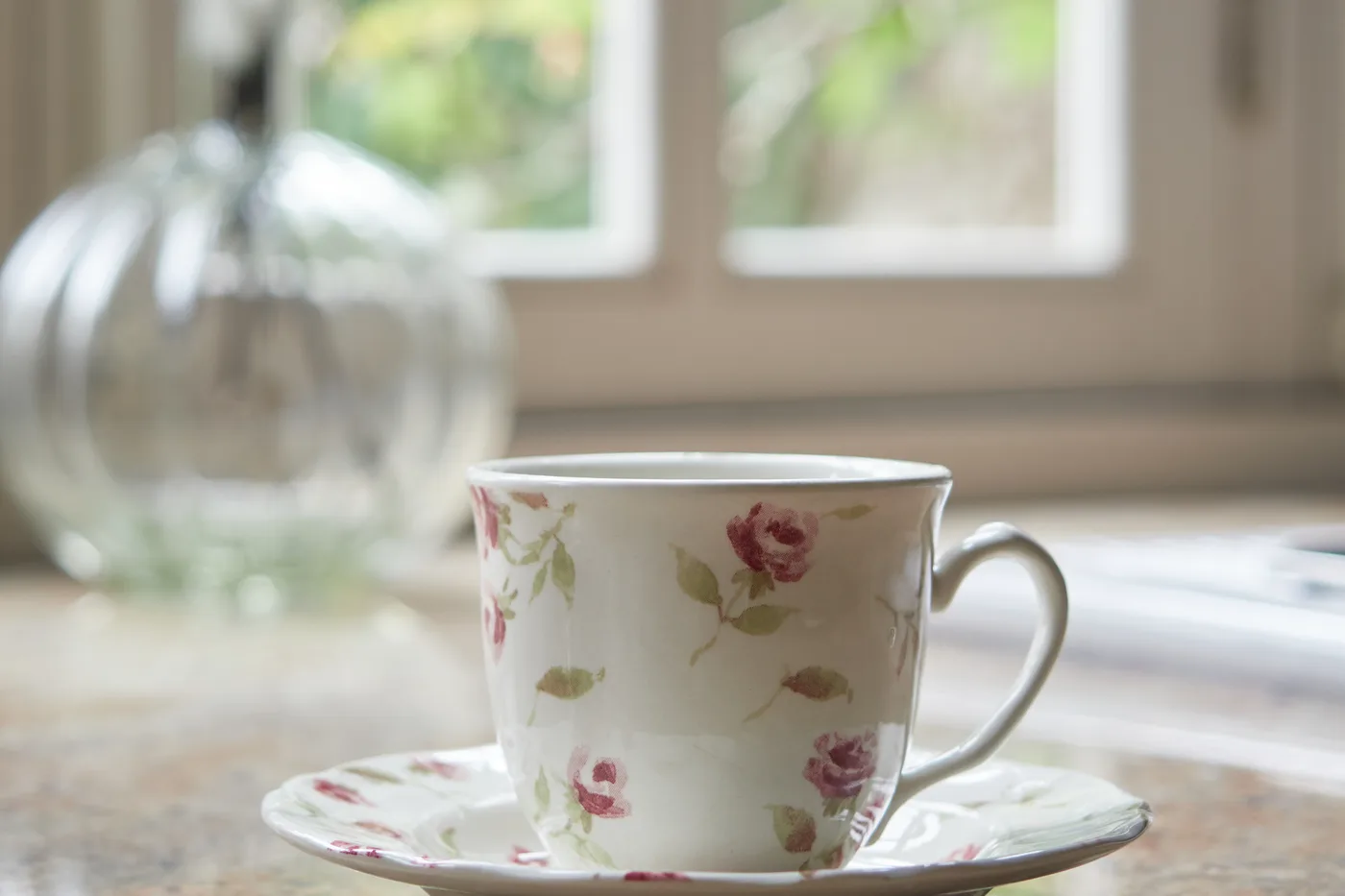
There is a shelf in almost every home that nobody is allowed to touch. The good towels live there, and the china that only comes down at Thanksgiving, and the perfume that was expensive enough to ration, and the dress with the tags still on, waiting for an occasion worthy of it. The shelf has a logic, inherited and rarely examined: some things are too good for ordinary life. It is worth asking, at least once, what that logic is costing you.
Where the shelf comes from
Saving things for best is not a personal quirk. It is handed down. Many of us watched a grandmother keep a parlor nobody sat in and glassware nobody drank from, and the keeping made sense in her world: objects were scarce, replacing them was hard, and a houseful of things that survived decades was a form of security you could dust. If you grew up with less, the instinct runs deeper still. A good thing protected is a good thing you still have.
There is also a quieter engine underneath, one the psychologists of money and loss would recognize: using a thing feels like spending it. The candle burned is a candle gone. As long as the perfume stays mostly full, you still have the perfume, the way money unspent is still money. So the bottle sits on the dresser performing fullness, and the actual pleasure it was built to deliver, the moment of scent on skin on a day that needed it, never happens at all.
And some of it is simpler: the object is a trophy. The china says a wedding happened. The dress says a certain body, a certain year, a certain hope. Using trophies feels wrong, the way you would not play catch with a medal. But most of what sits on the shelf was never a medal. It was a tool with a shine on it, and tools want work.
What the waiting costs
Start with the arithmetic nobody does. If the good tablecloth comes out twice a year, it will be used perhaps sixty more times in your life. The occasions you are saving it for are not an abundant future resource. They are a short, countable list, and every year the list gets shorter. Meanwhile the ordinary dinners, the ones you eat on the chipped plates with the mismatched napkins, number in the thousands. You have assigned your best things to the smallest part of your life.
Then there is what the shelf does to the things themselves, because objects do not actually keep. Perfume turns; give a bottle enough years of light and warm air and the top notes sour, so the rationing preserves nothing but the shape of the bottle. Scented candles fade in the jar, elastic perishes in the drawer, silk yellows along its folds, rubber boots crack without ever meeting rain. The shelf is not a vault. It is a slow goodbye with extra steps, and the thing you were protecting ends up thrown away unused, which is the one fate worse than wearing out.
The deepest cost is harder to see because it is about standing, not stuff. Every time you set the good table for guests and the lesser table for yourself, you file a small report about who deserves what. Nobody means it that way. But run the habit for thirty years and you have spent your one life being the person the second-best towels are for, in your own house, by your own hand.
What things are for
A thing used is not a thing squandered. It is a thing honored. The potter who made the cup meant it to hold tea, not air. The weaver meant the cloth for a table with elbows on it. Somewhere along the line we confused preservation with respect, but you do not respect a violin by never playing it. An object's purpose is the use it was shaped for, and a beautiful object doing its work on an ordinary Tuesday is more itself, not less, than the same object in the dark of a cabinet.
Use also writes a record that storage never can. The wooden spoon worn to the shape of a hand, the cookbook page stiff with splatter, the teacup whose glaze has gone soft at the rim from ten thousand washings: this is what belonging to a life looks like. A chip in the good bowl is not the end of the bowl. It is the bowl's first memory of you.
The practice
Take one thing off the shelf this week. Only one; this is not a purge, and it is not a holiday. Pick the saved thing that tugs at you most, the one you always notice and never touch, and use it on a day that has nothing to recommend it. Burn the good candle on a Tuesday while you answer email. Put the perfume on to take out the recycling. Eat a weeknight omelet off the wedding china and wash it by hand while the radio plays.
Notice what happens, because something does. The day does not rise to the object; the object lowers itself into the day, and the day absorbs a little of its care. Dinner on the good plates is still Tuesday dinner, but you sit differently at it. The practice is not about the plate. It is about being the kind of person to whom care is shown, and discovering that the person showing it can be you.
Apply the guest standard going forward: anything you would do for company, you are allowed to do for yourself. Guests get the matching towels, the lit candle, the table set before the food lands. You are the guest who stays longest.
And be honest about the things you will never use, because the shelf holds some of those too. The crystal you have moved through three houses without unboxing is not waiting for its occasion; it is waiting for its person, and the person may be someone else. Passing a saved thing to somebody who will actually use it is not a defeat. It is the thing finally being spent on purpose.
The occasion is here
The habit of saving for best rests on one quiet assumption: that the real occasion is still ahead, and the days in between are rehearsal. But the days in between are the show. They are nearly all of it. The ordinary morning with its ordinary coffee, poured this time into the cup you love too much to use, is not beneath your best things. It is exactly what they were made for.
You do not need the wedding, the milestone, the company coming. You woke up today with taste in your mouth and a finite number of Tuesdays left, which is as much occasion as anything ever gets. Take it down off the shelf. You are the occasion.

Loading comments…