
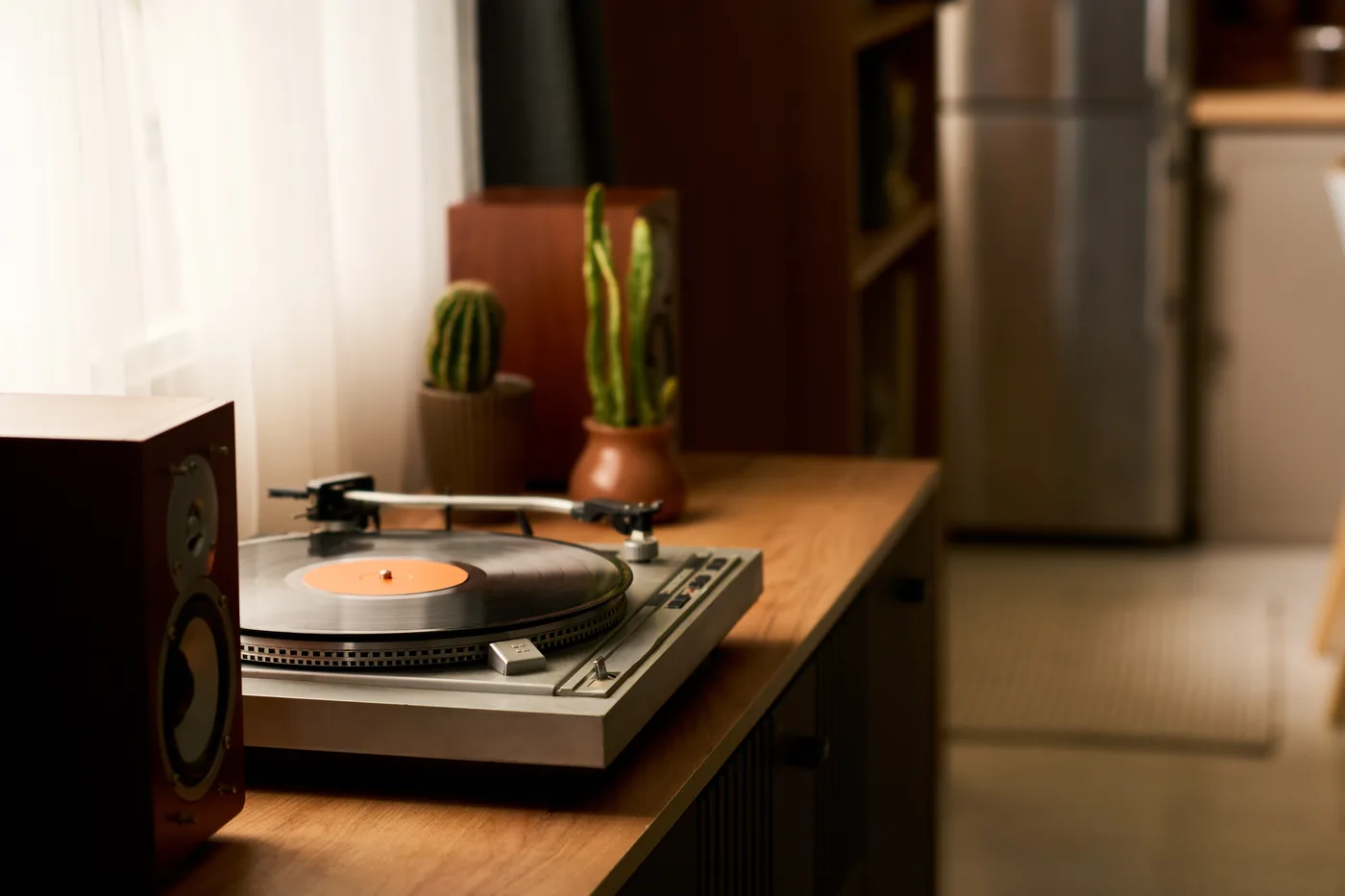
Think about the last time you listened to a piece of music and did nothing else. Not music in the car, under the dishes, behind a conversation or in one ear on a walk. Just the song, start to finish, with your hands empty and nowhere to look. For most people it has been a long time, maybe years. Music has become the wallpaper of the day, which is a strange fate for something people once traveled miles and dressed up to hear. There is a small meditation hiding in that gap, and it takes about four minutes.
Music as background
For nearly all of human history, music happened only when someone played it. You heard it at a celebration, a service, a gathering around a fire, and when it ended there was silence again. Recorded sound changed that within a few generations. Now almost any song ever made is a tap away, and the natural result is that we have stopped treating it as an event. It plays while we do something else.
Nothing is wrong with that. A good playlist makes a long drive shorter and a chore lighter. But background listening is a particular kind of listening, half attention at best, and if it is the only kind you do, you can lose touch with what a single piece of music can do when it has all of you. Many people say that the first time they sit down and listen properly in years, a song they have heard a hundred times sounds new. Nothing about the song changed. The attention did.
Why a song works as a meditation
Sitting meditation asks you to rest attention on something, usually the breath, and to come back each time the mind wanders. It is simple to describe and famously hard to do, partly because the breath is quiet and the mind is loud. Music gives attention a richer place to rest. It moves, it changes, it has a beginning, a middle and an end. It pulls you forward on its own.
A song also has a built-in length, which removes one of the hardest parts of starting a practice. You do not have to decide how long to sit or keep checking a timer. The practice is over when the music is. Three or four minutes is short enough that almost anyone can manage it, even on a crowded day, and long enough for the mind to wander off and be gently brought back several times. That coming back is the whole exercise.
And because music reaches the body as well as the mind, the effects are easy to feel. People commonly notice their breathing slow with a slow piece, their shoulders drop, their eyes sting at a passage they had never really heard before. You do not need to chase any of that. It tends to arrive on its own when you stop doing three things at once.
The practice: one whole song
Choose the song before you sit. Scrolling for the perfect track is its own distraction. Pick something you already know you like, or something you have always meant to hear properly. Instrumental music can make it easier at first, since lyrics tend to pull attention toward meaning and memory, but any song will do. Avoid anything you associate with work or exercise.
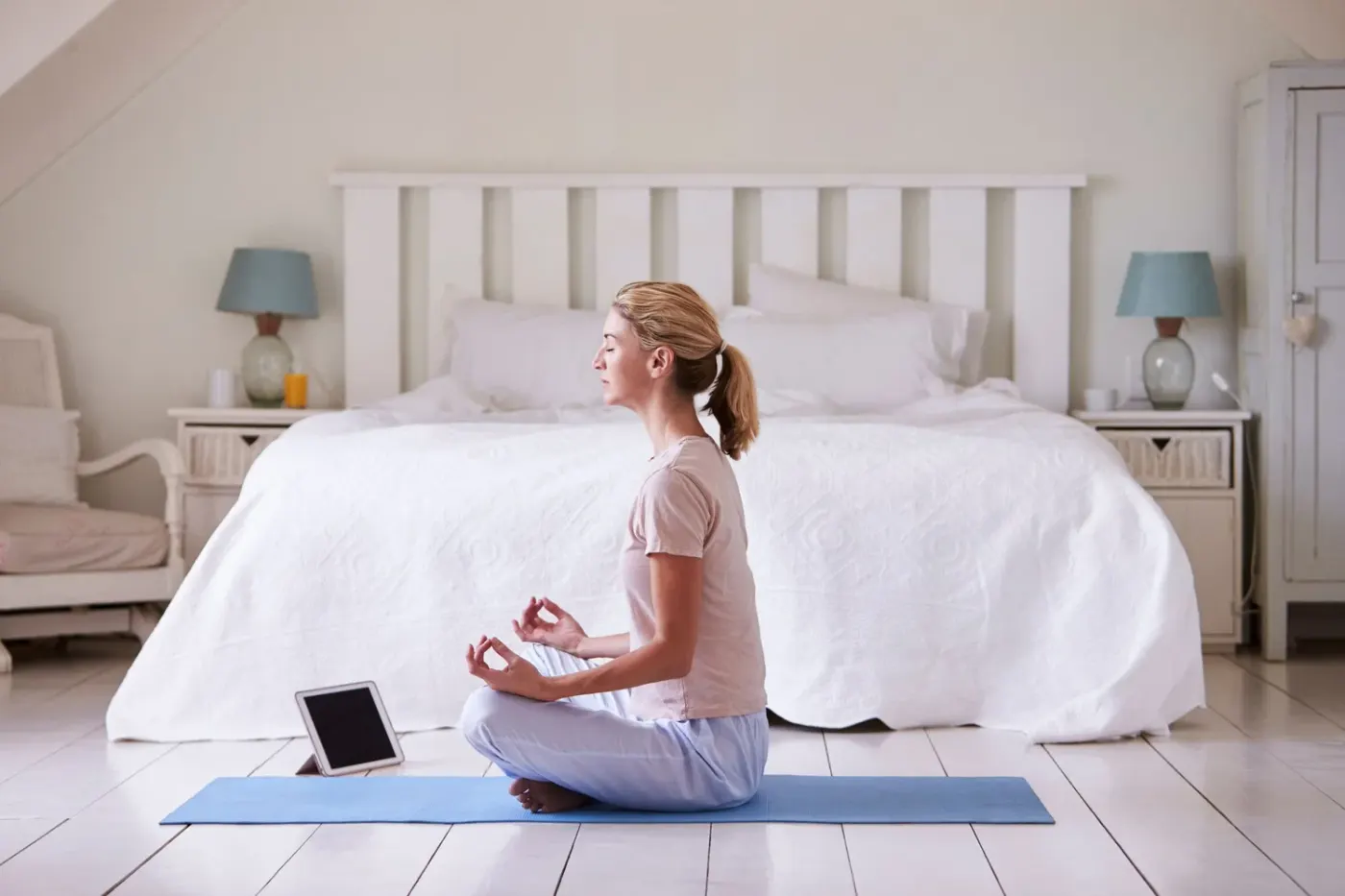
Set yourself up to stay put. Sit somewhere comfortable, in a chair or on the floor, and put the phone face down or across the room once the music is playing. Headphones help if the house is noisy. A speaker is lovely if it is quiet. Turn the volume to a level you would choose for a long conversation, not a party.
Close your eyes and listen to the first few seconds closely. Notice how the song begins: with a single instrument, a voice, a beat, a room tone. Beginnings go by quickly and are usually missed.
Follow one thread. Partway in, pick a single part to follow: the bass line, the drums, a background voice, the piano's left hand. Stay with it for a while. Then let it go and take in the whole sound again. Moving between the part and the whole is a good way to keep attention awake.
When the mind wanders, come back. It will. You will start thinking about where you first heard the song, or tomorrow's errands, or whether you should be doing something more productive. That is not failure. Notice that you have drifted, and return to the sound, wherever the song happens to be by then.
Stay for the silence at the end. When the last note fades, keep your eyes closed for a few more breaths. The quiet after music has its own texture, and it is often the most restful part of the whole practice. Then get up and go back to your day, without immediately starting the next song.
Making it a habit
The practice fits naturally into the edges of a day. Some people use one song as a bridge between work and home, sitting in the parked car before they go inside. Others take one in the morning, before the news, or at night instead of the last half hour of scrolling. It can also be a reset in the middle of a hard afternoon, something to do with four minutes that leaves you more settled than a glance at your phone would.
Over time, you may want to work through an album the same way, one track a day, or return to the same piece every day for a week and notice how differently it sounds each time. The song stays the same. You are the part that changes, and music turns out to be a surprisingly honest mirror for how scattered or settled you are on a given day.
Listening with someone else
This also works with another person, and it can be one of the quieter forms of company there is. Choose a song for each other, sit in the same room, and listen without talking until it ends. Afterward, say one thing you noticed, or nothing at all. It is a little like the old evenings when families gathered around a record player or a radio, giving the same sound their full attention together. Few of us do that anymore, and it is easy to bring back.
What you are practicing
On the surface, this is about music. Underneath, it is about the difference between consuming something and receiving it. So much of what fills a day is taken in at half attention: meals, conversations, the view from a window, the people we love. One whole song is a small rehearsal for paying full attention to something good while it is happening.
Tonight, before the next thing, pick one song. Sit down, close your eyes, and give it the four minutes it asks for. Then notice how the room sounds when it is over.

Loading comments…