
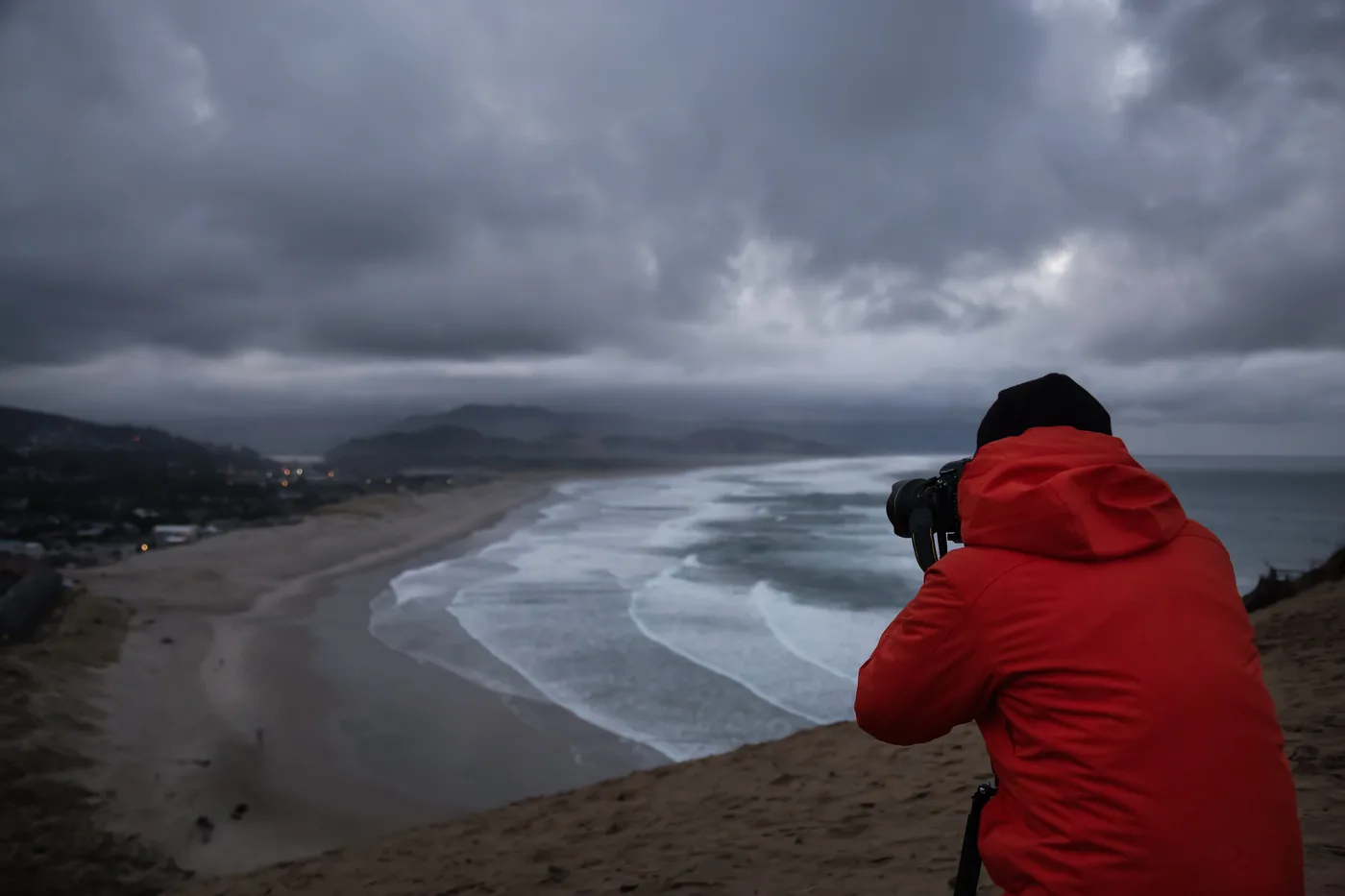
Open the photo library on your phone and scroll back a month. Somewhere in there are forty pictures of the same sunset, a dozen nearly identical shots of a plate of food, screenshots you have no memory of taking, and a few images you genuinely love, buried so deep you will probably never see them again. A phone camera made photography free, which was a gift. It also made each picture worth almost nothing, and that changed the way we look at the world before we ever press the button.
What a roll of film did
For most of the last century, a camera came with a hard limit. A standard roll of 35mm film held twenty-four or thirty-six exposures. Many medium-format cameras gave you just twelve. Film cost money, developing cost more, and you had no way of seeing a picture until the roll was finished and printed, days or weeks later.
That limit shaped everything. Photographers learned to wait. They walked around a subject before raising the camera, watched the light, thought about what belonged in the frame and what did not. A wasted shot was a real loss, so each one was a small decision. Ordinary families felt it too: the roll in the camera might last from a birthday to a summer vacation, and every picture on it had been chosen.
When the limit disappeared, so did most of the choosing. Taking forty photographs and keeping one feels efficient, but it moves all the attention to after the fact, scrolling and deleting, rather than the moment itself. The looking gets thinner, because the camera does not ask you to look.
Constraint as a creative tool
Artists have long known that limits help. A poet working in fourteen lines, a painter using three colors, a cook with only what is in season: the boundary forces choices, and choices are where personal style comes from. When anything is possible, it is surprisingly hard to make something that feels like yours.
Photography is no different. Give yourself a small, fixed number of frames and something shifts. You stop photographing everything that is pleasant and start asking what is actually worth one of your twelve. You notice light more, because light is often what makes the difference. You move your feet. You wait for the person to step out of the doorway or the gull to land on the post. The constraint does not limit your eye. It wakes it up.
The practice: twelve frames
You do not need a film camera for this, though if you have one in a closet it is a lovely excuse to load it. The phone in your pocket works fine. The point is the rule, not the equipment.
Choose a walk and a number. Pick a route you know well, an hour or less: your street, a stretch of beach, the park near the train station. Decide that you will take exactly twelve photographs on it. Not twelve good ones. Twelve.
No deleting, no retakes, no reviewing. This is the rule that makes the practice work. Once you take a frame, it counts, whatever it looks like. Do not look at it on the screen afterward. If you can, turn off the preview that flashes up after each shot. You are trying to bring back the experience of not knowing how it came out.
Walk first, photograph second. For the first ten minutes or so, take nothing. Just look. Notice what draws your eye: a color, a shadow, a texture, a pattern of repeated shapes. Then begin, and spend your frames slowly.
Before each one, ask a single question. What, exactly, am I photographing? Not the scene, but the thing in it that made you stop. Then move until the frame holds that thing and very little else. Get closer than feels natural. Most photographs are improved by taking a step forward.
Look at them later, all at once. When you get home, or the next day, sit down and look at the twelve together, in order. Notice which ones surprise you. Notice what you kept returning to. A theme often appears that you did not plan, and that theme is a small piece of information about what you love to look at.
What usually happens
Most people find the first walk a little uncomfortable. The habit of photographing anything mildly interesting is strong, and holding back can feel like missing out. That is part of the practice. By the second or third walk, the discomfort tends to give way to something closer to calm. You are looking harder and photographing less, and the walk itself becomes more vivid.
The pictures change too. They are not necessarily more polished, but they are more yours. Twelve frames taken this way often contain more of what you actually saw than a hundred taken the other way, because each one was a decision. Some will be failures, which is fine. A failed frame you thought about teaches you more than a lucky one you did not.
Variations worth trying
Once the basic practice feels familiar, change the rule. Spend twelve frames on a single color, or on things that are round, or on hands at work. Photograph one place, the same twelve spots, in each season of the year and lay them side by side at the end of the year. Walk with a friend, each with twelve frames, and compare what the two of you saw on the same route. Or try a single frame: one photograph, a whole afternoon, and the patience to wait for it.
Long Island in late autumn and winter suits this well. The light comes in low and gold for much of the day, the beaches empty out, and the bare trees show their structure. There is less color and more shape, which is exactly what a limited eye learns to see.
A smaller library, a bigger memory
There is one more benefit, and it is easy to overlook. When you photograph less, you remember more. Taking a picture can become a substitute for paying attention, a way of filing the moment away instead of having it. Twelve frames leaves most of the walk to your own eyes, and the few pictures you do bring home carry the rest of it with them.
So the next time you head out for a walk, set a number before you leave the house. Take your twelve, put the phone away, and see what the walk looks like when you are not trying to keep all of it.


Loading comments…