

Someone asks how you're doing and the word is out before you've taken a breath or a beat. Fine.
It's the I'll-say-I'm-okay-if-you-will-too. A social contract we sign without reading it. Ask a woman how her week was on a Sunday and she'll say fine — even if, when she actually lets herself think back, she'd remember how utterly undone Tuesday made her, how hard she worked to hold everything together by Friday. We've been so well-trained in keeping it light that we forget, sometimes within days, what genuinely cost us.
And honestly? How are you really takes more time and space than most of us feel we can afford right now. We are living inside a relentless output culture, doom-scrolling through a world on fire, emotionally wrung out — and we still have to get the camp forms signed and make it to Susie's recital with a smile while answering Slack messages in the car before racing home to get dinner on the table. There is no gap in that sentence. There is no gap in that life.
So we say “fine.” Because the alternative is slowing down, and a lot of us — if we're honest — are afraid of what happens if we do. The feelings that are waiting aren't small. Midlife has arrived and your body is changing in ways no one warned you about, your kids are changing, brain fog has moved into the house, and intimacy has become a foreign language in your own home. If you stop moving long enough to feel any of it, everything you've been holding together might stop holding.
Fine is a sentence. And like all sentences, it can be served. These four principles are what I return to again and again —and with the women I coach— for finding the way back.
Principle One: Numbness Is Not Neutral
"Fine" is numbness with a name tag on. And numbness isn't free — it has a cost, carried in the body, in the nervous system, in that low hum most of us can feel but have learned not to follow. The not-feeling takes as much energy as the feeling would. More, sometimes.
Because feeling — really feeling, especially what isn't working, what isn't fulfilling, where this one short life might be asking more of you than you've been willing to look at — that is brave work. Not soft. Not indulgent. Brave. The invitation isn't to manufacture something better on command. It's just to notice, before your mind tidies it into one clean word, what's actually there.
Principle Two: Wanting Is Information, Not Indulgence
Most women are raised to treat desire like a luxury item — something earned after the real work is done, if there's time left over, if no one else needs anything first. Inside that framework, wanting more reads as greedy, unrealistic, even a little embarrassing.
But desire isn't decoration. It's data. The most direct signal your life force sends — underneath every "should" that's been layered on top of it. When a woman dismisses her own wanting as impractical, she isn't being mature. She's cutting the wire that tells her what's true. Every flicker of I want — even the inconvenient ones, especially the inconvenient ones — is information worth following.
Principle Three: Your "No" Protects What Your "Yes" Expresses
We talk about boundaries as if they're walls — cold, defensive, the opposite of aliveness. In practice, it's the reverse. A clean "no" and a full-bodied "yes" come from the exact same place: a life force that knows what it's for.
Women living inside "fine" tend to have blurry boundaries — not from a lack of discipline, but because a real "no" risks disturbing the very peace that "fine" was built to protect. Getting back to yourself often means letting your "no" get louder before your "yes" can get truer. Not as a strategy. As a sequence.
Principle Four: Aliveness Needs a Witness
Life force that stays private doesn't stay alive for long. Desire, creativity, anger, hunger, joy — all of it dims when it's never spoken, never let out, never seen. "Fine" is a way of staying unseen. Small enough to slip past anyone's notice, including your own. Ending it doesn't require a grand gesture. It requires one true sentence, said out loud, to someone who's actually listening. Not "I'm fine." The other kind.
The Sentence You're Actually Serving
The next time "fine" arrives — in your mouth, in a text, in the mirror — pause before you let it close the loop. Ask what it's standing in for. Ask what you'd say if the honest answer cost you nothing. Stop handing down a life sentence, in one quiet word, every single day. Your life force was never sentenced. It's been waiting for you to notice.
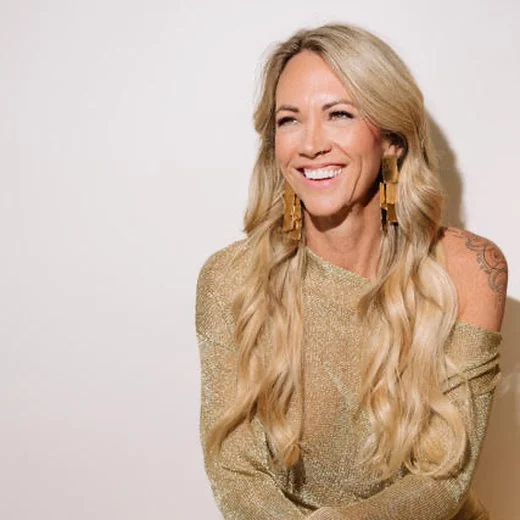
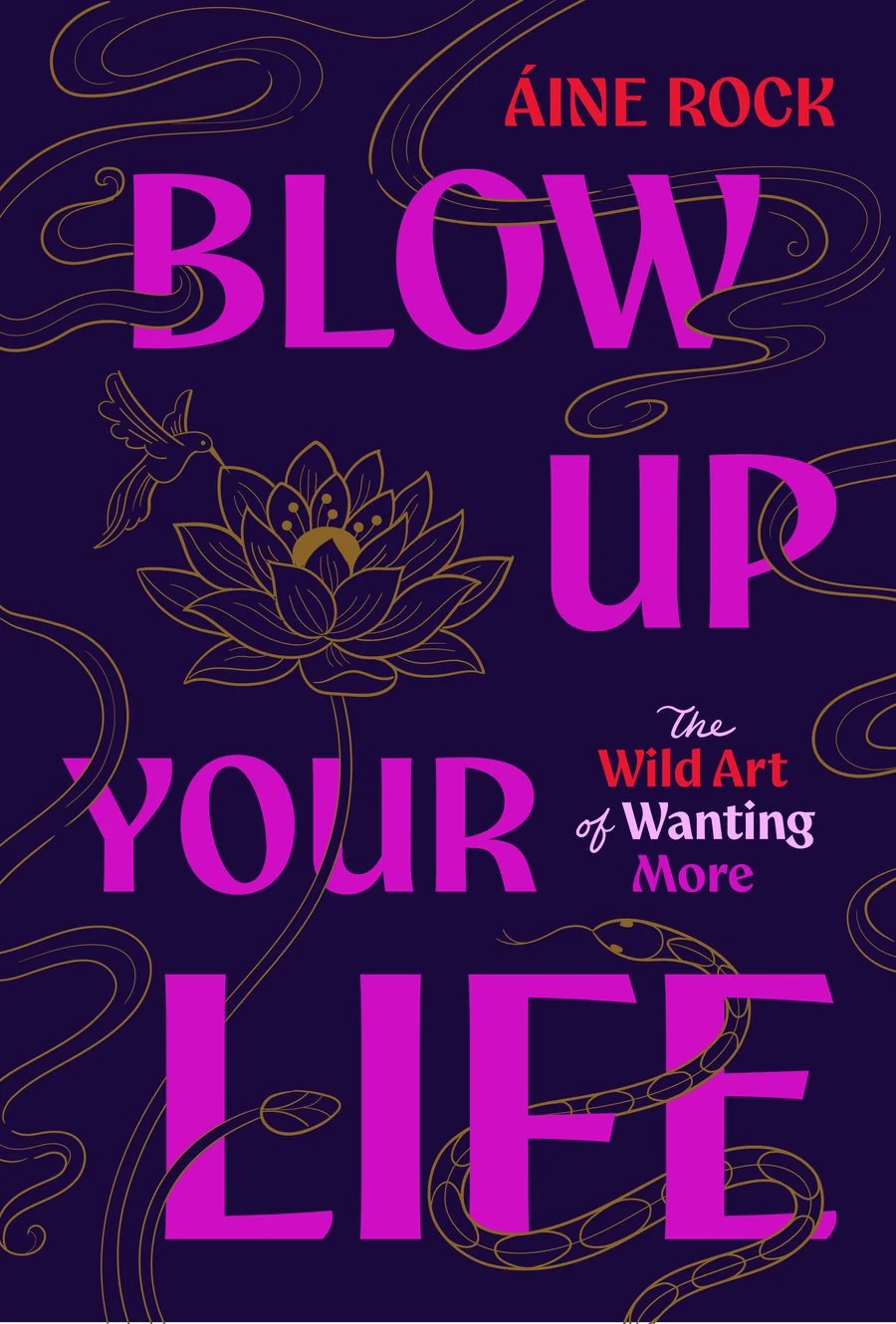
Áine Rock (pronounced “On-yah”) is a Modern Priestess of Pleasure, transformational guide, and founder of Sofanya, a global movement devoted to feminine reclamation and embodied leadership. Through her programs, retreats, and private mentorship, she helps women reclaim their power through pleasure, integration, and radical self-expression. Known for her signature blend of somatic healing, spiritual awakening, and sacred erotic embodiment, Áine guides women to rebuild their lives from the inside out. She is rooted in truth, magnetism, and aliveness. Her work is inspired by her own initiation: blowing up a life that looked “perfect” on the outside to build one that feels sacred, sensual, and free. Her teachings invite women to remember who they are beneath the conditioning and to live fully, feel deeply, and want more. When she's not working with clients or writing, Áine is spending time with her children and her labradoodles, or traveling the world. Blow Up Your Life: The Wild Art of Wanting More is her debut book. https://ainerock.com Instagram: @its_aine_rock LinkedIn Subtack



Loading comments…