

Your heart rate, your digestion, your blood pressure: almost everything your body regulates runs on its own quiet schedule, without asking. Breathing is the exception. It happens whether you attend to it or not, and yet at any moment you can take the controls, slow it down, and change the conversation your body is having with itself. That small piece of access turns out to be one of the most reliable tools we have for settling a stirred-up nervous system.
The Two Halves of the Breath
Watch your pulse closely while you breathe and you will notice something curious. It speeds up slightly as you draw air in, and slows as you let it out. Physiologists call this respiratory sinus arrhythmia, and it is a sign of a healthy, responsive nervous system rather than a problem. The inhale nudges you toward alertness. The exhale nudges you toward rest.
That asymmetry is the whole secret. The vagus nerve, the long wandering nerve carrying signals between the brain and the organs, exerts its calming influence most strongly on the out-breath. Lengthen the exhale relative to the inhale and you tip the balance of the autonomic nervous system toward its rest-and-digest branch. Nothing mystical is required. You are simply using a lever the body already installed.
What the Research Shows
Studies of slow, paced breathing have repeatedly found measurable effects: lower resting blood pressure, reduced self-reported anxiety, and a rise in heart rate variability, the beat-to-beat variation researchers use as a rough index of nervous-system flexibility. Much of this work converges on a surprisingly specific pace. At around five to six breaths per minute, considerably slower than the twelve to sixteen most adults take at rest, the rhythms of breath and heart rate fall into step. Researchers call this resonance, and it is where the effects on heart rate variability are largest.
A more recent line of work has looked at short, practical interventions. A 2023 study from Stanford researchers compared several brief daily breathing practices against mindfulness meditation, and found that a few minutes a day of deliberate slow breathing, particularly patterns emphasizing a long exhale, improved mood and lowered resting respiratory rate over the course of a month. The doses involved were small. Five minutes was enough to register.
Four Patterns Worth Knowing
The physiological sigh. Two inhales through the nose, the second a short top-up on the first, followed by a long, unhurried exhale through the mouth. This is a pattern the body already performs spontaneously during sleep and after crying. One or two rounds can take the edge off acute stress within seconds, which makes it the most useful thing on this list to carry in your pocket.
Four in, six out. Inhale through the nose for a count of four, exhale for a count of six, and repeat for five minutes. The counts matter less than the ratio. The exhale should be meaningfully longer than the inhale, and if four and six feel strained, try three and five.
Resonance breathing. Inhale for five, exhale for five, which lands you at six breaths per minute. Practiced for ten minutes a day, this is the pattern used most often in the heart rate variability research, and the one to reach for if you want a steady daily practice rather than an emergency brake.
Box breathing. Inhale four, hold four, exhale four, hold four. Favored in high-pressure professions for a reason: the equal counts and the holds give a scattered mind something structured to hold onto.
Let the Nose Do the Work
Wherever possible, breathe through the nose. Nasal breathing warms and humidifies incoming air and filters out particles, and the nasal passages release nitric oxide, a molecule that helps open the airways and supports the efficiency of oxygen uptake in the lungs. Mouth breathing bypasses all of it. It also tends to be faster and shallower, which is precisely the pattern you are trying to move away from.
A Practice, Not a Cure
It helps to hold reasonable expectations. Slow breathing will not resolve a genuine anxiety disorder, treat sleep apnea, or take the place of medical care, and anyone with a respiratory or cardiac condition should speak with their clinician before taking up a formal practice. What it does offer is something smaller and more repeatable: a way to interrupt the stress response in the moment and, practiced daily, a gradual widening of the space between what happens to you and how hard your body reacts to it.
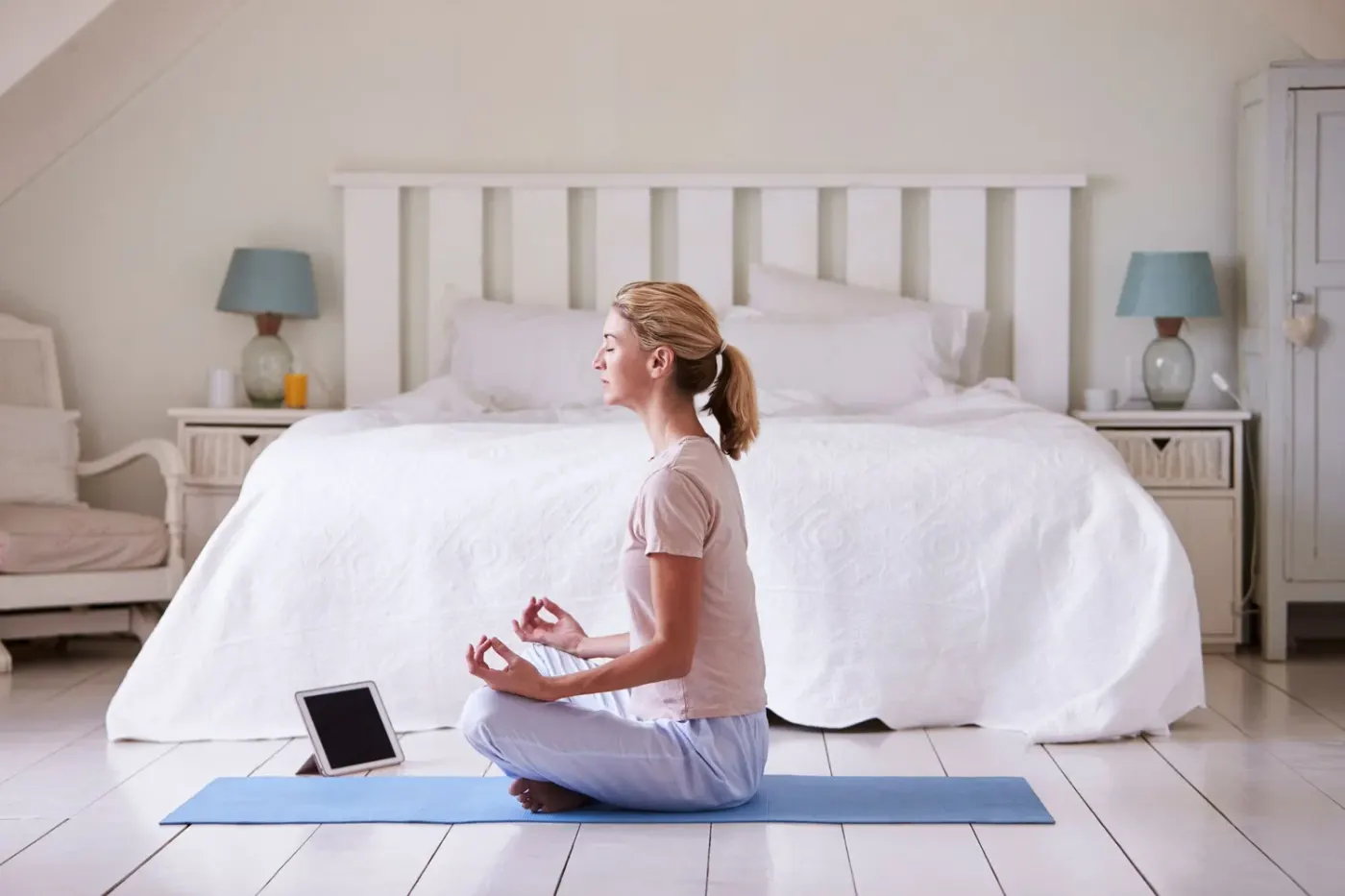
Begin with a minute. Sit somewhere ordinary, let the exhale run longer than the inhale, and pay attention to what changes. The instrument has been with you the whole time. It only asks to be played a little more slowly.
Loading comments…