
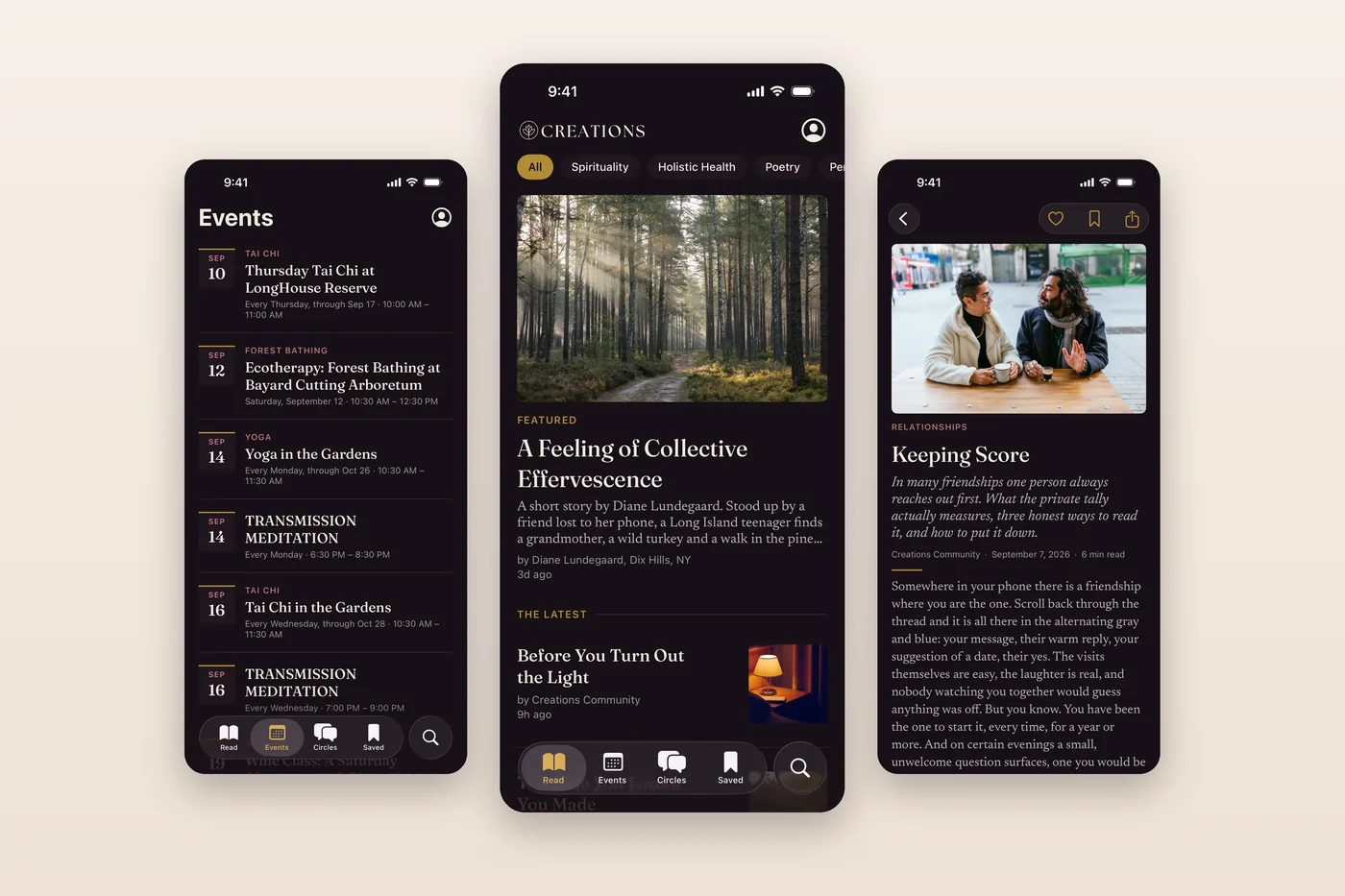
Creations is now an app, free on iPhone and on Android. Forty years of writing, finally searchable, in something quiet enough to read at the end of the day.
You know the nine o’clock version of yourself. The house has gone still, the day is behind you, and you reach for your phone because you want something to put in your mind before sleep. Ten minutes later you put it down again and you could not say what you read. Not one sentence of it stayed. Whatever you were looking for, you did not find it, and you are a little more tired than when you started.
That is not a failure of attention. It is a room built for a different purpose. Most of what lives on a phone is designed to keep you moving, and moving is the opposite of reading.
So we built somewhere else to go. Creations is now a real app, on the App Store and on Google Play, and the whole of it is free.
The magazine, made for a phone
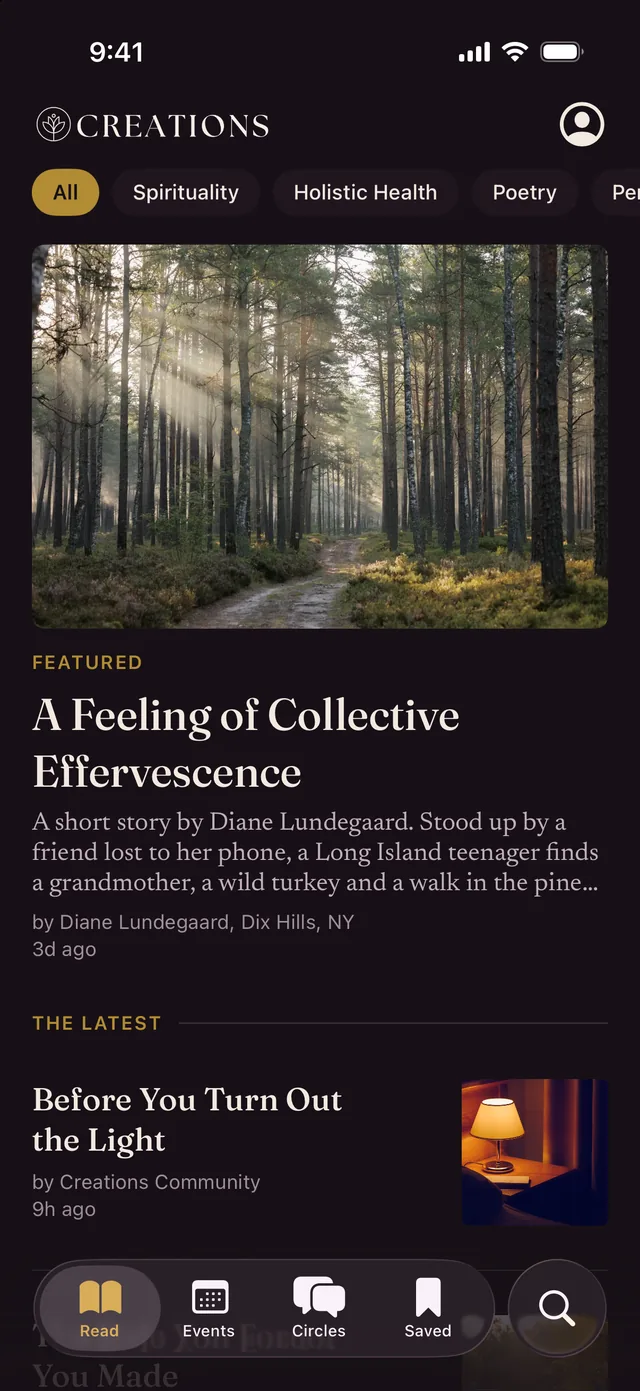
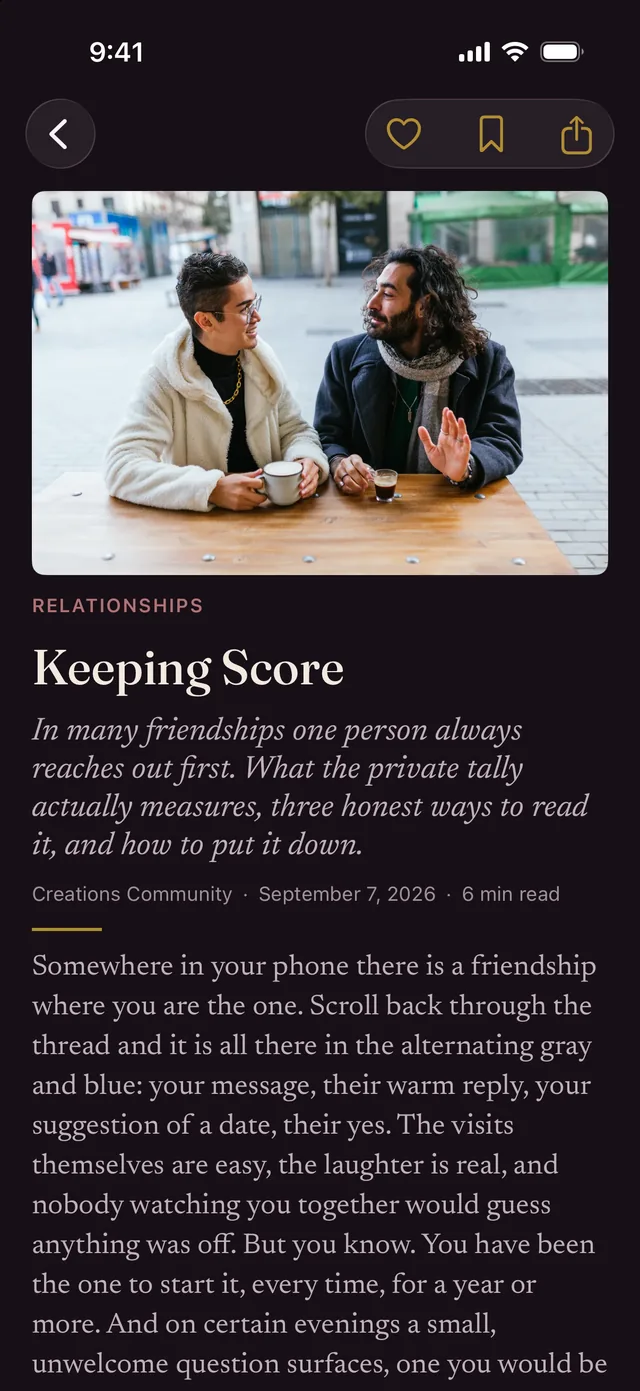
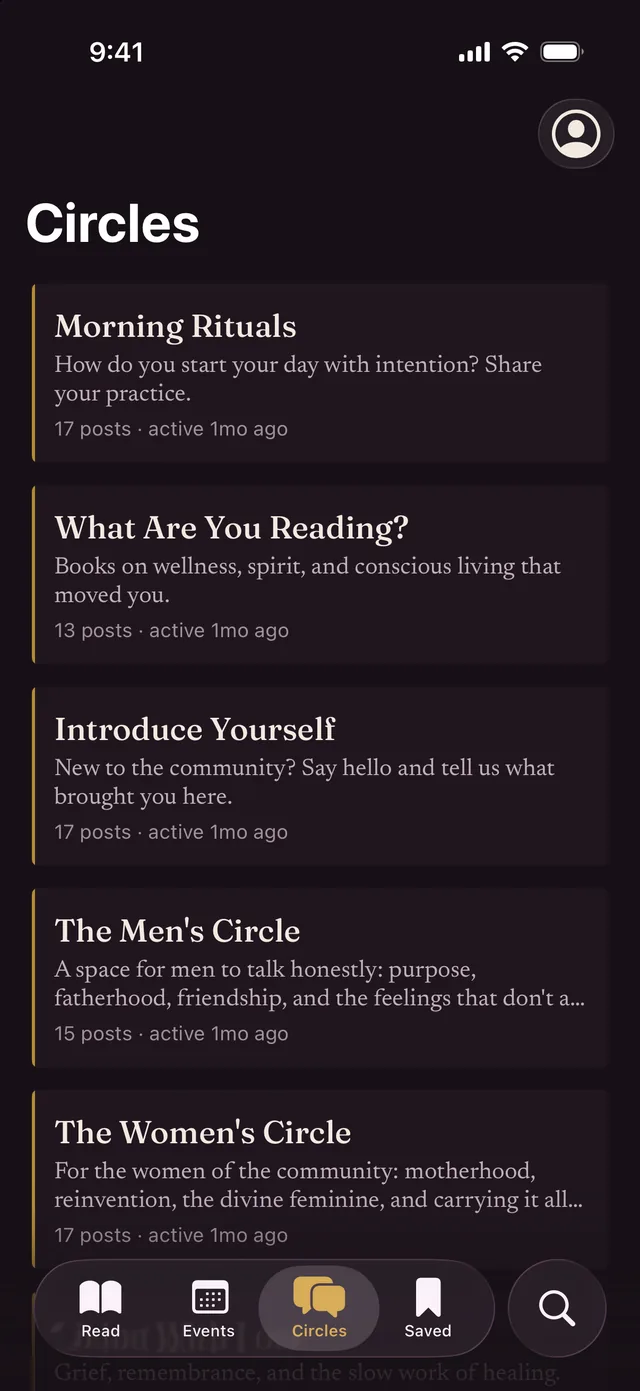
Not the website squeezed into a smaller window. Pieces are typeset for the app, with the text size set to whatever your eyes actually agree with, in light, in dark, or following whatever your phone is already doing. The day’s new writing is at the top. The sections you came for are one tap away: spirituality, holistic health, poetry, relationships, and the rest of the magazine.
Forty years, and at last findable
This is the part we are most glad about. There are more than four hundred and fifty published pieces in the Creations archive, and until now the honest answer to “where was that essay about grief I read a few years ago” was that you would probably not find it again. In the app you find it in a couple of words. Half a title, a phrase you remember, the name of the practitioner who wrote it.
Forty years of writers, teachers and practitioners on Long Island and beyond, and all of it in your pocket, in a searchable form, for nothing.
It keeps working when the signal stops
Save a piece and it comes with you. Saved reading opens on a train, in a waiting room, at the top of a trail, anywhere the bars run out. That was not an afterthought. The places where you most want fifteen quiet minutes are very often the places with the worst reception.
The conversations, and the calendar
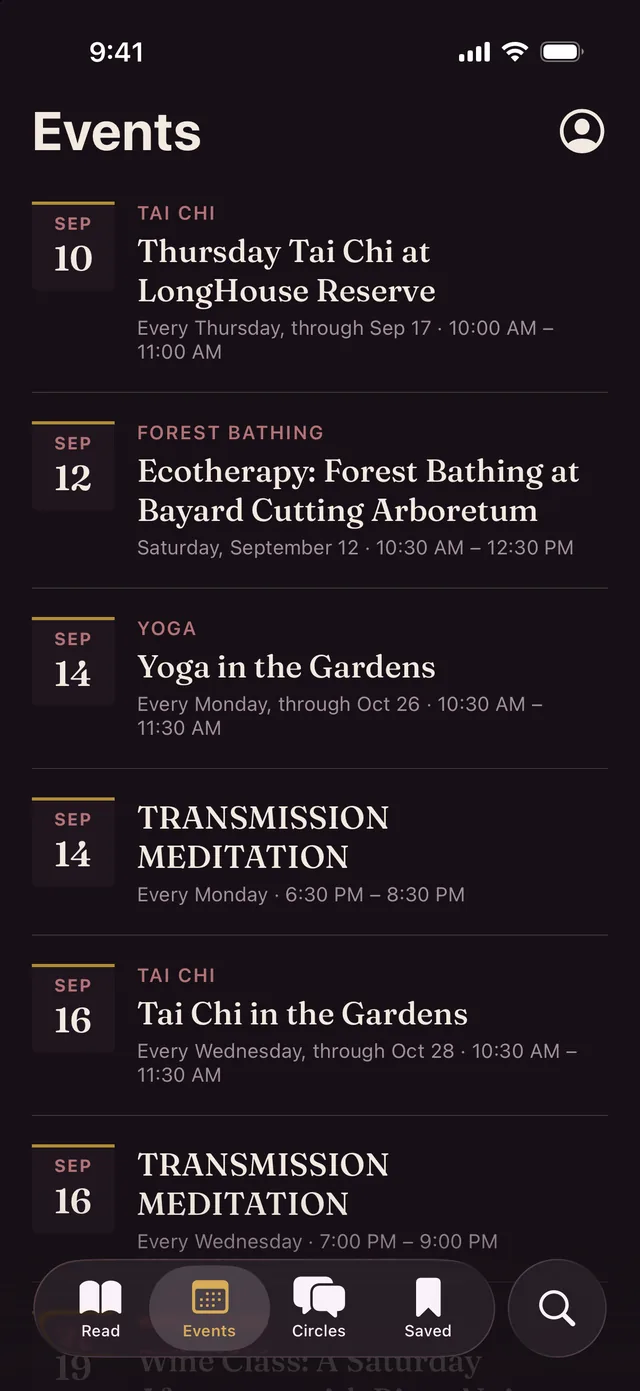
The circles are where readers talk about the writing, and you can join them from the app, with comments on the pieces themselves. The events calendar is laid out by the day: the workshops, gatherings, readings and retreats worth putting in your week, in the places you can actually get to.
“Most of what lives on a phone is designed to keep you moving, and moving is the opposite of reading.”
What it costs, and what it asks of you
Nothing, and almost nothing. The app is free, every piece in it is free, and there is no subscription and no paywall waiting a few articles in. You do not need an account to read: reading, searching and the calendar all work signed out.
If you do want an account, for the circles and for the pieces you save, signing in is a six-digit code sent to your email. There is no password to invent and no password to forget. And if you would like to know when the day’s new writing goes up, your phone can give you one gentle tap, never a barrage, and you can turn it off whenever you like.
Where to get it
On an iPhone or an iPad, it is on the App Store. On an Android phone or tablet, it is on Google Play. It is the same magazine either way. If you would rather see what you are getting first, there is a longer look at it, with the answers to the questions people keep asking, on the app page.
An invitation
Tonight, when the house goes quiet and you reach for your phone out of habit, try opening this instead. Read one piece. Not five, not a scroll, one. See whether you can still remember a sentence of it in the morning.
That is the whole of what we were trying to build. Somewhere on your phone where the reading stays with you.


Loading comments…