
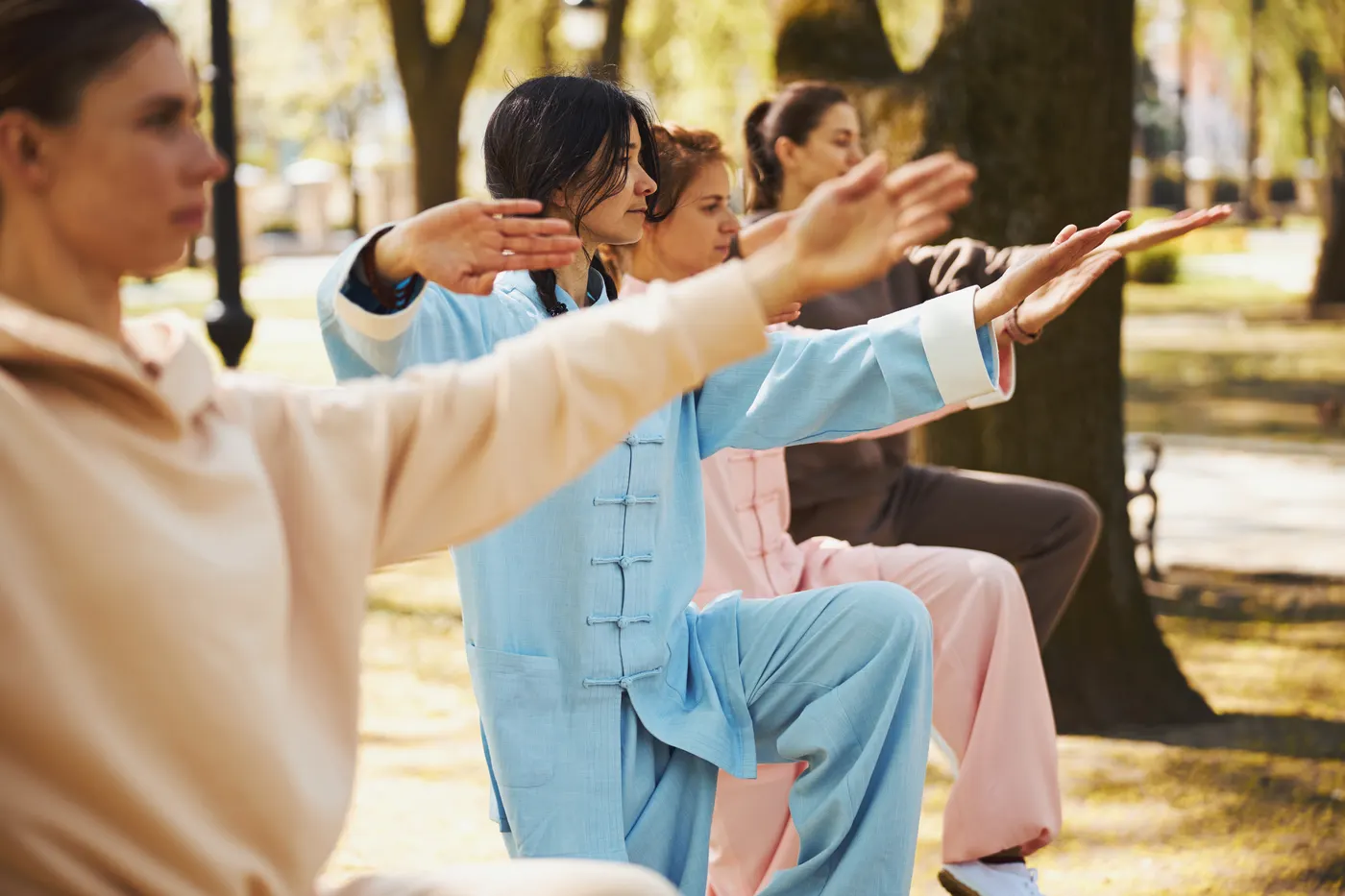
There is a difference between doing a practice in a room and doing it on grass, and anyone who has tried both knows it before they can explain it. The ground is not level. The light moves. A hawk goes over halfway through and the whole class watches it. What is lost in precision is repaid in something harder to name, and on Long Island the window for it closes in about twelve weeks.
What Is Running, and When
The most reliable of the outdoor offerings this season sits on the lawns at Old Westbury Gardens, where two all-levels classes run side by side through the autumn.
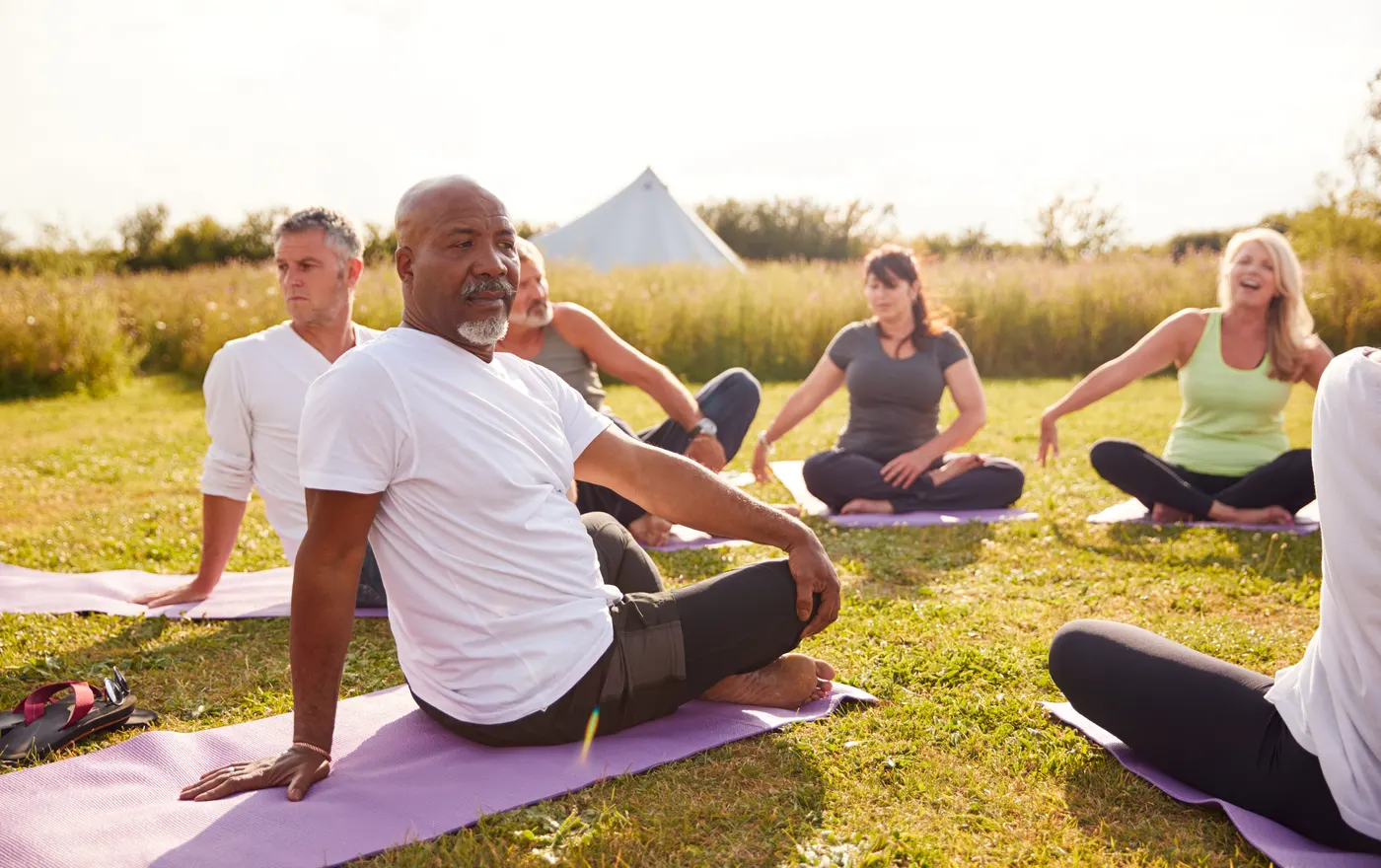
Yoga in the Gardens meets Mondays from 10:30 to 11:30 in the morning and runs through 26 October. It is taught by Marilyn Ashley, a Kripalu-trained yoga educator and E-RYT 500 with more than a decade of full-time teaching behind her, and it is a deliberately gentle class: slow shapes, breath, and stretches of stillness, built for people arriving at the start of a week rather than performing at the end of one.
Tai Chi in the Gardens meets Wednesdays at the same hour and runs through 28 October, taught by Linda Cafiero. Tai chi is often described as a moving meditation, which undersells how much is happening in the legs, and it is designed here for every level of experience including none.
Both are $32 per session, and you can register online or pay at the admission booth on the day, by card. Members of the Gardens pay less, with the larger discount going to those who book online. The address is 71 Old Westbury Road in Old Westbury, and both classes gather on the grounds rather than indoors.
One change worth knowing about for 2026: there is no longer an inclement weather location. If a class is canceled for weather, the Gardens post the announcement on their own website by six o'clock the previous evening. As with any listing, confirm the details with the organizer before you travel.
Why Outdoors Is Not Just a Nicer Backdrop
The case for taking a practice outside got a good deal firmer in 2019, when Mathew White and colleagues published an analysis in Scientific Reports drawing on a nationally representative survey of nearly twenty thousand people in England. They were looking for a dose: how much contact with nature in a week is associated with people reporting good health and high wellbeing.
The answer came out at around 120 minutes. Below that threshold the association was not reliable. At or above it, the likelihood of reporting good health and high wellbeing was significantly greater, and the benefit leveled off somewhere past five hours, so there is no need to move into the woods. Two details make it unusually practical. It did not matter whether the two hours came in one long visit or in several short ones. And it held across age, across long-term illness, and across social groups.
An hour-long class plus the walk in from the parking lot and a slow lap of the grounds afterward puts a serious dent in that weekly figure, without anybody having to schedule nature as a separate project.
The Case for Tai Chi in Particular
Tai chi tends to be filed under gentle, which causes people to underestimate it. The strongest evidence behind it is not about calm at all. It is about not falling over, which is the single event most likely to end an older adult's independence.
In 2018 Fuzhong Li and colleagues published a randomized trial in JAMA Internal Medicine involving 670 adults aged seventy and over, all of them at high risk of falling. Each group did twice-weekly hour-long sessions for twenty-four weeks. A therapeutic tai ji quan program cut falls by 58 percent compared with a stretching program, and by 31 percent compared with a conventional multimodal exercise program of aerobic work, strength and balance training.
That second comparison is the striking one. Tai chi did not merely beat doing very little. It beat the standard, sensible, well-designed exercise intervention, at the specific job of keeping people upright. It is a slow practice with a serious result attached, and it is being taught on a lawn in Old Westbury on Wednesday mornings for the price of a couple of coffees.
Going, Practically
Arrive a few minutes early. Both classes gather on the grounds and finding the spot the first time takes longer than you think. Bring a mat and something to sit on, because dew stays in the grass well into the morning at this time of year, and a light layer for October, when a still hour outdoors is colder than the walk in suggested. Uneven ground is part of the point in both practices, but it does mean shoes matter for tai chi and bare feet on a slope behave differently from bare feet on a studio floor.
If you are new, arrive new. Both instructors teach mixed-ability groups every week and neither class is a place where anyone is watching you.
The Season Is Short
Long Island gets a genuinely good autumn, three or four weeks when the light comes in low and gold across a lawn and the air is finally worth breathing slowly. Both of these series run right through it and then stop until spring. That is worth putting in a calendar now rather than in the second week of November, when the thought of an hour outdoors first becomes something you have to talk yourself into.


Loading comments…