

Somewhere in your past there is a kid of about ten, lying on the floor of a bedroom, completely absorbed. Drawing horses. Sorting rocks. Building a fort, a radio, a city out of cardboard. Reading under the covers with a flashlight long after lights out. Nobody assigned this. Nobody was watching, and no one was paying. That kid had found something, and the strange, useful truth of adult life is that the finding still counts.
The cleanest data you will ever have on yourself
Ask an adult what they love and you get a careful answer, filtered through what pays, what fits the schedule, what sounds reasonable at a dinner party. Ask what they did unprompted at ten and you get something closer to signal. Before adolescence, most of us chose our hours the way water chooses a path: by pure pull. There was no resume to build and no image to manage. What you did with a free Saturday at that age is about the most honest record that exists of what your attention, left alone, wants to do.
That is worth taking seriously, because almost every other instrument for answering the question has a thumb on the scale. Aptitude tests measure what schools value. Career counseling measures what markets value. The ten-year-old on the bedroom floor was running a decade-long experiment with no sponsor, and the results are still on file.
Where it went
Most of those loves did not die of natural causes. They were abandoned at roughly the same age, for roughly the same reason: an audience showed up. Around twelve or thirteen, being seen trying becomes expensive. The kid who drew constantly discovers that someone else in class draws better, and that people compare. The singer gets a look from a sibling. The rock collection becomes, overnight, something to be embarrassed about. Add the great sorting of adolescence, where activities get tagged as talents or not, and the quiet verdict of adulthood, where everything must justify itself as useful, and the floor-time loves go into storage one by one.
Notice what actually happened there. The love did not end. The conditions got hostile. Those are different events, and only one of them is permanent.
Follow the property, not the hobby
Here is where this gets more interesting than simple nostalgia, because the point is not to be ten again, and the instruction is not necessarily to buy colored pencils. A childhood absorption is usually a bundle of properties, and the properties are what carried the pull. The kid who drew horses for three years may have loved drawing, or horses, or more precisely the act of looking hard at a living thing until its structure gave itself up. The fort builder may have loved construction, or enclosure, or the deep satisfaction of a space that did not exist at breakfast and existed by dinner. The rock sorter might have been in it for geology, or for the sorting: the bringing of order, the naming, the completed set.
So the translation question is not what did I do, but what was that made of. An adult who loved maps at ten might find the same current running through genealogy, trail planning, or city zoning meetings. The flashlight reader might be starved not for novels but for the specific pleasure of a world with a door on it. Follow the property and you have options at every scale of money, time and dignity that adult life requires. Follow only the hobby and you are stuck waiting until you can afford a horse.
The inventory
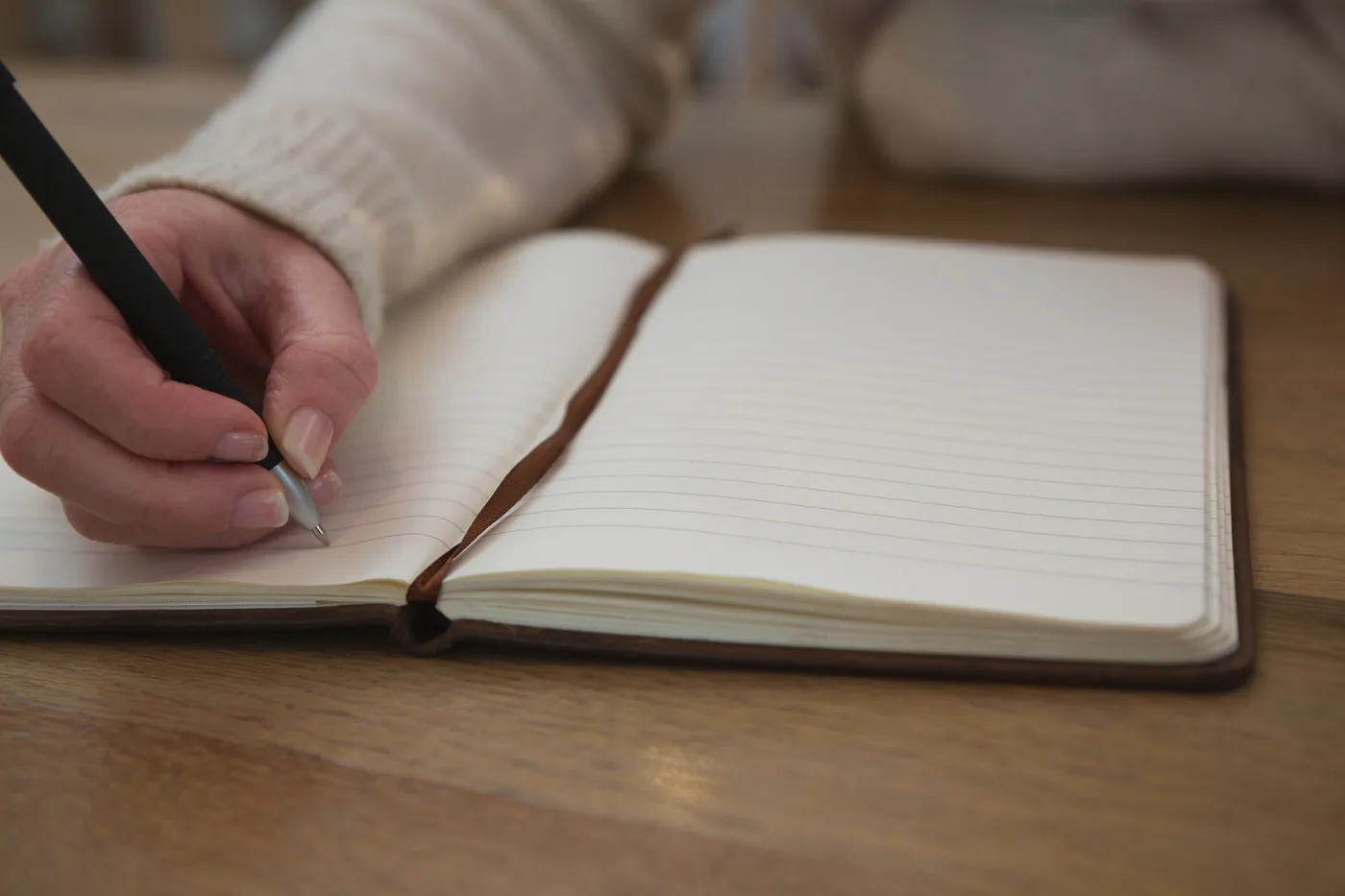
The practice begins with a list, and the list has rules. Sit down for twenty minutes and write out everything you remember doing unprompted before about thirteen. Not what you were good at. Not what won ribbons. What you did when nobody made you, including the odd stuff, especially the odd stuff: the invented languages, the funerals held for insects, the hours spent perfecting a bike skid. Judgment is banned for the duration; you are an archivist here, not a critic.
Then read the list slowly and watch yourself. One or two items will be warmer than the rest. There is often a physical tell, a small rise in the chest, an involuntary half-smile, the impulse to look up and tell somebody about the thing. That is the live wire. You are not choosing the most impressive item or the most practical one. You are choosing the one that still has current in it.
One hour, nobody watching
Then give the live wire one hour this month, under the original conditions: alone, unposted, with no plan to monetize, improve yourself, or tell anyone. This last part is not optional. The audience is what shut these things down the first time, and the audience now lives in your pocket. An hour of watercolor becomes a different activity the moment part of you is composing the caption. Protect the hour the way the ten-year-old would have, behind a closed door, for its own sake.
Expect a particular awkwardness, and let it be fine. You will have an adult's taste and a child's rusty skill, and the gap between them is uncomfortable in a way the ten-year-old never felt, because the ten-year-old was not measuring. The gap is not a verdict. It is just the distance between visits. Adults also bring something back to these reunions that children never had: patience bought with years, and the knowledge of how practice works. The second hour is better than the first. It almost always is.
What people get back
Talk to adults who have done this, the fifty-year-old back in the saddle, the accountant with the soldering iron out again, the grandmother filling sketchbooks, and they rarely describe it as learning something new. The word that comes up is recognizing. Something about the activity fits in the hand like a key cut long ago. And the effects are not confined to the hour: people report that reclaiming one abandoned love loosens the soil generally, that work gets easier to start, that they are somehow more present at their own kitchen table. A life with one purely pointless absorption in it tends to resent the rest of its obligations less.
None of this requires the thing to go anywhere. It is allowed to stay small forever, an hour here and there, a drawer of rocks, a notebook no one sees. Usefulness is what buried it the first time. Do not send it back down the same hole.
Still holding it
Think of it this way. At some point, decades ago, you got called to dinner, or to adolescence, or to adulthood, and you handed the ten-year-old whatever was in your hands and said, hold this, I will be right back.
They are still there. Still holding it. They kept the good Saturdays on file all this time, waiting for you to remember where you left them. You know the way back to that bedroom floor; you have known it all along. Go see what is in their hands.

Loading comments…