
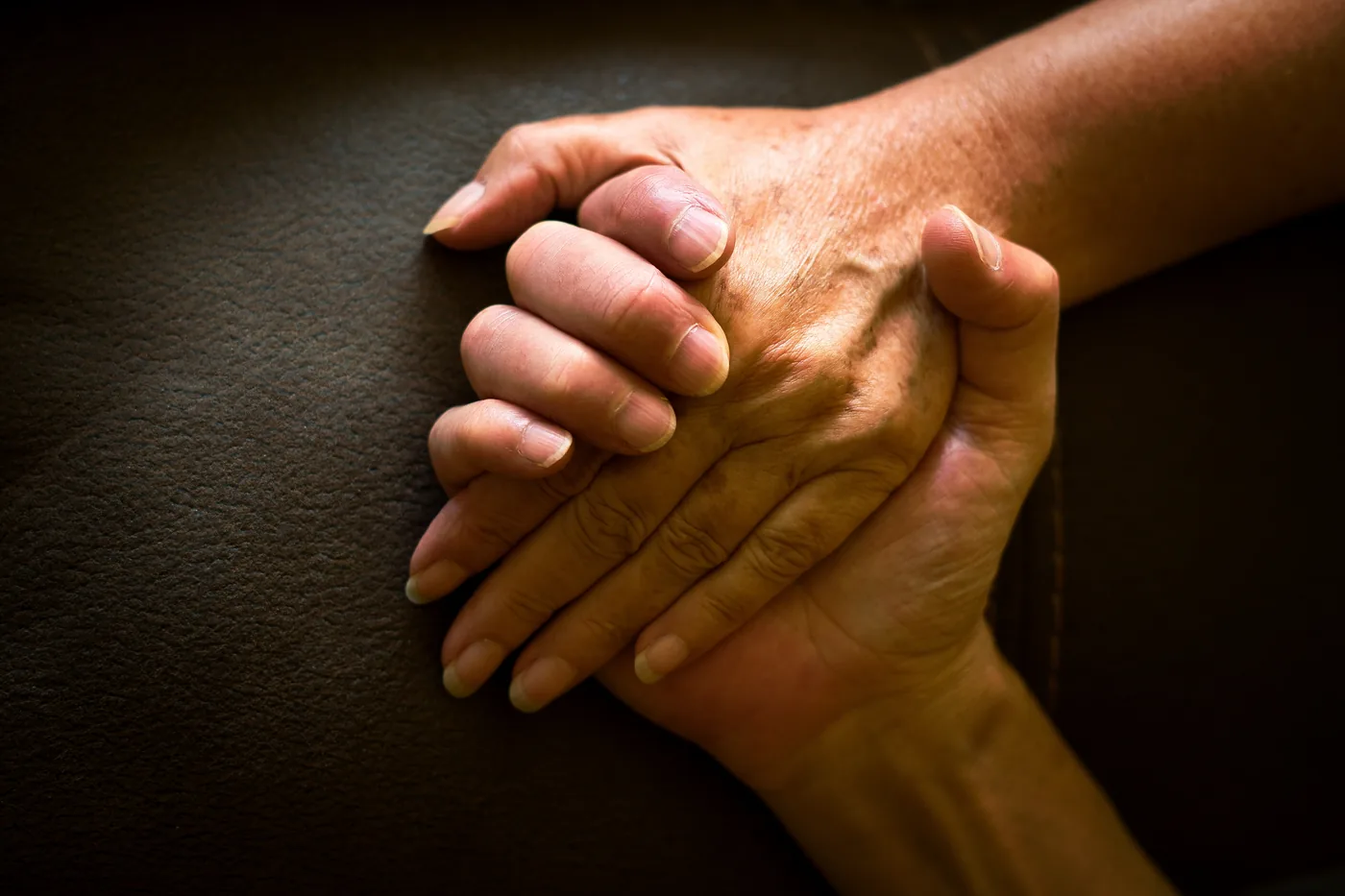
Touch is the first sense to come online. It is working in the womb long before sight, and through the first year of life it is the main channel by which a person learns whether the world is a safe place to be. Then, somewhere in adolescence, most of us begin to ration it. A great many adults now pass an entire week receiving no touch at all that is not accidental, transactional or medical. It is worth asking what exactly is being rationed.
A Nerve That Seems to Exist for Affection
For most of the twentieth century, touch was understood as an information system. Nerve fibers in the skin report pressure, texture, vibration, temperature and pain, and they report fast, because knowing your hand is on a hot pan is time sensitive. Those fibers are insulated for speed.
Then researchers using microneurography, a technique in which a fine electrode is placed directly into a nerve in a waking volunteer, found a population of fibers that did not fit the theory. Hairy skin, which is to say most of the body, also carries slow, uninsulated fibers now known as C-tactile afferents. They are close to useless for the job touch was assumed to do. They cannot tell you much about what is touching you, and they are far too slow to help you react to it.
What they respond to is stroking. Specifically, gentle stroking somewhere between one and ten centimeters per second, at roughly the temperature of human skin. Faster or slower and the firing falls away on both sides, and that curve tracks, closely, how pleasant people report the touch to be. In work by Francis McGlone and colleagues, stroking at three centimeters per second was rated more pleasant than stroking at thirty, and produced a greater slowing of the heart.
The signal does not travel where the fast fibers travel. It arrives in the insular cortex, a region bound up with the sense of one's own internal bodily state, rather than in the map of the body surface. Read plainly, the system does not look as though it was built to tell you what is touching you. It looks as though it was built to tell you that you are being touched at the speed of a caress.
What the Evidence Actually Supports
That is the anatomy. The harder question is whether touch does anything measurable, and here the honest answer took a long time to arrive, because the field was small, the studies were small, and a great deal of the enthusiasm ran ahead of the data.
The clearest picture we have comes from a 2024 systematic review and meta-analysis published in Nature Human Behaviour, which pooled 137 studies covering just under thirteen thousand people. Its finding was neither the miracle nor the debunking. Touch interventions produced moderate benefits, fairly consistently, for pain, for anxiety and for depression, in adults and in children alike.
Two details in it are more interesting than the headline. The first is that people who were already unwell, physically or mentally, benefited more than healthy adults did. Touch appears to matter most precisely where there is the least of it, which is to say in illness, in the hospital, in old age. The second is that the effect did not depend much on who was doing the touching. A partner and a trained stranger both worked. What mattered more was frequency: short, repeated contact did more than one long session, a pattern that will be familiar to anyone who has noticed that a massage every two weeks does less for them than a household where people habitually touch each other in passing.
What It Does Not Support
There is a claim you will meet almost everywhere touch is discussed, which is that massage lowers cortisol by around a third. It traces back to a body of work from a single laboratory, and when other researchers went looking for the effect in the wider literature they found it to be very small and, in most cases, not reliably distinguishable from zero in adults. The same 2024 meta-analysis found a strong cortisol effect in newborns, where the evidence is genuinely good, and much less in everyone else.
This is worth saying plainly rather than quietly dropping, because the overreach is what makes people dismiss the whole subject. Touch does not need a hormone story to justify it. The measured benefits for pain and mood are real, they are moderate, and they hold up. That is a more useful thing to know than a number that does not survive scrutiny.
The Slow Withdrawal
Against that, consider how much less contact an ordinary week now contains. More people live alone than at any point on record. Time use data collected by the Bureau of Labor Statistics shows Americans spending steadily less time in the physical company of other people, with the decline running for two decades before the pandemic accelerated it. Errands that once put you within arm's length of another person are now a doorstep and an app.
None of this was decided. It accumulated. And because touch is the one need almost nobody will name out loud, its absence tends to get reported as something else: restlessness, low mood, a vague sense of being unanchored that no amount of company on a screen resolves.
What This Suggests in Practice
Slow beats brisk. The back-slapping hug that lasts under a second is not what the research is describing. A hug held long enough to become slightly awkward is closer.
Frequency beats duration. If the meta-analysis has one practical message, it is that a household where people touch each other briefly and often is doing more than the monthly appointment.
Paid touch counts. Massage, and to a lesser degree the hairdresser and the barber, are among the few remaining settings in which an adult can receive sustained, unhurried, non-sexual touch without having to ask anyone for it. There is nothing lesser about arriving at it this way.
Animals count, and so does your own hand. A dog on the lap does some of this work, which is not sentimentality but the same fibers firing. Self-touch is weaker but not nothing, and it is available at three in the morning.
Say the thing. The most common reason adults go without is that nobody has a script for asking. Naming it, once, to someone close, does more than any technique on this list.
The Part That Has to Be Said
All of the above holds only where the touch is wanted. The same contact that settles one nervous system will put another on alert, and the difference is not in the hand, it is in whether the person receiving it has any say. For anyone carrying a history of touch that was not chosen, an unexpected hand on the shoulder is not comfort, it is an ambush.
Which makes asking the whole practice rather than an obstacle to it. Not the anxious hovering question, but the ordinary one: is this alright. It costs a sentence and it changes the thing entirely.
We are, in the end, mammals with an unusual amount of exposed skin and a nerve running through it that appears to have no purpose except to register being cared for. It has been there the whole time, doing very little, waiting to be given something to do.



Loading comments…