
Somewhere on your body there is a line that was not there when you were born. A pale seam on a knee from a childhood you half remember, a thin mark on a forearm from a pan that was hotter than it looked, a neat stripe from a surgery that saved you some trouble or saved your life. You stopped noticing it years ago. But the skin there is not the skin around it, and it never will be. A scar is not a flaw in the healing. It is the healing, made visible, and the way the body builds one has something to say about every kind of recovery you will ever attempt.
Four Seasons of a Wound
The repair of skin is not one process but a relay of them, and the order almost never varies. In the first minutes after a wound, the body's only concern is stopping the loss. Blood vessels clamp down, platelets pile into the breach, and a mesh of protein knits over the opening. This is the stage you can watch happen, and it is finished within hours.
Then comes inflammation, which has a bad reputation it does not deserve. For a few days the site is red, warm, swollen and tender, and every one of those signals is the sign of work being done. Immune cells arrive to clear out bacteria and debris, dismantling anything that cannot be part of the rebuild. A wound that never inflamed would never heal. The discomfort of this stage is not the injury lingering. It is the cleanup crew on site.
The third stage is construction. Over the following weeks, cells called fibroblasts move in and begin laying down collagen, the rope-like protein that gives skin its strength. New blood vessels branch into the area to feed the effort. Fresh skin cells creep in from the edges. The wound closes, and to a casual eye the job looks done.
It is not close to done. The last stage, remodeling, is the longest and the least visible, and it is the one almost nobody waits for. The collagen laid down in the emergency was thrown up quickly and in a hurry, thick and disorganized, like a wall built during a storm. For months, and often for a year or two, the body takes that wall apart strand by strand and rebuilds it with stronger, better-aligned material. This is why a new scar is raised, red and angry, and an old one is flat, pale and quiet. The difference between them is not time passing. It is work, ongoing, that you cannot see.
Not Restoration, Reconstruction
Here is the part worth sitting with. The body does not restore wounded skin to what it was. Scar tissue is a different material. It has no hair follicles, no sweat glands, and its collagen lies in dense parallel bundles rather than the basketweave of uninjured skin. Even fully matured, it reaches only a large fraction of the original strength, never all of it. The body, which can do so many extravagant things, does not run the clock backward. It builds something new that holds.
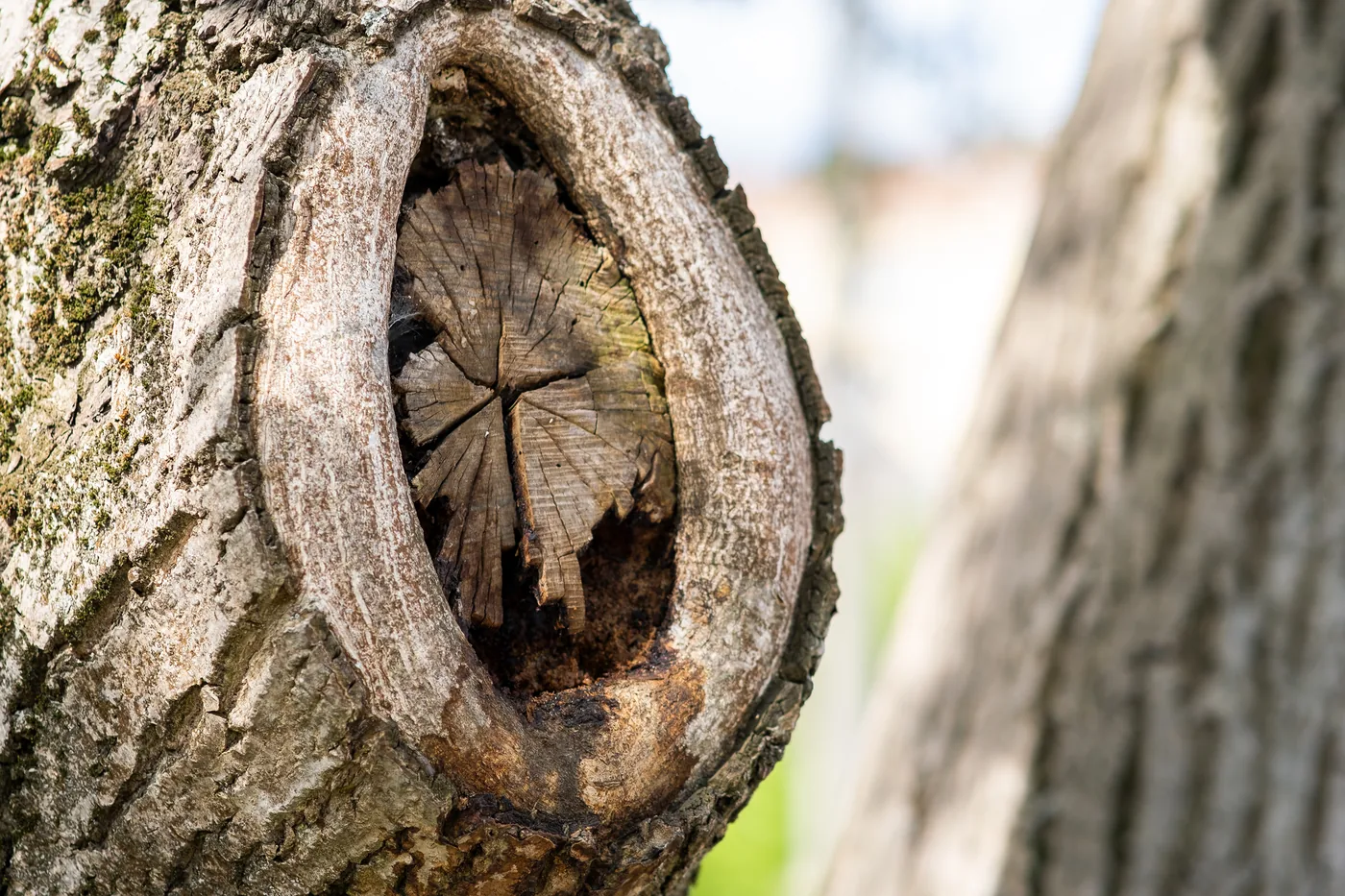
Trees do a version of the same thing. A tree cannot replace damaged wood, so it does not try. It walls the injury off, grows new wood around it, and carries the sealed-over wound inside its trunk for the rest of its life. The limb scar on an oak is not a failure to heal. It is the tree's answer, and the tree is still standing.
We tend to talk about recovery, from injury and from everything else, as a return trip. Getting back to normal. Back on your feet, back to your old self. The body has never once worked that way. What it does instead is more honest: it closes the breach fast with whatever it has, then spends a long, unglamorous season replacing the emergency version with something built to last. The mended place is different from the original. Different is not the same as worse.
What Care Actually Does
None of this means healing goes well on its own regardless of what you do. It means the helping is humbler than we imagine. You cannot instruct a fibroblast. What you can do is keep the conditions right and stay out of the way.
For skin, the conditions are mostly known and mostly simple. A healing wound wants to be clean and slightly moist, not scrubbed and not sealed off from care entirely. A new scar wants protection from the sun, because young scar tissue darkens easily and can hold that darkness for a long time. Many people find that once a wound has fully closed, gently massaging the area seems to help the scar soften and flatten as it matures, and clinicians often suggest it. And every stage wants the boring fundamentals: sleep, protein, patience. The construction crew works the night shift, and it builds with what you eat.
What a wound does not want is interference dressed up as attention. Picking at a scab reopens the site and restarts the clock. Checking constantly, prodding, worrying the edges: none of it speeds anything. The most useful thing you can offer a healing process, once the conditions are set, is to leave it alone and let the slow work run.
A caveat that matters: this is the ordinary story of ordinary wounds. A wound that will not close, keeps reopening, spreads redness, or simply worries you is a reason to see a clinician, not to wait it out, and nothing here is a substitute for that visit. People living with diabetes or circulation trouble know that healing can need real help. Knowing how the process works is not the same as managing it alone.
The Remodeling Year
The stage worth carrying out of this piece is the last one. Remodeling is the season with no visible drama, no milestones, nothing to report. The wound is closed. Everyone, including you, has moved on. And underneath the quiet, the body is still revising, still swapping rushed material for durable material, still strengthening a place that already looks finished.
It is hard not to hear the wider echo. Anyone who has come through a hard year knows the difference between a wound that has closed and a wound that has healed. The closing happens in public and gets acknowledged. The remodeling happens in private, long after the casseroles stop arriving, and it is the part that determines what the mended place will be like to live in. The body's schedule suggests we routinely underestimate that second season by an order of magnitude. We allot weeks to what takes a year, then wonder why the place still aches.
So find that old scar again, the one on your knee or your arm or wherever your history happens to be written. It is pale and soft now, and it did not get that way in the weeks you spent watching it. It got that way in the year or two you spent not watching, while something patient in you kept working without being asked. The next time some part of your life closes over and you catch yourself wondering why it does not yet feel finished, remember what the skin knows: closed is the end of the emergency. It is only the beginning of the healing.



Loading comments…