
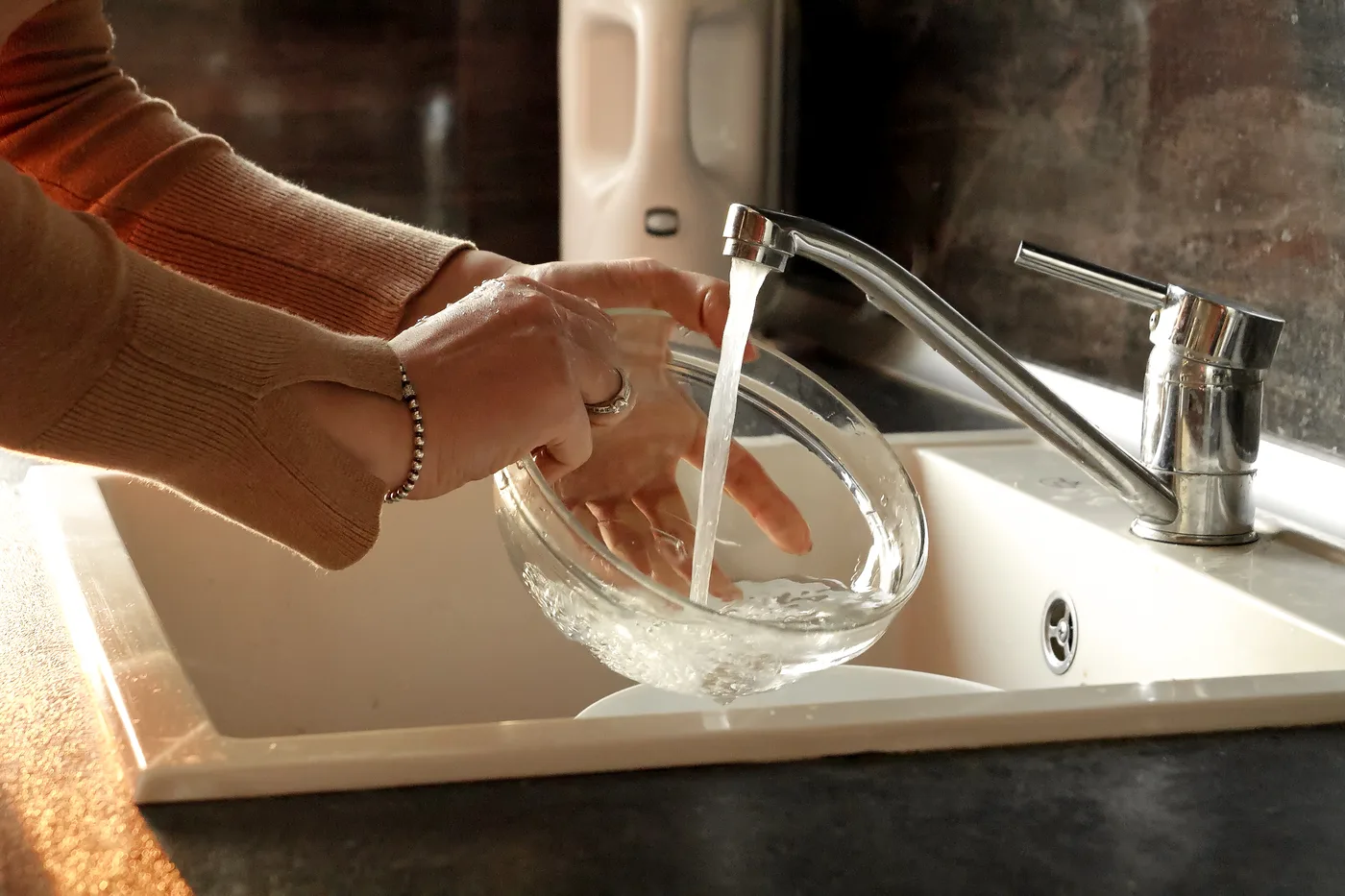
The water runs warm over your wrists. A glass comes up out of the suds, squeaks once under your thumb, and goes into the rack. Then a fork, then another. Behind you the evening goes on, a voice in the next room, a car passing outside, and in front of you there is only the sink, the steady sound of the tap, and the next thing in your hand. You have done this a thousand times while thinking about something else. Tonight you could do it while thinking about this.
The chore that is already a practice
Most of us treat the dishes as the toll at the end of a meal, something to get through as quickly as possible, preferably with a podcast in one ear. That is a reasonable way to handle a chore. It is also a missed opportunity, because washing dishes by hand happens to have almost every quality a meditation teacher would design into a practice if one were starting from scratch.
It has a clear beginning and a clear end. It occupies the hands completely and the thinking mind hardly at all. It is full of sensation: heat, weight, slipperiness, the sound of water, the smell of soap, the small resistance of dried food giving way. It repeats, so attention has somewhere to return to every few seconds. And it is already on your schedule. You do not have to find twenty minutes for it. The twenty minutes are sitting in the sink.
The idea is not new. In Zen monasteries, kitchen work has long been treated as part of the practice rather than a break from it, and the monk who cooks and cleans is given real standing, not handed a lesser job. The point was never that scrubbing a pot is holy. It was that attention does not need a cushion or a special room. It needs something real to rest on, and a sink full of dishes is very real.
There is even a little modern evidence for it. In a small study at Florida State University, published in 2015, people who were given a short passage on paying attention to the sensations of washing dishes, and then washed dishes, reported feeling less nervous and more inspired afterward than people who simply washed them. It was one modest study, not a proof of anything, but it points the same way centuries of practice do.
How to do it
You do not need to change much. The practice is in what you leave out.
Take out the soundtrack. No podcast, no phone propped against the backsplash, no television in the next room turned up so you can follow it. This is the one real change, and it is the one people resist most. Try it once and see.
Clear a space first. Scrape the plates, stack them by the sink, empty the rack. A cluttered counter makes the work feel endless. A clear one gives it a shape.
Feel the water before you start. Fill the basin or run the tap and put your hands in before you pick anything up. Notice the temperature. Notice whether your shoulders have crept up toward your ears, and let them drop.
Work in an order. The traditional sequence runs from the cleanest things to the dirtiest: glasses first, then silverware, then plates and bowls, and the pots and pans last. It keeps the water clean longer, and it gives the work a natural progression to follow, which helps the mind settle into it.
One thing at a time. Pick up a single object. Wash it as though it is the only thing in the sink. Rinse it, place it in the rack, and only then reach for the next. Feel the curve of the bowl, the tines of the fork, the weight of the pan. This is the whole instruction, and it is harder than it sounds.
Finish the job. Wipe down the sink and the counter. Wring out the cloth and hang it up. The ending matters. A practice that trails off leaves no mark; one that closes deliberately lets you feel that something was completed.
What to expect
Within about a minute, your mind will leave. You will be rehearsing a conversation from work, planning tomorrow, composing a message you have not sent. This is not failure. It is the practice. The moment you notice you are somewhere else, come back to whatever is in your hands: the heat, the soap, the shape of the cup. Every return is a repetition, the same way a lift at the gym is a repetition.
You will also notice the urge to hurry. It shows up as a tightness, a sense that this is in the way of something better. Watch it without obeying it. Very often the thing waiting on the other side of the dishes is the couch and a screen, which will still be there in ten minutes.
Some nights it will feel like nothing. The dishes will just be dishes. That is fine too. A practice is not a performance, and it is not supposed to produce a feeling on demand.
Other nights, something softens. The work slows down without taking any longer. The kitchen goes quiet in a way that has nothing to do with the noise in it. You find that you have been somewhere specific for ten minutes, which is a rare enough thing in an ordinary day that people tend to remember it.
If you have a dishwasher
Most households do, and nobody needs to give it up. Choose the things that do not go in it: the good knife, the wooden spoon, the roasting pan, the wine glasses. Or choose one meal a day, or one evening a week, when you wash by hand on purpose. A practice does not need to cover everything to count. It needs to happen regularly enough that you begin to recognize the place it takes you.
If you live with other people, you might find that the sink becomes a place to stand side by side, one washing and one drying, without much need to talk. That is its own kind of practice, and an old one.
The bowl in your hands
There is no shortage of advice about finding time for stillness. Most of it asks you to add something to a day that is already full. This asks you to subtract something from a task you were already going to do: the noise you brought with you to make it bearable.
Tonight, after dinner, run the water warm and pick up one bowl. Wash it as though it were the only one. Then pick up the next.
Loading comments…