
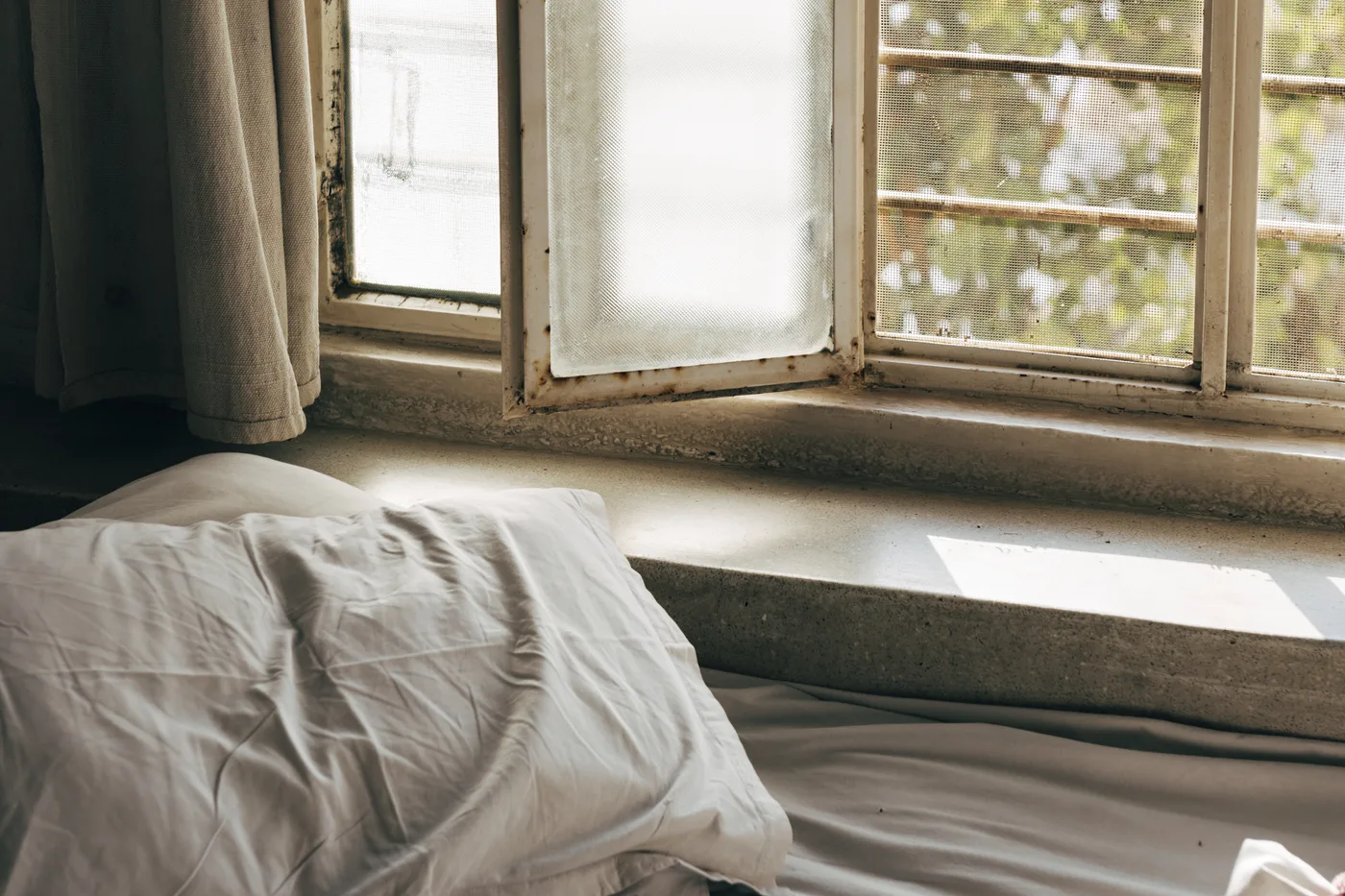
Everyone knows the cool side of the pillow. You have flipped it a thousand times without ever being taught to, in the dark, half asleep, following an instinct so reliable it feels like appetite. Nobody flips to the warm side. And in that small, universal preference sits nearly everything science knows about how sleep actually begins: it does not arrive on a schedule or a wish, it arrives on a falling temperature. The body cools itself into sleep the way a house settles in the evening, and most of what genuinely helps at night, the cool room, the warm bath, the foot that finds its way out from under the blanket, helps for the same unglamorous reason. It lets the heat leave.
The Nightly Descent
Your core temperature is not a constant. It runs a quiet daily circuit, warmest in the early evening and lowest in the small hours before dawn, and the whole descent spans roughly a degree Celsius, about two degrees Fahrenheit. That sounds like nothing. Internally it is a season, and the body treats it as one.
Sleep does not wait for the bottom of the curve. It tends to arrive on the way down, on the steep part of the slope, when the body is shedding warmth fastest. The drowsiness that lands in the late evening is not merely the day catching up with you; it is partly the descent itself, the nervous system reading the falling temperature as permission. The hormone melatonin, the body's own signal of biological night, rises alongside the same decline, the two moving together like dusk and cooling air.
Which reframes the common miserable experience of lying awake feeling hot. That is not a detail of your discomfort. It is often the whole problem. A body that cannot lose heat is a body being asked to fall asleep against its own physics.
Where the Heat Actually Goes
Here is the strange part: the exits are the hands and the feet. The skin there is dense with small blood vessels built for exactly this, and when bedtime approaches, those vessels widen and the warm blood of the core is routed outward, through the palms and the soles, into the room. Warm hands and feet at night are not a sign of overheating. They are radiators doing their work, the visible half of an invisible cooling.
This is why cold feet keep people awake. Constricted vessels in a cold foot are a closed exit, and the core heat has nowhere to go. Researchers noticed long ago that warm feet at bedtime track with falling asleep sooner, and the old habit of bed socks turns out to be an engineering solution: warm the feet, the vessels open, the heat leaves, and the core does its descent. The sock is not warming you to sleep. It is opening the drain.
The same logic runs the other way in August. A foot slid out from under the blanket is not restlessness; it is the body deploying its best radiator into the open air. Let it stay out.
The Warm Bath Paradox
The advice sounds backward: to cool down for sleep, take a warm bath. But the sequence makes sense once you know where the exits are. Warm water an hour or two before bed pulls blood to the skin, opens the vessels of the hands and feet wide, and when you step out, all that opened plumbing keeps releasing heat into the cooler air. The bath does not heat you up so much as it props the doors open, and the descent that follows is steeper than the one your body would have managed alone.
The pooled research on this is modest and consistent: a warm bath or shower, somewhere in the last hour or two before bed, is associated with falling asleep faster, on average by around ten minutes, and with people reporting somewhat better sleep. Ten minutes is not a miracle, and it is not promised to anyone. But it is a real number attached to a pleasant habit that costs nothing, and it points at the mechanism rather than at magic. Timing matters more than duration; even a short warm shower counts. A hot bath taken right at the moment of lying down, by contrast, can leave you on the wrong side of the curve, still warming when you want to be cooling.
The Room Does Half the Work
All of this shedding needs somewhere for the heat to go, which is why the bedroom itself matters more than most of what is sold as sleep hygiene. A room in the mid-sixties Fahrenheit, cooler than most people keep the rest of the house, gives the body a gradient to work with. Warmer than that, and the descent flattens; the body is trying to radiate into air nearly as warm as the skin.
The old pattern of a cool room and warm bedding is the right one, and it beats a warm room with light bedding, because bedding is adjustable in the night and air mostly is not. Layers you can shed let the body fine-tune all night long, which it does, constantly, without waking you, unless the adjustments run out of range. An open window in the cooler months, a fan moving air in the warm ones, the winter duvet actually put away in June: none of it is sophisticated. It is all the same single idea, keep the gradient open.
Working With the Descent
Give the evening a downhill shape. Bright light, hard exercise and heavy meals all sit on the warm side of the day; leave them there, finishing vigorous exercise a few hours before bed where you can. The last hour wants to be dim and unhurried, because the descent is partly a signal chain and light interrupts it.
Use the warm shower an hour or two out. Not as a promise, as an assist. Warm water, then cooler air, then bed. If evenings leave no room, even washing the feet in warm water aims at the same vessels.
Solve cold feet directly. Socks to bed, or a hot water bottle at the foot of the bed, particularly in the cold months and particularly if your feet run cold. Take the socks off if you wake warm; the job is done.
Cool the room, not the person. Aim for the mid-sixties if you can get there, and get the gradient however your house allows: the window, the fan, the lighter duvet. Then let hands and feet do their work outside the covers when they want to.
And know what this is not. Temperature is one lever, a real one, but sleeplessness that persists for weeks, or night sweats that arrive uninvited and often, are conversations for a clinician, not a thermostat. Nothing here is a substitute for that visit.
The Cool Side
The body has been running this descent every night of your life, unthanked, adjusting the blood flow to your hands while you dream. You do not have to manage it. You only have to stop working against it, and maybe hold the doors open on the nights it struggles. The pillow flip was never trivial. It was the body, as usual, knowing exactly what it needed, and reaching for the cooler air the way a sleeper reaches for morning.


Loading comments…