
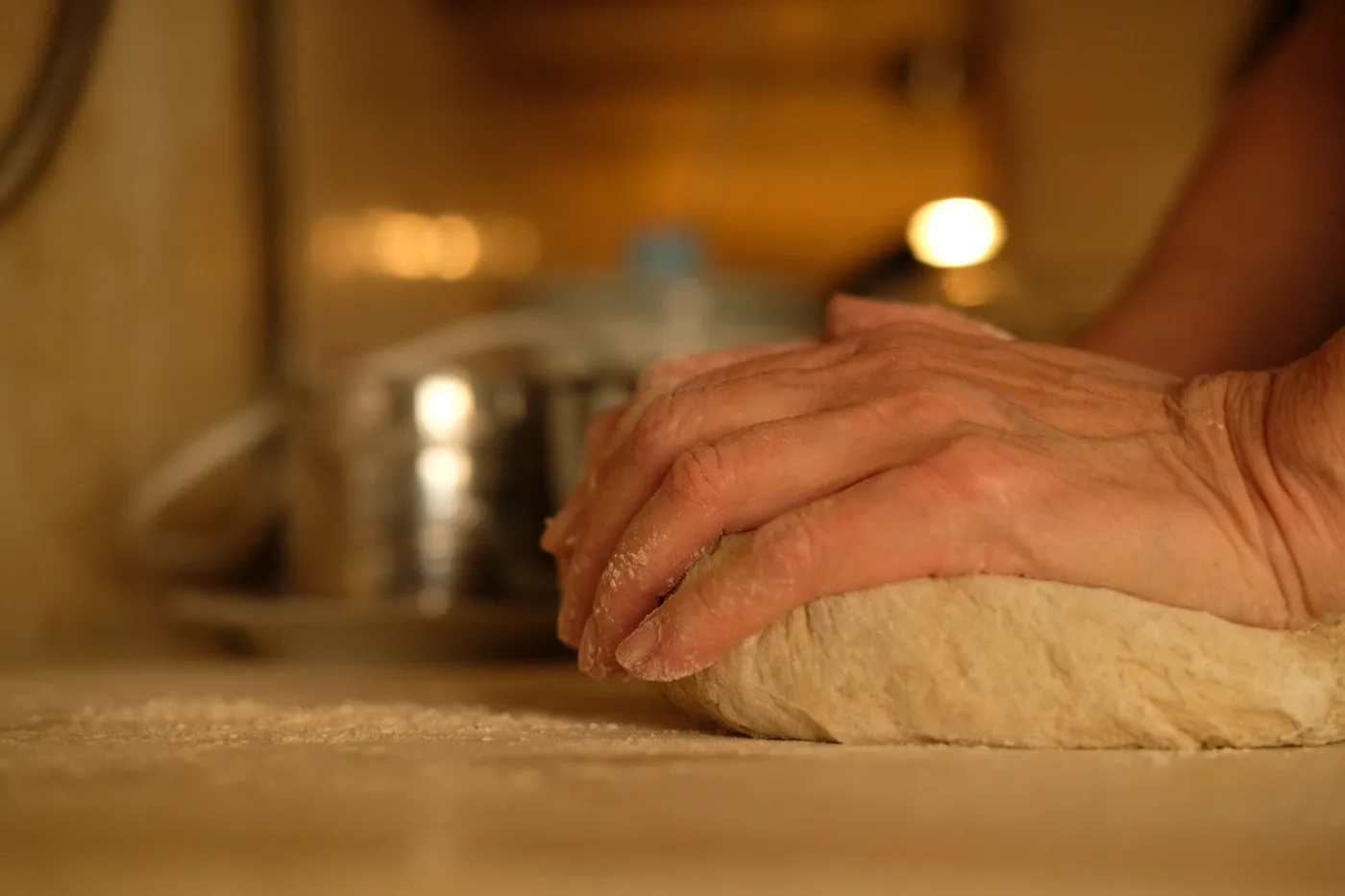
The first loaf is an event. You clear the counter, you read the recipe twice, you watch the dough the way you would watch a sleeping baby, and when it comes out of the oven you photograph it, because you made bread. Then, for most of us, that is the end of the story. The starter goes quiet in the back of the refrigerator, the recipe closes, and the next project begins. Which is a shame, because the first making of anything is mostly noise. The learning was waiting in the second one, and the second one is the loaf almost nobody bakes.
Why we stop at one
There is a quiet rule running under most adult making, and it says that repeating yourself is a failure of imagination. New project, new recipe, new pattern, new trail. Novelty feels like growth, and finishing feels like an ending, so the natural rhythm becomes one attempt per thing, forever. A knitter with nine different half-finished patterns. A cook with two hundred recipes tried once. A notebook of first drafts with no second drafts behind them.
Part of this is temperament, but most of it is a misunderstanding about where the learning actually sits. We treat the first attempt as the lesson and the second as a rerun. It is closer to the opposite. The first attempt is the price of admission. The second is the class.
What the first time is really like
Think about what you were actually doing the first time you made the thing. You were following. Your attention was spent on the mechanics: which step comes next, what the dough is supposed to feel like, whether that smell is normal. Every decision arrived under load, and most of them were not decisions at all. They were guesses, or they were the recipe talking, or they were accidents that happened to work.
That is not a flaw in you. It is what first attempts are. Attention is a narrow channel, and when the whole procedure is unfamiliar, the procedure takes all of it. There is nothing left over for noticing, and noticing is the part that makes you better.
This is also why you can finish a first attempt and have almost no idea why it turned out the way it did. The loaf was dense, or the sweater sleeve was tight, or the paragraph went flat in the middle, and you cannot say which of your forty small choices did it. One attempt gives you an outcome. It does not give you a reading. A single data point cannot be interpreted, in bread or in anything else.
What the second time frees
The second making is a different experience in the body, and you feel it within minutes. The steps have lost their strangeness, so they stop demanding your whole mind. Your hands carry more of the mechanics, and your attention climbs a level. Now you are not asking what comes next. You are watching what is happening.
And what you notice, almost immediately, is which of your first-time choices were real and which were accidents. The second time through, the fork in the road is visible as a fork. Last time you added the water all at once because the recipe seemed to say so. This time you feel the dough asking for it slowly. Last time the paragraph ended where it ended because you were tired. This time you can see it wanted one more sentence.
This is what craft is, at its root. Not talent, and not even practice in the vague sense of hours logged. Craft is the accumulated difference between first attempts and second attempts, noticed and kept. The potter who seems to improvise is drawing on a thousand second times.
The comparison matters as much as the freed attention. Two makings give you something one cannot: a pair. Same recipe, same oven, same hands, one week apart. Whatever differs between the loaves came from the few things you changed, or from the variability you did not know was there. Either way, you have learned something true about the thing you are making, and you learned it from yourself, not from the recipe's author.
How to do it this week
Pick one thing you made recently and liked well enough, and make it again within the week, while the first making is still fresh in your hands. The closeness matters. A second attempt six months later is really a new first attempt.
Change one thing at most. The temptation on a second pass is to fix everything you half-noticed the first time, and if you do, you are back to uninterpretable results. One change, or none. Making it again with no changes at all is its own education, because the thing will still come out different, and the difference will show you how much of the first result was luck.
Keep the first one in view if you can. Save the first photograph next to the second. Keep the first draft in the drawer and read it after the rewrite. The pair is the lesson, and memory alone is a poor place to store half of it.
And lower the stakes on purpose. The second making should feel lighter than the first, not heavier. You are not trying to beat your previous attempt. You are trying to see it. Some second loaves come out worse, and that is not a verdict. It is information about what the first one owed to chance, which is something you genuinely could not have known any other way.
Where it goes from there
The second making has a way of asking for a third, and the third is where something shifts. By then the procedure is nearly silent in your hands, and your changes start to be preferences rather than corrections. A little less sugar, because you like it less sweet. A longer rise, because you like the sour. The thing starts bending toward you.
This is the part novelty can never deliver. A hundred different recipes tried once will make you experienced in a thin way, familiar with many procedures and fluent in none. Three loaves of the same bread will teach you what dough is. The deep version of any craft is narrow before it is wide, and the narrowness is not a sacrifice. It is where the pleasure concentrates.
None of this is confined to the kitchen. The same shift waits inside a garden bed planted the same way two springs running, a song learned past the point of first performance, a walk repeated until you start seeing what changed rather than what is there. Make it again is a portable instruction. It works on nearly anything that can be made more than once.
The first loaf belongs to the recipe. You followed, and following was right, and what came out of the oven was the recipe's bread, baked by your hands. The second loaf is the first one that belongs to you. Bake that one too.



Loading comments…