
Watch what your body does in the minute before something hard. Before the difficult phone call, before you open the email you have been avoiding, before you walk into the room where the conversation is going to happen, you sigh. Nobody taught you this. You did it as an infant, you do it in your sleep, and you will do it today, probably within the hour, without noticing. The sigh is the body reaching for a lever it has always known how to pull: a long breath out. The rest of this piece is about that lever, because it turns out to be the one control on your own nervous system that you can operate directly, on purpose, any time you like.
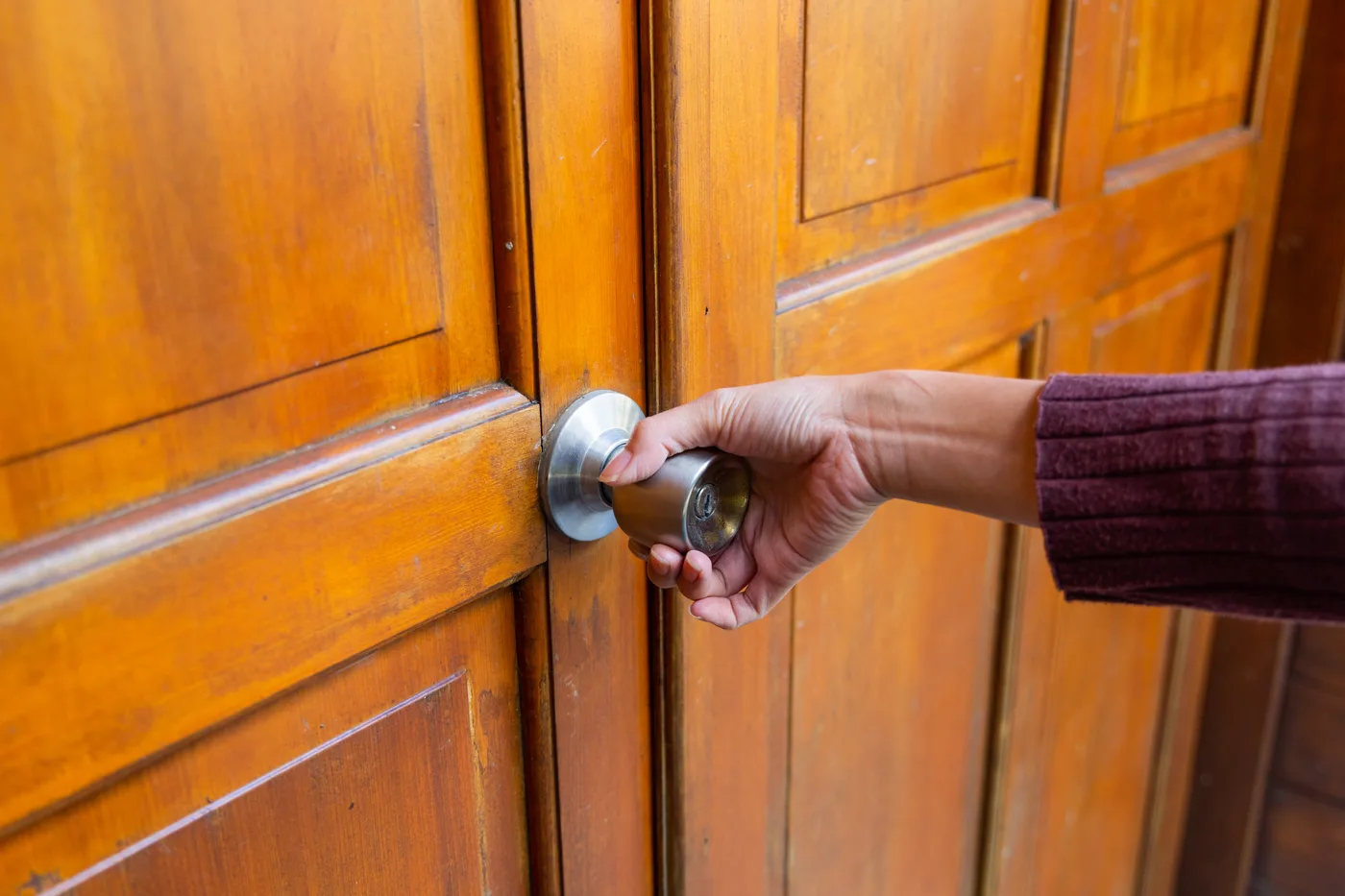
The one door with a handle on your side
Most of what your autonomic nervous system does, it does without consulting you. You cannot decide to lower your heart rate the way you decide to lower your voice. You cannot instruct your blood pressure, your digestion, or the sweat response that arrives ahead of a hard conversation. These systems run in the background, tilting between two modes: the sympathetic side, which mobilizes you for effort, and the parasympathetic side, which settles you for rest and repair.
Breathing is the exception. It runs automatically all night, and yet you can take the controls whenever you want. That dual citizenship is what makes the breath interesting. It is not that breathing is mystical. It is that breathing is the one autonomic process with a handle on your side of the door, and through it you can reach the others.
Here is the mechanism, and it is worth knowing precisely. When you inhale, your heart rate rises slightly. When you exhale, it eases back down. This rhythm has a name, respiratory sinus arrhythmia, and it is not a malfunction; it is a sign of a responsive, healthy system. On the exhale, the vagus nerve, the main channel of the parasympathetic side, leans on the heart's pacemaker and slows it. Every breath out is a small application of the brake.
Which means the arithmetic is almost embarrassingly simple. If the brake engages on the exhale, then a breath with a longer exhale spends more of its cycle braking. You are not visualizing calm or talking yourself into it. You are spending more seconds per minute with the settling half of your nervous system engaged.
Why the sigh is the body's own version
The spontaneous sigh, the one you take before the hard thing, is the body running this program on its own. Researchers who study breathing have paid particular attention to a pattern sometimes called the physiological sigh: a deep inhale through the nose, a second short inhale stacked on top of it, and then a long, slow exhale through the mouth. The double inhale pops open the small air sacs in the lungs that collapse slightly during shallow breathing, which lets the long exhale that follows move more air and carbon dioxide out. You have felt this exact sequence arrive on its own after crying, which is the body tidying up after a storm.
This pattern has been studied deliberately as well. In 2023, researchers at Stanford compared several brief daily breathing practices with an equal amount of mindfulness meditation, a few minutes a day over a month. The exhale-emphasized breathing was associated with improved mood and a slower resting breath rate, and it performed at least as well as the meditation it was compared against. That is one study, with the usual caveats, and it did not promise anyone a transformed life. But it points at something practitioners of slow breathing have reported for a long time: the exhale is where the settling happens, and a few minutes of it is enough to feel.
The practice, in its entirety
There is no app to download and no posture to learn. The whole practice is this: for a few breaths, make the exhale longer than the inhale.
If counting helps, breathe in through the nose for a count of about four, and out for a count of about six. The numbers are not sacred. What matters is only the ratio: out longer than in. If counting feels fussy, use the sigh instead: one full inhale through the nose, a second small sip of air on top, then a long exhale through the mouth, the way you would fog a window slowly. Two or three of those. That is the entire technique.
A few notes from people who do this regularly. Keep it gentle. This is not a deep-breathing exercise in the huffing sense, and forcing big breaths can leave you lightheaded; if it does, stop and breathe normally, and make the next attempt smaller. Breathe in through the nose, which slows and warms the air. And do not try to relax. Relaxing is not a task you can perform. Lengthen the exhale and let whatever happens happen. The point of knowing the mechanism is that you can stop supervising the outcome.
Where it fits in an actual day
The mistake is to save this for emergencies, or to schedule it like a workout. Its real home is the seams of the day, the thirty-second gaps you already have and currently spend bracing.
In the car, parked, before you go in: three long exhales before you open the door, whether the building holds your job, your parent, or a waiting room. On hold, instead of composing the complaint. At the red light. In the elevator. Standing at the kitchen counter at 9 p.m. when the day is done but your body has not received the memo. And at 3 a.m., when you surface and the mind starts its inventory: a long exhale is something to do that is not thinking, and the body tends to follow it back down.
It also belongs just before speaking in the moments that matter. A longer exhale before you answer gives you the pause you always wish you had taken, and it delivers you into the sentence slightly slower than the provocation that prompted it. People who negotiate, perform, or parent teenagers tend to discover this independently.
What to expect, honestly
Not a switch. The exhale does not delete stress, and three slow breaths will not make bad news good. What people generally notice is a small downshift: shoulders that drop a centimeter, a jaw that unclenches, a beat of space between the feeling and the reaction. The effect is modest and reliable, which is a better combination than dramatic and occasional.
It is also not a treatment. If anxiety is running your days, waking you regularly, or narrowing your life, that deserves a clinician, not a breathing pattern, and nothing here is a substitute for one. Slow breathing is a floor lamp, not the wiring. But most of us are not in that territory most of the time. We are simply carrying a nervous system that spends the day being mobilized by small alarms, with no instructions for the return trip.
You take somewhere around twenty thousand breaths a day. Each one already ends with the brake lightly applied; you are settling yourself constantly, invisibly, for free. The practice is only this: a few times a day, on purpose, let the ending run long. The body has been demonstrating the technique your whole life, every time you sighed. It was never a symptom. It was a lesson, offered patiently, until you noticed.
Loading comments…