
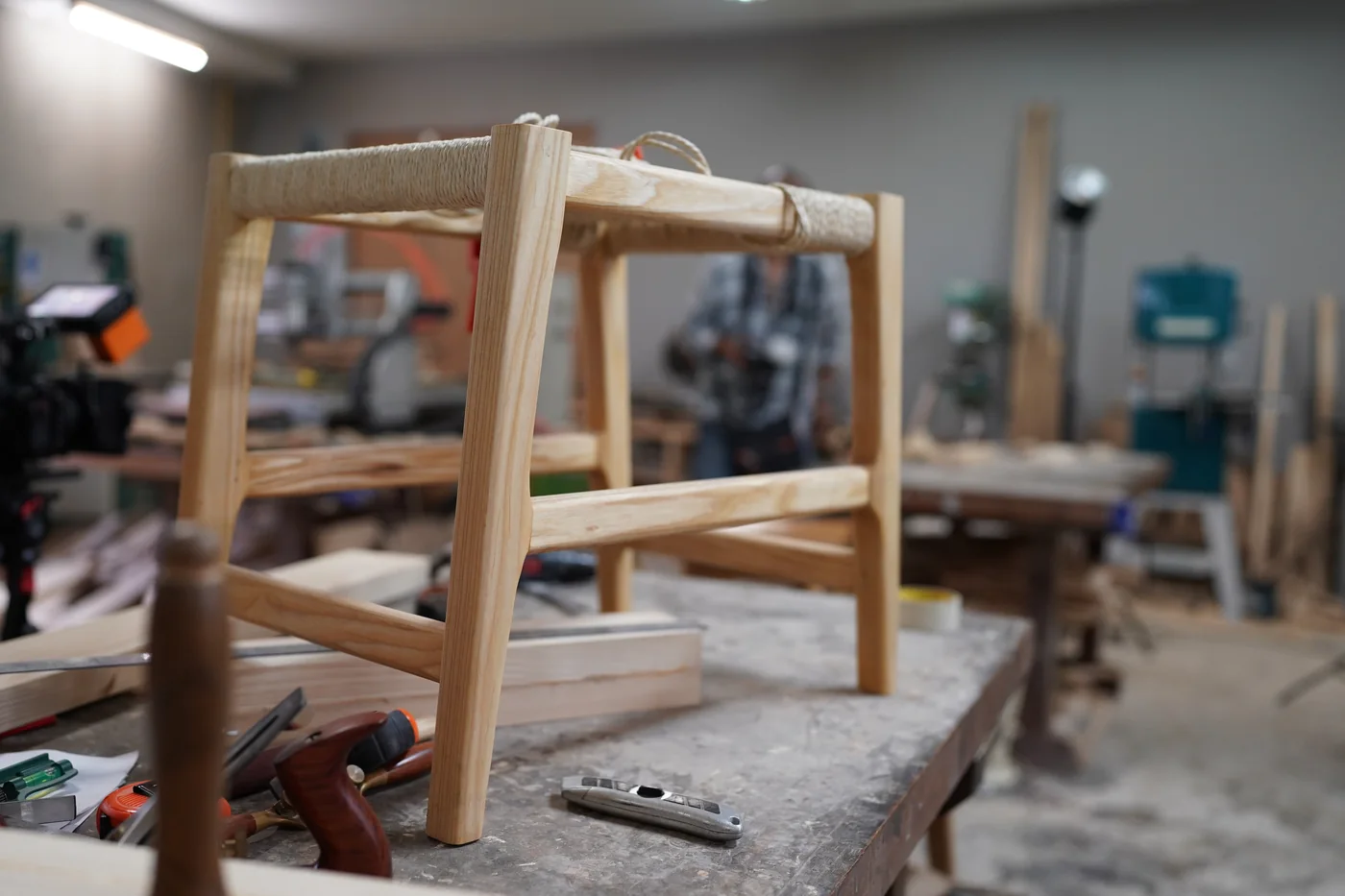
There is a drawer in your house, or a folder on your laptop, or a shelf in the garage, and you know exactly what is in it. The quilt with one border left. The manuscript that stops eleven pages from the end. The half-refinished chair, the song with no second verse, the business plan that was finished in every respect except the part where you told somebody about it. None of these are failures of ambition. Every one of them got most of the way there. That is precisely what makes the drawer so uncomfortable to open.
Ninety Percent Is Not Almost Done
The common story we tell about unfinished work is that we ran out of time, or interest, or that life intervened. Sometimes that is true. But look honestly at the contents of the drawer and a pattern shows up that has nothing to do with time.
Things do not stop at the beginning. They stop near the end.
Almost nobody abandons a project on day two. The abandonment happens at eighty or ninety percent, at the stage where the interesting problems have all been solved and what remains is hemming, proofreading, sanding, the second coat, the phone call. The creative work is done. What is left is finishing work, and finishing work is a completely different activity that we go on assuming is just more of the same.
It is not more of the same. Making something is expansive: every decision opens more possibilities, and the thing in front of you keeps getting more interesting. Finishing something is the reverse. Every decision closes a possibility off. You are no longer discovering what this might be. You are agreeing to what it is, permanently, and letting go of every other version it could have been.
That is a form of grief, in miniature, and it explains why the last ten percent feels so strangely heavy for something that is meant to be the easy part.
The Real Reason We Stall
There is a second thing happening, and it is worth saying plainly, because most people carry it without ever putting words to it.
An unfinished thing cannot be judged. It exists in a permanently favorable condition: it is still becoming, it still has all its potential intact, and any criticism can be met, internally, with the entirely reasonable observation that it is not done yet.
The moment you finish it, that protection ends. A finished thing is a claim. It says this is what I made, and this is what I am capable of, and now you may look at it.
So the drawer is not really a drawer of unfinished projects. It is a drawer of things kept safe. Every one of them is still, technically, going to be wonderful.
Recognizing this does not make it go away. But it changes what you are dealing with. If you believe the problem is discipline, you will keep trying to solve it with schedules and accountability partners, and it will keep not working, because the problem was never that you could not find two hours. The problem is that finishing costs you the comfort of possibility, and no calendar app addresses that.
Done Is a Decision, Not a Feeling
Here is where most people get stuck for years, and it is fixable.
We tend to wait for a thing to feel finished. We assume that at some point the work will announce itself, that there will be a moment of rightness, and until that moment arrives it must not be ready.
That moment does not reliably arrive. Ask anybody who makes things for a living and they will tell you the same thing in slightly different words: you do not finish, you stop. The painter Paul Valéry said a poem is never finished, only abandoned, and every maker who has heard that line recognizes it immediately, because it is not cynicism. It is relief.
Which means done has to be defined rather than felt. And the moment to define it is at the beginning, when you are still clear-eyed, before you have fallen in love with the thing and before you have started to fear it.
Before you start the next project, write down one sentence describing what finished looks like. Not what excellent looks like. What finished looks like. The quilt is finished when the binding is on. The essay is finished when it has been read aloud once and had one pass for typos. The room is finished when the trim is painted, whatever you decide later about the shelves.
Then, when you arrive there, you are not consulting a feeling. You are consulting a note you left yourself, from a version of you who was not yet afraid.
What Finishing Actually Gives You
The obvious argument is that you get the thing. You get the quilt, the essay, the room. That is true and it is the smaller half.
The larger half is that finishing is the only part of the process that teaches you anything durable. An unfinished project teaches you about beginning, which you already know how to do. A finished one teaches you what your work actually looks like once every idea has been forced through the narrow gate of reality. You cannot learn that from the middle. The middle always looks promising.
Finishing also does something to your sense of yourself that is difficult to get any other way. Every unfinished thing in the house is a small open loop, and open loops are not free. They take a low, continuous tax on attention, and you feel it as a vague sense of being behind on something you cannot name. Close one and the relief is out of all proportion to the size of the task, which anyone who has spent an hour clearing a single lingering item will confirm.
And there is a compounding effect. People who finish things are not, mostly, more talented than people who do not. They have simply been around the whole loop more times, and each full loop teaches something the partial loops cannot.
The Ending Deserves a Ceremony
One thing that gets lost in a culture organized around the next thing: we have almost no rituals for completion.
We celebrate launches. We celebrate beginnings, resolutions, first days. But the moment a piece of work is genuinely done tends to pass without any acknowledgment at all, usually because you are already tired of it and slightly disappointed that it is not what you imagined at the start.
That disappointment is nearly universal and it is worth expecting rather than being ambushed by. Everything finished is smaller than the version that existed in your head, because the version in your head never had to survive contact with fabric, or paint, or a sentence that had to be actually written. That gap is not evidence that you failed. It is the ordinary tax of making anything at all, and everyone who makes things pays it, every time.
So mark the ending anyway. Show the thing to one person. Photograph it. Put the tools away properly rather than leaving them out for the next project. Say out loud, to somebody, that you finished it. These sound like small gestures and they do something real: they close the loop in your own mind, which is where it was open.
Where to Start This Week
Do not start by looking at the whole drawer. That is how the drawer stays shut.
Take an inventory once, without judgment. Write down every unfinished thing you can think of, including the ones that embarrass you. It is almost always fewer than it feels like. The list is nearly always shorter than the dread.
Sort them into three piles honestly. The ones you genuinely want to finish. The ones you have outgrown. The ones you are keeping out of guilt. Only the first pile is real work; the other two are decisions you have been avoiding making, which is a different problem and a lighter one.
Release the second pile out loud. Not into the bin necessarily, but out of the category of things you owe. A project you have outgrown is allowed to be over. Saying so is not quitting; it is bookkeeping, and it frees up more attention than finishing something would.
Pick one from the first pile. The smallest one. Not the most important. The smallest, because what you are practicing is the act of ending, and the act is the same whether the thing is large or small.
Write down what done means for it. One sentence, before you touch it. Then do exactly that and stop, even if you can see six ways it could be better.
Give yourself an hour, not a weekend. The last ten percent is almost never as long as the dread suggests. Most of what remains in that drawer is a fraction of an afternoon's work, held in place by something that has nothing to do with the work.
The Drawer Can Be Empty
It will not be, entirely, and that is fine. New things arrive and everything spends some time unfinished on the way to being finished, which is what unfinished is for.
But there is a particular kind of lightness that belongs to the person who mostly ends what they begin, and it is available to anyone willing to trade a little safety for it. The safety is real. As long as a thing is unfinished, it is still going to be wonderful.
Finish one this week and find out what it actually is. That turns out to be a much better thing to have.



Loading comments…