
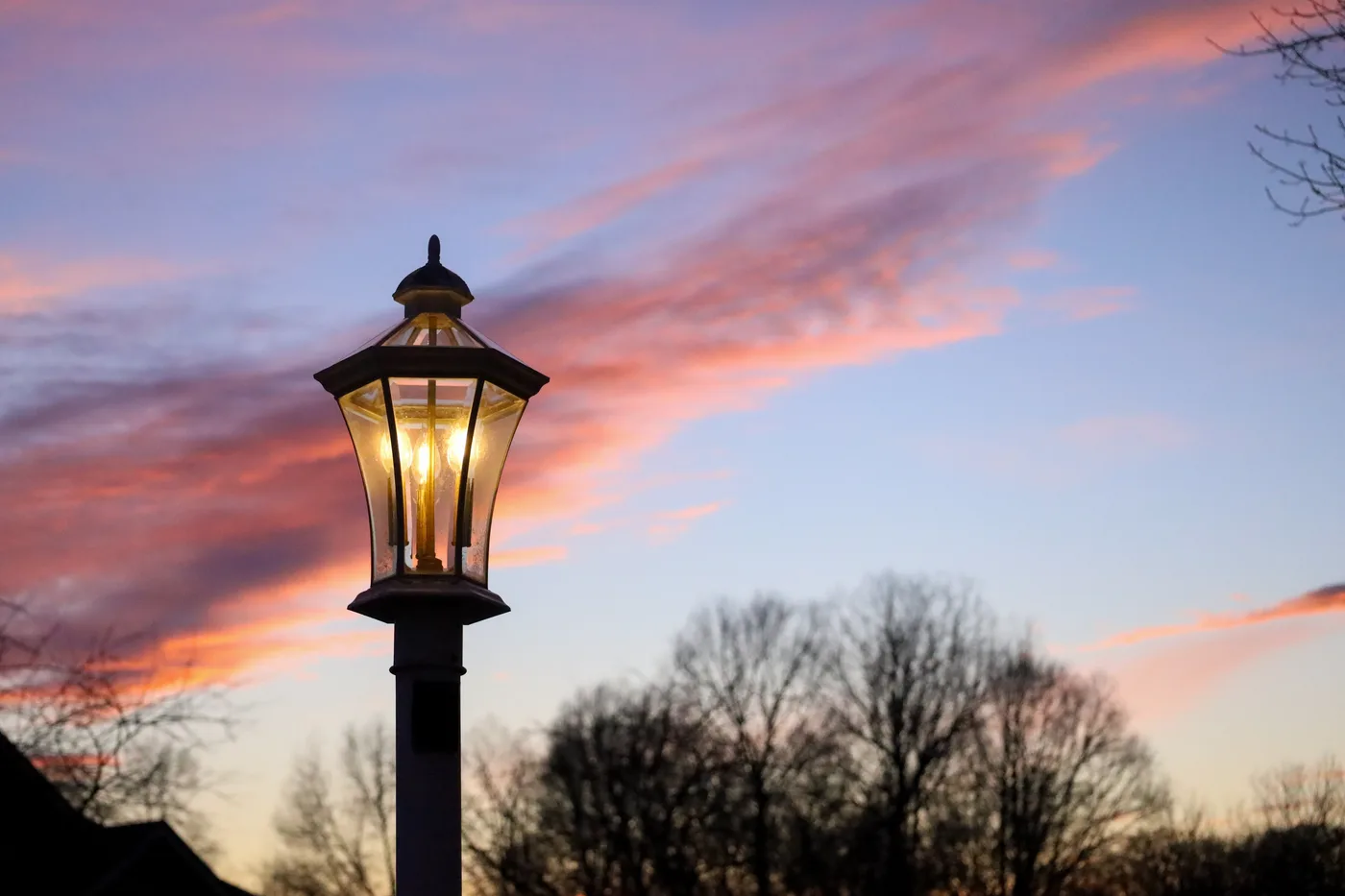
Somewhere around half past four the light starts to go. You notice it the way you notice a sound that has stopped: the kitchen is suddenly dimmer than it was, the trees outside have lost their color, and your hand is already moving toward the switch. Before you flip it, consider waiting. The half hour between day and dark is one of the few transitions you still get to watch happen in real time, and most of us have trained ourselves to skip it entirely.
The hour we switch off
We treat dusk as a problem with a simple fix. The room gets dark, so we turn on a lamp, and the lamp ends the question. By November on Long Island the sun is down before five, which means the fix gets applied in the middle of the working afternoon, often without a thought. Overhead lights go on, screens brighten to compensate, and the evening begins with no sense that anything has changed.
That reflex costs something small and real. Dusk is the body's own signal that the day is turning. It is the cue that, over a long human history, told people to slow down, gather in, and start the shift toward rest. When the lights go on the instant the sky starts to fade, that cue never fully arrives. The afternoon just continues, artificially, until bedtime.
None of this means living in the dark. It means letting one transition a day happen at its own speed, and paying attention while it does.
What your eyes are doing
Part of what makes dusk worth watching is that your own vision changes as you watch it. In bright light you see mostly with the cone cells concentrated in the center of the eye, the ones that handle color and fine detail. As light falls, the rod cells take over. Rods are far more sensitive to dim light but carry no color, which is why the world seems to drain toward gray as evening comes on.
The handover is gradual and uneven, and you can see it if you look. Reds go dark first. A red car, a red leaf, a red door will turn nearly black while blues and greens still hold a little of their color. Painters and photographers have long noticed this odd reversal: at twilight the cool colors seem to glow while the warm ones sink. It has a name, the Purkinje shift, after the physiologist who described it, but you do not need the name to enjoy it.
Full adjustment to darkness takes your eyes somewhere around twenty to thirty minutes. Switch on a bright light and much of that adjustment is lost at once. Wait it out, and you will be surprised how much of the room and the yard you can still see long after you assumed you would need a lamp.
A practice for the turning of the day
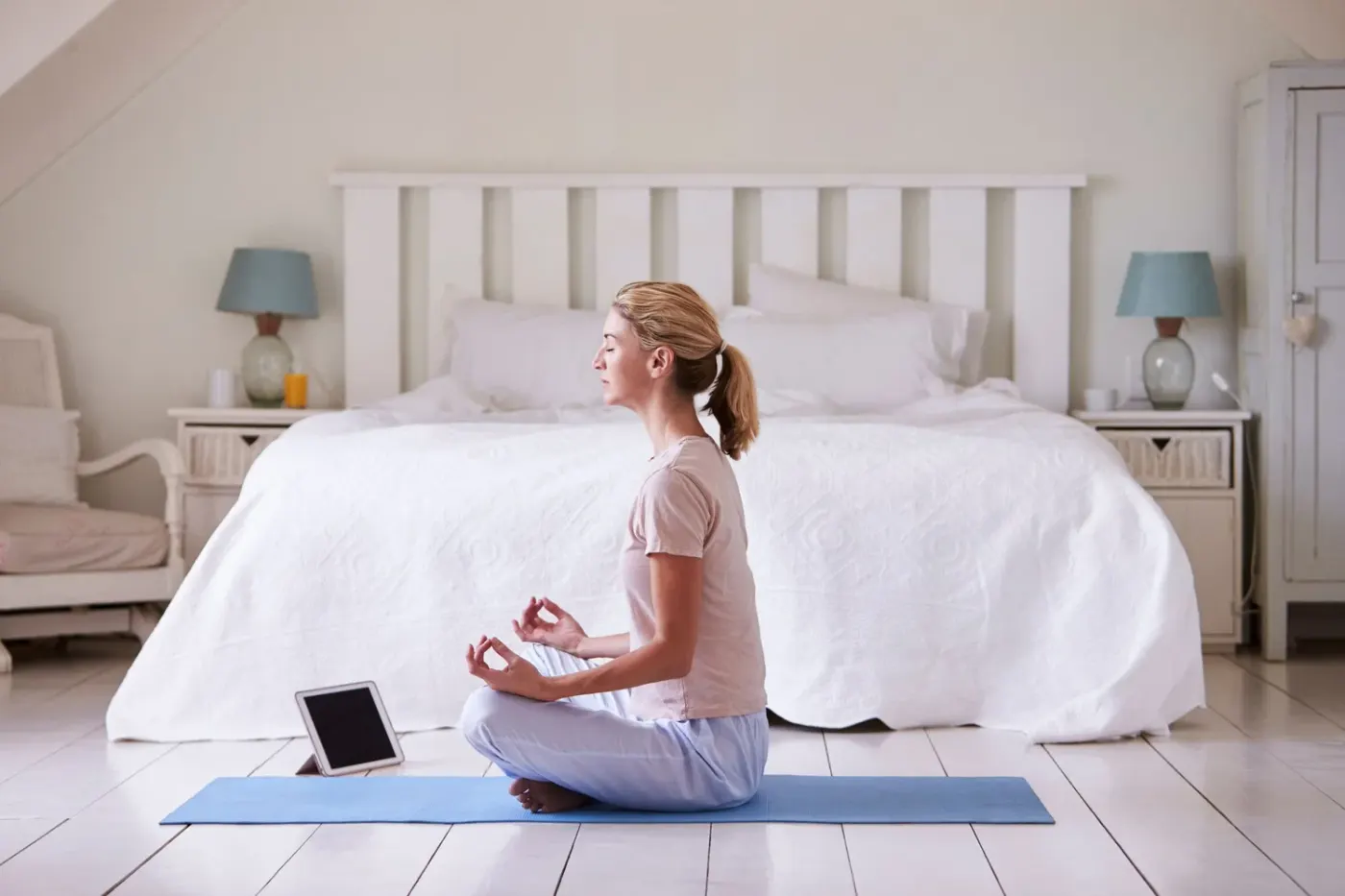
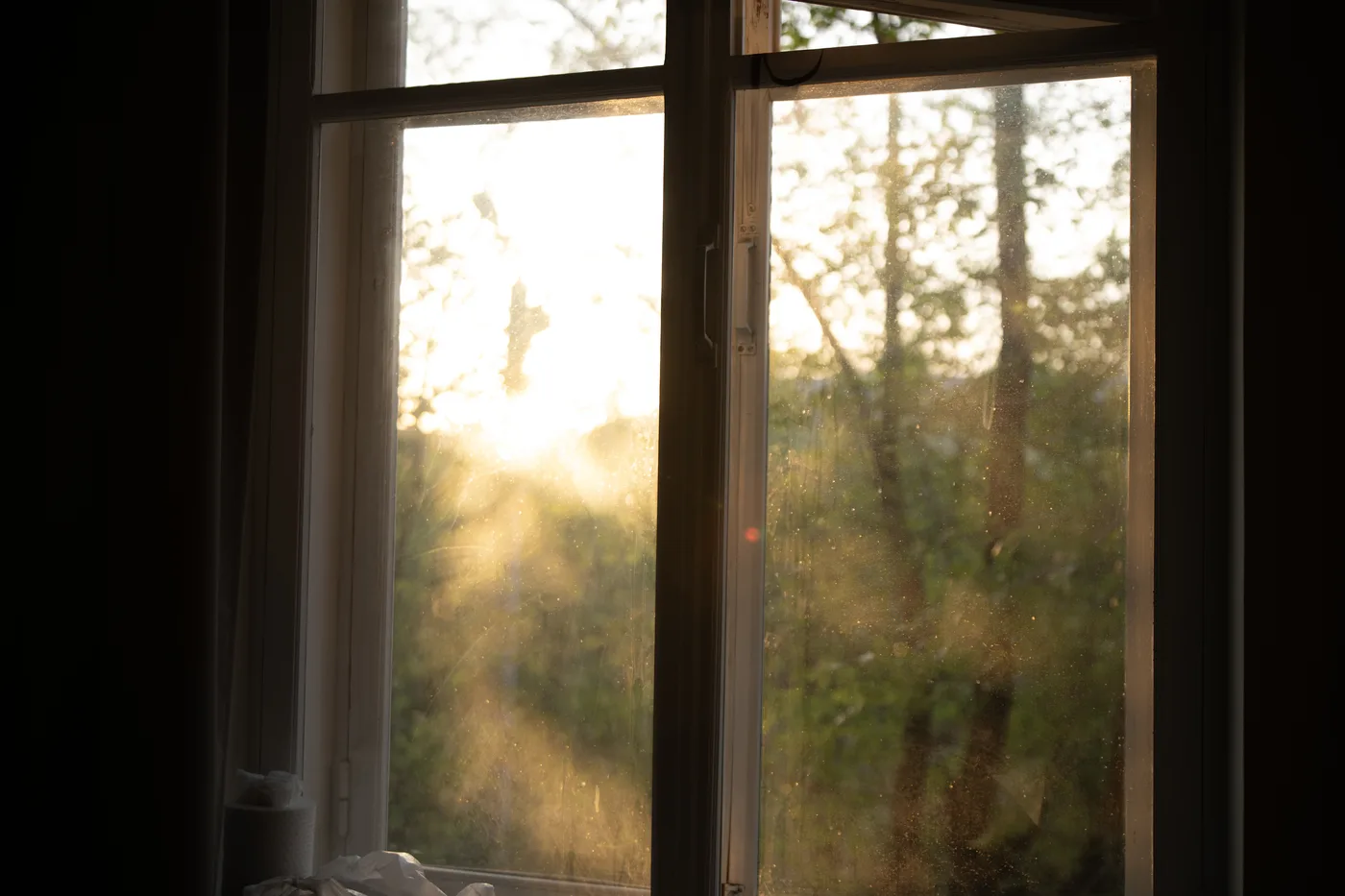
You do not need a cushion or a timer for this, only a place to sit or stand where you can see some sky. A window works. A back step is better.
Choose your spot before it gets dark. If you wait until dusk is underway, you will reach for the light out of habit before you remember the plan. Decide in the afternoon where you will be when the light goes.
Leave the lamps off for one stretch. Begin when you first notice the room dimming and stay with it for fifteen or twenty minutes. Let the light leave without replacing it.
Watch one thing change. Pick something specific: a tree against the sky, the color of a fence, the edge of a roofline across the street. Return your attention to it every so often. Notice the moment the leaves stop being green and become shapes. Notice when the sky becomes brighter than anything on the ground.
Let your hearing come forward. As sight quiets, sound tends to fill in. Traffic seems closer. A dog two yards over, a furnace kicking on, a train in the distance. You are not listening for anything in particular. You are simply noticing that you are still receiving the world through more than your eyes.
Notice the first lights. At some point a neighbor's window will go yellow, then a streetlamp, then a porch. Watch them arrive. There is something quietly moving about seeing other people make their own small decision to end the day.
Turn on one lamp, deliberately. When you are done, light a single lamp rather than the overhead. Choose a warm bulb if you have one. Let the switch be a decision rather than a reflex.
What tends to happen
People who try this often report that the evening feels longer, not shorter. That seems backward, since you have spent twenty minutes sitting in the dark. But a day with a clear ending tends to make the evening that follows feel like its own territory, rather than a dim continuation of work.
Others find the practice surfaces feelings they had been outrunning all afternoon. Dusk has a melancholy to it, and the season makes that sharper. If you notice sadness, you do not need to fix it. You can let it be part of what you are watching, the same as the color leaving the trees. For many people the shortening days bring a heavier, more persistent low mood. If that describes your winters, a sit at dusk is a fine companion to care but not a replacement for it, and a conversation with your doctor is worth having.
Some people simply find it restful. Twenty minutes with nothing to look at but changing light asks very little of you, and that is its own relief at the end of a demanding day.
Bringing it into ordinary evenings
You will not do this every night, and you do not need to. A few small changes carry the spirit of it into the rest of the season.
Light the evening in layers. Rather than one bright overhead fixture, use lamps at different heights and let corners of the room stay dim. The eye reads a pool of low light as calm in a way it never reads a uniformly lit room.
Keep the brightest screens for earlier. If you can, do the email and the bill paying in daylight and let the hours after dark hold slower things: cooking, reading, a phone call, a walk around the block.
Take an occasional dusk walk. Twenty minutes outside as the light goes is the same practice in motion. You will see the streetlights come on and the windows light up house by house, and you will come home to an evening that feels like it began on purpose.
The day ends either way
The dark comes early now and will keep coming earlier until late December. You can meet it as an interruption to be switched off as quickly as possible, or as a daily event that happens whether or not anyone watches.
Tonight, when the kitchen dims and your hand moves for the switch, let it pause. Look out at the sky for a while. The lamp will still be there in twenty minutes, and so will you, having watched the day actually end.
Loading comments…