
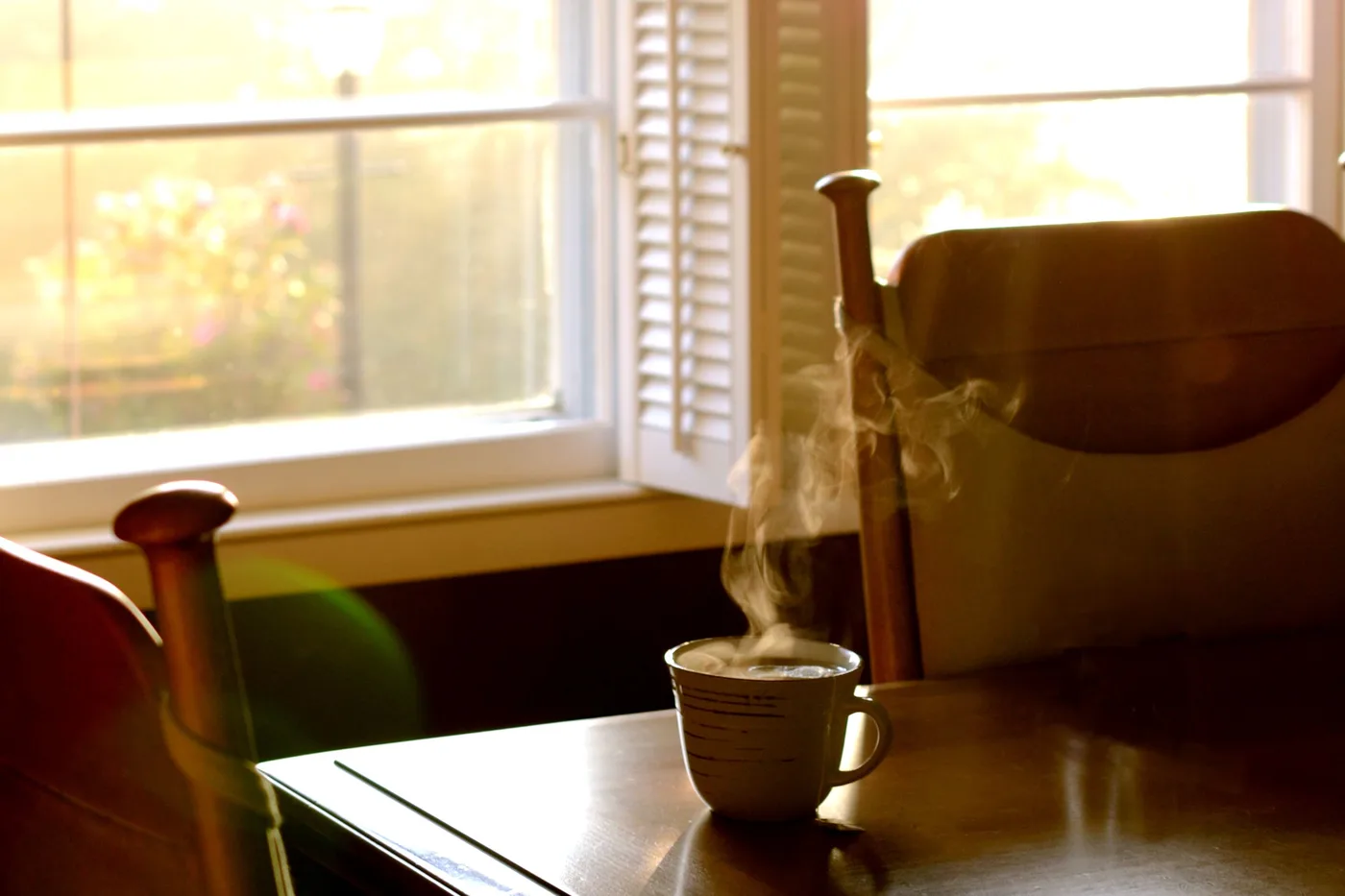
There is an hour that belongs to no one. It arrives before the first door slams, before the phone remembers what it wants from you, before the house takes on the day's shape. The light through the window is gray, then pearl, then suddenly gold, and the only sounds are the refrigerator and the first birds. If you have ever been awake in that hour, by intention or by insomnia or by a baby, you know it has a quality the rest of the day never quite recovers: the sense of standing in the world before the world starts.
The Oldest Appointment
It is striking, once you look, how many traditions found their way to this same hour and refused to give it up.
Monastic communities rose in darkness for vigils and met the sunrise already praying; the first offices of their day were built around the boundary between night and morning. Islam sets one of its five daily prayers, fajr, in the window between first light and sunrise, an appointment that moves with the sky rather than the clock. Jewish tradition holds the morning prayer in the hours after dawn, and some observant communities have timed it to begin precisely with sunrise. Zen monasteries begin seated meditation before the sun is up. Farmers, fishermen and bakers, whose disciplines were never written down as spiritual, kept the same hour for centuries and will tell you, if asked, that it was never only about the work.
Traditions that agree on almost nothing agree on this: the hour before the day begins is different in kind from the hours inside it, and something important happens to a person who shows up for it on purpose.
You do not have to belong to any of these traditions to take the hint. When practices that evolved independently, on different continents, in different centuries, converge on the same instruction, the instruction is probably not arbitrary. It is describing something about the hour itself.
What the Hour Is Made Of
So what is actually there, in the early morning, that so many disciplines went looking for?
The first thing is the absence of claims. From the moment the day properly starts, you are spoken for. Messages arrive with their small hooks. Every hour has an assignment, and even the free hours are free in relation to the schedule around them. The hour before is the only one with no assignment at all. Nobody expects anything of you at quarter to six, because nobody knows you are there. What you are, in that hour, is unwitnessed, and it turns out that being unwitnessed for a little while each day is not a small thing. It is where you find out what you are like when no one is watching, including the performing self that watches from inside.
The second thing is the light. Dawn is the one daily event that cannot be paused, replayed or sped up. It proceeds at its own pace, takes about forty minutes to go from gray to done, and is different every single morning. Sitting through it, actually watching it, is a lesson in a kind of time we hardly inhabit anymore: time that moves without being pushed. People who keep a morning practice often say the light is half of it, and August on Long Island is a generous month for this, with sunrise arriving just before six, late enough to meet without heroics.
The third thing is your own mind, in the state the night leaves it in. Before the day's input begins, the mind has a stillness that is not achievable later by effort. The traditions knew this, which is why the hard practices, the sitting, the prayer, the examination of conscience, were scheduled for the hour when the water was already calm.
Not the Productive Morning
It matters to say clearly what this is not, because the early morning has been colonized in recent years by a very different project.
The productivity morning, the cold shower and the journaling stack and the hour of focused output before dawn, treats the early hour as a head start: a way of getting ahead of the day, of other people, of your own inbox. Whatever its merits, it is the opposite of what the traditions were doing. A monk at vigils is not getting ahead of anything. The hour is not a means. It is kept, the way you keep an appointment or a promise, and what it produces is nothing at all, which is precisely its value. It is the one hour whose success is not measured.
If you take the hour and fill it with optimization, you have not kept the hour. You have just started work early, and the day will feel like it started early, because it did. The invitation here is different: an hour, or even twenty minutes, that produces nothing, proves nothing, and belongs entirely to the practice of being awake before you are useful.
How to Keep It
Keeping the hour is simple, which is not the same as easy. A few things help.
Start with twenty minutes, not sixty. Wake twenty minutes before you would otherwise need to, and protect only that. A small vigil kept daily is worth more than a grand one kept twice.
Do not pick up the phone. This is the entire discipline, and it is harder than it sounds, because the phone is the day, and touching it starts the day. Some people leave it charging in another room and use a plain alarm clock; that one arrangement does most of the work.
Have somewhere to sit, ideally facing a window with eastern light. Make the tea or the coffee the night before if the kitchen clatter wakes the house. The point is that the hour should require no decisions.
Then do very little. Sit. Watch the light change, which it will do continuously the whole time. If you pray, pray. If you sit meditation, sit. If you do neither, you can simply keep company with the morning: notice the sounds arriving in order, the birds first, then the first cars, then the house waking, the day assembling itself around you like a tide coming in. A single page of something old and slow, read without hurry, belongs to this hour; a feed does not.
Expect it to feel like nothing for the first while. The hour before does not deliver an experience on demand, and the first mornings can feel flat, even boring. The traditions would say the boredom is the threshold, not the verdict. Somewhere in the second week, most people find the hour has begun to feel less like something they do and more like somewhere they go.
The Day That Follows
Here is the quiet aftereffect, the one that keeps people at it for years. A day that begins with a kept hour starts from a different place. Not a calmer schedule, the schedule is untouched, but a different starting point in yourself, the way a house feels different all day when its first room was left in order. You have already been somewhere the day cannot reach. Whatever the inbox holds, it arrives second.
The hour is there tomorrow, a little after five thirty, no equipment required, no belief required, no one watching. It has been kept by shepherds and abbesses, bakers and grandmothers, for as long as there have been mornings. It will not mind that you are new.
Loading comments…