
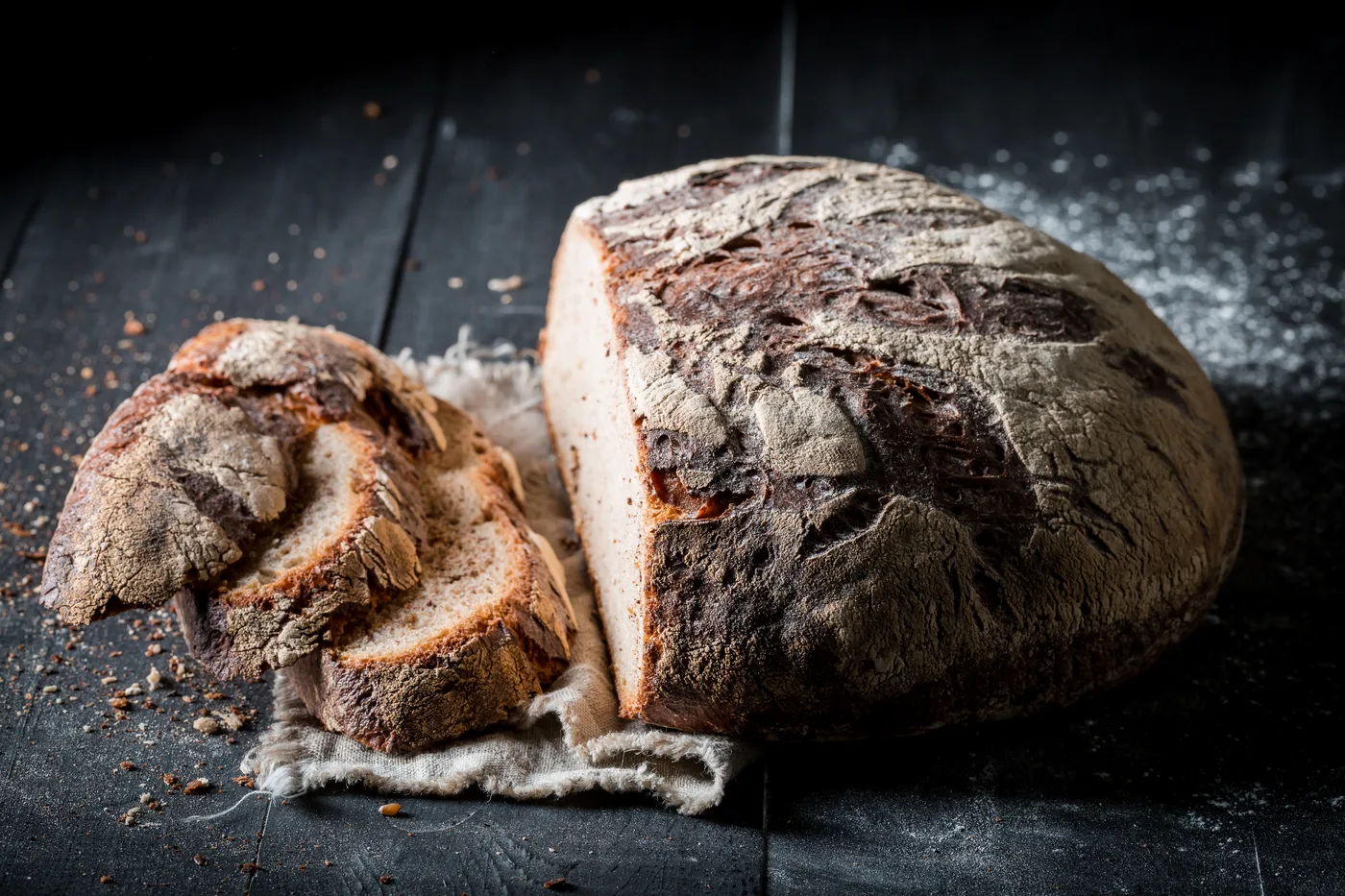
Take a plain piece of bread, no butter, nothing on it, and chew it for longer than feels normal. Keep going past the point where you would usually swallow. Somewhere around the half-minute mark, something odd happens: the bread starts to taste sweet. Nothing was added. The sweetness was there all along, locked inside the starch, and your own mouth has started to let it out.
The first part of digestion
We tend to think of digestion as something that happens out of sight, in the stomach and below. But it starts the moment food is in your mouth, and chewing is the opening move.
Saliva is not just water. It carries an enzyme called amylase, whose whole job is to break starch into smaller sugars. Bread, rice, potatoes and oats are mostly starch, which on its own has very little taste. Give amylase enough time in contact with a mouthful and it begins cutting those long starch chains into pieces your tongue recognizes as sweet. That is what you taste when the bread changes. It is a small chemistry experiment you can run at any meal.
Chewing also does the plain mechanical work. Your teeth turn a bite into many small particles, and every particle has a surface that the enzymes further down can reach. A mouthful that arrives in the stomach well broken down has already had some of the work done for it. A mouthful swallowed in chunks hands the whole job on.
Where flavor actually happens
There is a second reason chewing matters, and it is the one most people notice first once they slow down. Most of what we call flavor is really smell. As you chew, aromas rise from the food and travel up the back of the throat into the nose. This is why food tastes flat when you have a cold, and why a hurried meal can leave you strangely unsatisfied even when you ate plenty.
Each chew releases a little more. A bite of apple at the third chew and the same bite at the twentieth are not the same experience. The first is mostly crunch and sharpness. The later one is fuller and more floral, with something like honey underneath. You paid for all of it. Most of us swallow before we get there.
The signal that comes late
The body has a set of signals that tell you when you have had enough. They come from the stomach stretching and from hormones the gut releases as food arrives, and they build gradually over the course of a meal. They do not arrive the instant food goes down. That lag is part of why it is so easy to eat past the point of comfort when eating fast: the meal is over before the message has caught up.
Chewing more slows everything without asking you to do anything as abstract as eat mindfully. In laboratory studies, people asked to chew each mouthful more times than usual tended to eat somewhat less, and often reported feeling just as full. The effect is modest, and no one should treat it as a diet. But it points at something real: the pace of the mouth sets the pace of the meal.
The man who chewed too much
None of this is new advice, and it once went too far. In the early 1900s an American named Horace Fletcher became famous for urging people to chew every mouthful until it turned to liquid, sometimes dozens of times. He had a large following, and well-known people of the day tried it. Then it faded, as fads do, and left behind a vague memory that chewing a lot is a bit silly.
The lesson worth keeping is not a number. Counting chews turns a meal into a chore and pulls your attention onto the count instead of the food. What helps is simply chewing until the bite has changed: until it is soft, until the flavor has opened up, until swallowing is easy rather than a gulp.
How to try it
Start with one meal, not every meal. Breakfast or lunch on a quieter day works well, because no one is waiting on you and nothing is rushing you to the next thing.
Run the bread test first. One plain bite, chewed slowly, until it turns sweet. It takes less than a minute and it makes the idea physical rather than theoretical. Once you have tasted the change, you know what you are looking for.
Put the fork down. The single most useful habit is setting your utensil on the plate between bites. It breaks the loop where the next forkful is loaded and waiting before the current one is finished. You do not have to chew any particular amount. You just cannot hurry the next bite.
Take smaller bites. A huge mouthful is hard to chew well, so it gets swallowed half done. Smaller bites are easier to work through and let the flavor come forward.
Notice the halfway point. Partway through the meal, pause for a breath and check how hungry you still are. Not to stop, necessarily. Just to let the late signal have a chance to speak.
Eat one thing on its own. Once in a while, give a single food your full attention: a slice of good bread, a few walnuts, a segment of orange. Foods with texture reward slow chewing the most, and they teach you how much is in an ordinary bite.
What to expect
The first time, slow chewing feels unnatural, almost theatrical. You may notice how quickly you usually eat, which can be a little uncomfortable. That passes. After a week or so of one slower meal a day, many people find that their pace at other meals eases a little on its own, without effort.
You will probably also notice food more. Not in a precious way, but in the plain sense of tasting what is there. Cheap bread and good bread stop seeming similar. A ripe pear becomes worth waiting for. Meals that used to vanish start to feel like they happened.
A word of care: if chewing is painful, if your jaw clicks or aches, or if swallowing is difficult, that is worth raising with a dentist or a clinician rather than working through. This is a practice for an ordinary, comfortable mouth, not a treatment for anything.
The sweetness you already have
There is something quietly encouraging in the bread test. The sweetness is not something you add. It is already there, in a plain and unremarkable food, and it only shows itself if you stay with the bite a little longer than you are used to.
Plenty of things are like that. Tonight, or at tomorrow's lunch, pick up a piece of bread and chew it until it changes. Then notice how long it took, and how rarely you have ever waited that long for anything you eat.


Loading comments…