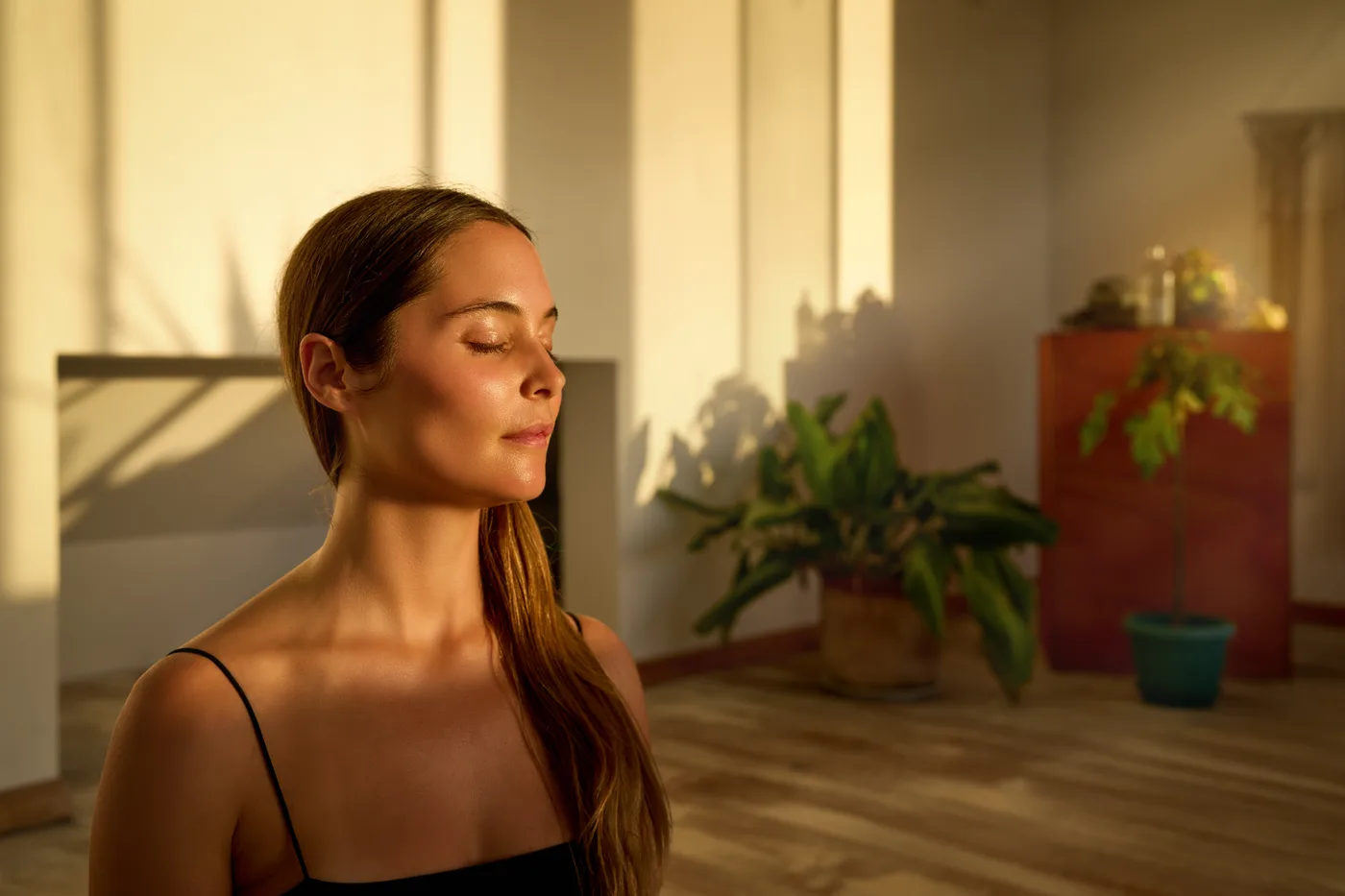
Almost nothing your autonomic nervous system does is any of your business. You cannot decide to widen a blood vessel. You cannot instruct your gut to move things along, or tell your pupils what to do about the light, or lower your own blood pressure by wanting to. The whole apparatus runs underneath the level where decisions happen, which is mostly a mercy. There is exactly one exception. You can breathe on purpose. And because breathing is wired into the same circuitry as everything else down there, it turns out to be a handle on a system you otherwise have no handle on at all.
Why the Rate Matters More Than the Technique
There is an enormous amount of breathing advice in circulation and most of it is packaging. The techniques have names and origin stories and proprietary counts, and underneath a good number of them is one physiological fact doing all the work.
Your heart rate is not steady. It rises slightly as you breathe in and falls as you breathe out, and the size of that swing is a rough index of how much influence the parasympathetic side of your nervous system currently has. Researchers call the variation heart rate variability, and more of it, within reason, tends to go with better stress recovery and better cardiovascular health.
The swing is not the same size at every breathing rate. There is a frequency at which the rhythm of your breathing lines up with a slower oscillation already running in your blood pressure control system, and when the two synchronize the heart rate swings get dramatically larger. For most adults that frequency sits at roughly six breaths a minute. Ten seconds a breath. It is slow enough to feel deliberate and not so slow that it feels like a stunt.
In studies that compare breathing rates head to head, six comes out ahead. One randomized comparison of six breaths a minute against twelve found baroreflex sensitivity, a measure of how briskly the body corrects blood pressure, rose about ten percent from before to after the slow breathing, with increases in total power, low frequency power and the standard deviation of the intervals between beats. Work comparing different slow breathing patterns has found that six breaths a minute with an even split between inhale and exhale produces the strongest vagal response of the variations tested.
This is the part worth holding onto. Not a brand, not a count with a name attached. A rate.
What Is Actually Happening
The mechanism is not mysterious and it is not spiritual, though it is compatible with people who would like it to be either.
Slow breathing raises the vagally mediated portion of heart rate variability, visible in the high frequency band and in the beat to beat measure researchers abbreviate RMSSD. It shifts the balance between the sympathetic and parasympathetic branches. A long exhale, or a brief pause after one, lets carbon dioxide rise slightly, and that small rise is itself parasympathetically active, which is a decent part of why exhale-weighted patterns feel calming rather than merely slow. Nasal inhalation adds nitric oxide to the air on its way in, which affects vessel tone. Imaging work points to changes in connectivity between the prefrontal cortex and the amygdala during paced breathing, which is the sort of finding that fits neatly with the subjective experience of being less immediately reactive.
None of that requires belief. It is plumbing.
The Evidence, Honestly
Here is where the enthusiasm online has run considerably ahead of the literature, and it is worth being straight about it.
A 2025 review pulled together thirty peer-reviewed studies published between 2012 and 2025. Anxiety reduction was reported in ten of them and reduced perceived stress in nine. Heart rate variability biofeedback at around six breaths a minute has been associated with reductions in panic symptoms, negative emotion and chronic pain, and with improvements in stress resilience and cognitive performance.
That sounds like a lot until you look at the shape of the studies. Sample sizes across the reviewed work ran from fourteen to two hundred and fifty. Most were single sessions, often between two and ten minutes long, measuring what happened in the following minutes. Longitudinal trials, the kind that would tell you whether breathing slowly for ten minutes a day changes anything about your life in three months, are sparse. Breathing rates varied from four to seven a minute across studies, inhale and exhale ratios varied, delivery varied, outcome measures varied, and the variation makes the studies hard to pool. Some found nothing, particularly where instruction was thin or the whole thing was delivered through an app with nobody checking whether participants were doing it.
So the accurate summary is this. The acute physiological effect is real, measurable and reproducible: breathe at six a minute and your heart rate variability goes up, reliably, in a laboratory, right now. Whether a daily practice produces durable change in anxiety or blood pressure or anything else over months is a question the field has mostly not yet answered properly. The mechanism is much better established than the outcomes.
The other thing worth naming is the vagus nerve, which has become a wellness product category. It is a real nerve doing real work, and slow breathing genuinely does engage it. It is not a switch that resets your nervous system, and a great deal of what is currently sold on its authority has nothing behind it.
What This Looks Like in Practice
Six breaths a minute is ten seconds per cycle. Even is fine: five in, five out. Exhale-weighted is also fine and many people find it easier: four in, six out. If ten seconds feels like too much air, breathe more shallowly rather than faster. The rate is the active ingredient, not the volume, and hyperventilating slowly is still hyperventilating.
Through the nose, if your nose is available. Belly rather than chest, not because chest breathing is a moral failing but because the diaphragm moving properly is what produces the pressure changes the whole effect depends on.
Five minutes is a reasonable dose. The lab studies that produce clean effects are frequently shorter than that.
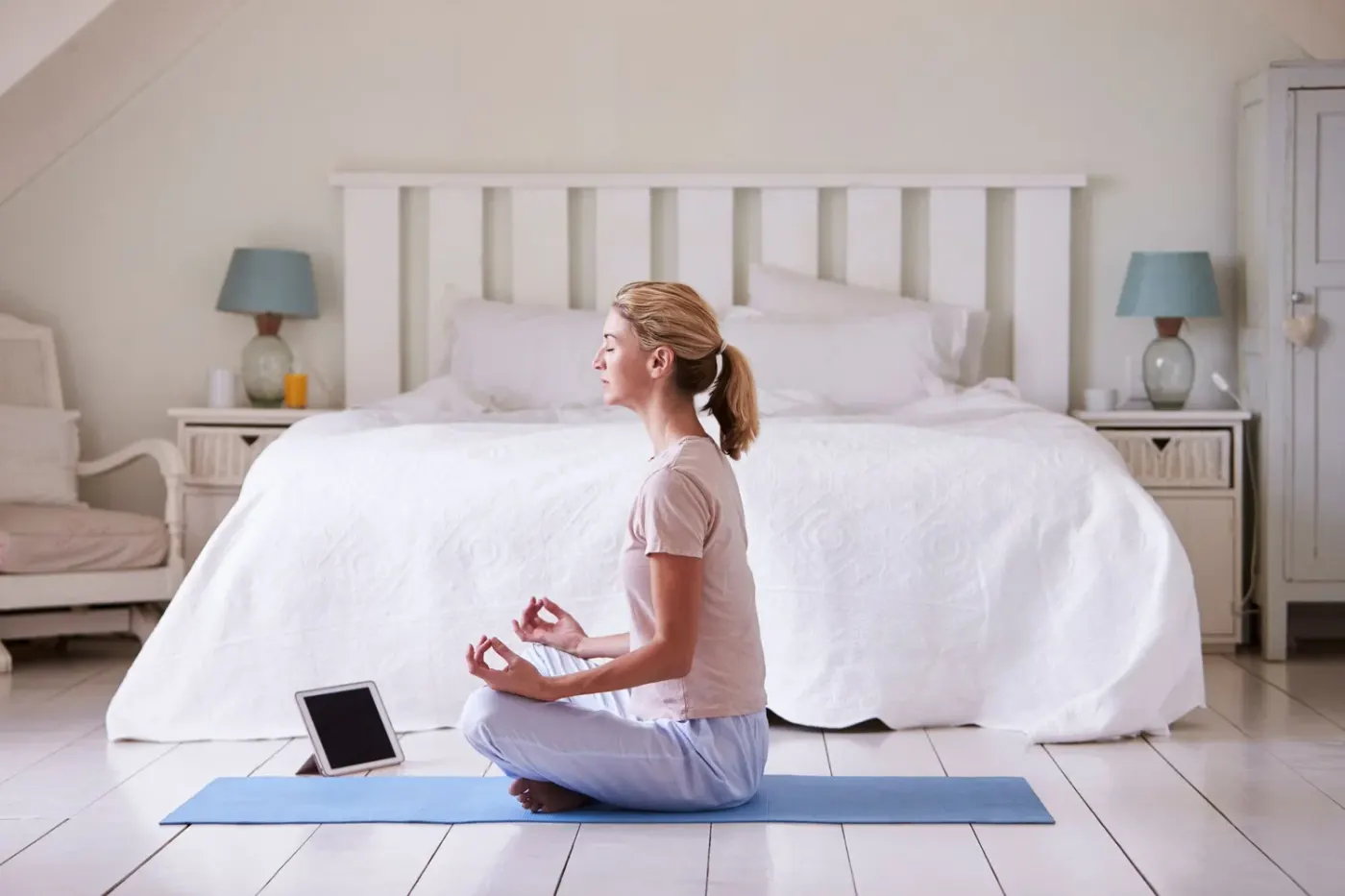
Nobody can tell from outside that you are doing it. This is not a small point. It works in a parked car outside an appointment you are dreading, in the ten minutes before a difficult conversation, at three in the morning, in the chair at the dentist, in the fifteen minutes after a phone call that went badly. The circumstances in which you most need access to your own nervous system are rarely circumstances in which you can lie on a mat.
The Case for Doing It With Other People Anyway
All of which makes it sound like a technique to be performed alone, efficiently, and there is something slightly impoverished about that framing.
The traditions that have carried paced breathing for centuries did not hand it out as a discrete intervention. It arrived inside pranayama, inside qigong, inside contemplative prayer, inside forms that also included other people, a place, a teacher and a reason to keep showing up. The research isolates the variable because that is what research does. It is not obliged to be the whole of your relationship to the thing.
There is a reasonable amount of this available locally through the warm months. Old Westbury Gardens runs yoga on Monday mornings and tai chi on Wednesdays, both at half past ten, out on the grounds through October. LongHouse Reserve in East Hampton has tai chi on Thursday mornings with Katherine Henderson into September. Neither is a controlled trial. Both put you outdoors, breathing slowly, alongside people who are also breathing slowly, which is a form of adherence support that no app has yet managed to replicate.
The lever is there either way. It is genuinely the only one of its kind you have. It is worth knowing where it is.
Loading comments…