
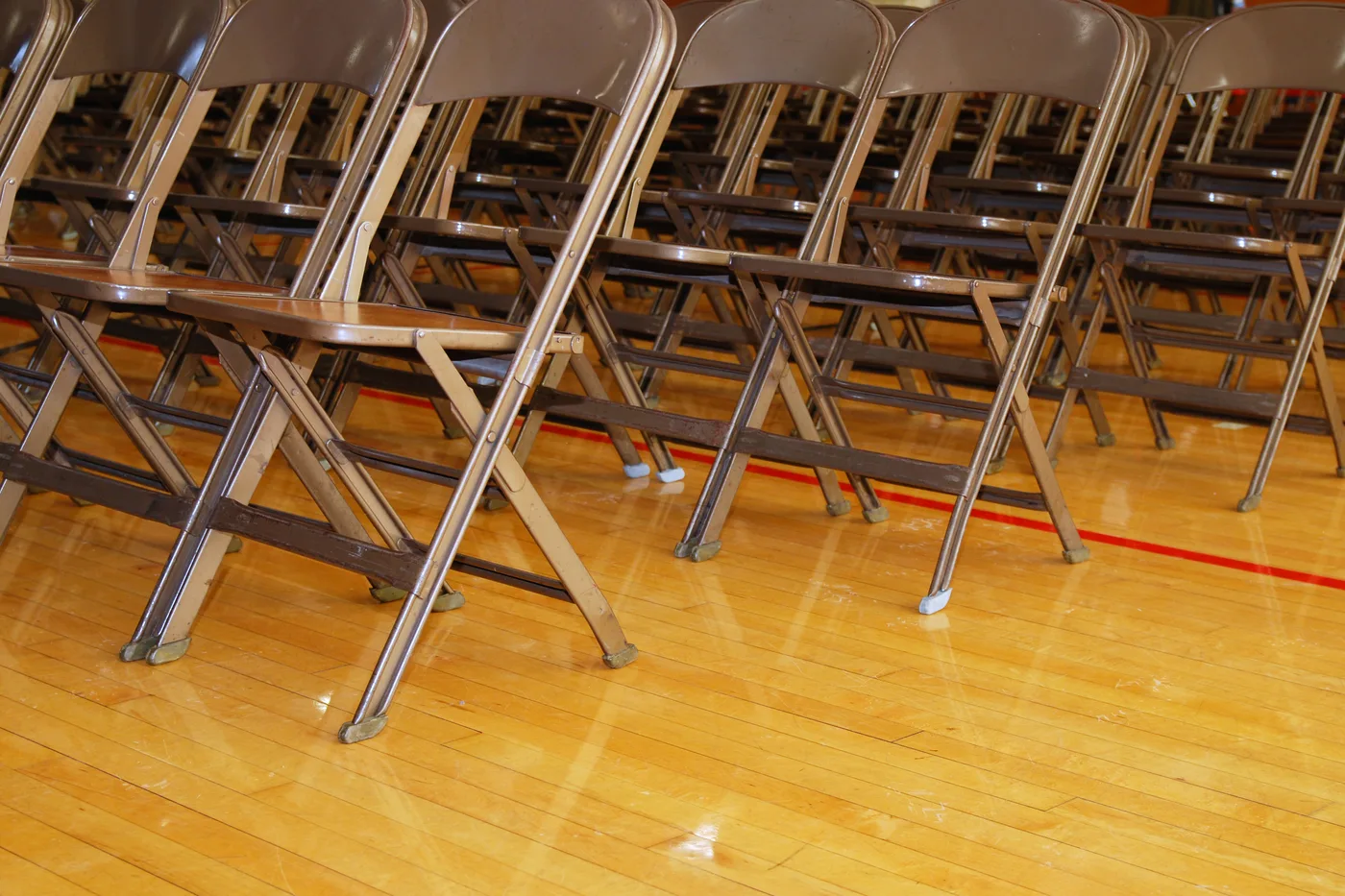
An hour before the concert, the hall is nothing. Fluorescent light, a stage with its curtain half open, a stack of folding chairs leaning against the back wall like something abandoned. And in the middle of that nothing there is one person, unfolding chairs. Clack, set, straighten. Clack, set, straighten. Row by row, a room is appearing where there was only a floor, and by the time you arrive tonight, coat over your arm, the room will seem like it was always there. It was not. Somebody made it, one chair at a time, and almost no one will ever know who.
The room does not make itself
Every gathering you have ever loved stood on work done before you arrived. The coffee urn that was already hot. The sign-in table with its pens that wrote. The door that was propped at exactly the moment people started arriving, the name tags alphabetized, the microphone that did not shriek because somebody tested it at six. This is the infrastructure of community, and its defining feature is that when it is done well it is invisible. Nobody walks into a warm, ready room and thinks about the person who dragged the tables. That is the proof it worked.
We talk a great deal about community as a feeling, the warmth of belonging, the comfort of being known. We talk much less about community as a verb, the hour of plain labor that makes the feeling possible. But the verb comes first. It always comes first. Before anyone can belong to a room, somebody has to build the room.
What the early shift gives you
Here is what nobody tells you about setup duty: it is not a sacrifice. It may be the best seat in the house.
Consider what the early person gets. They have seen the room empty, which means they know something about tonight that no one else knows: how much of it was made. They own a corner of the evening. Whatever else happens, the chairs are theirs, and there is a quiet, durable satisfaction in watching three hundred people sit down on work you did with your own hands.
And they never had to make an entrance. This is the gift that matters most to the people who need it most. If walking into a crowded room costs you something, if you have ever sat in the car for an extra minute gathering yourself, then the setup shift is a side door built precisely for you. The early crew does not enter the party; the party assembles around them. By the time the room fills, they are already inside it, already useful, already mid-conversation with the other person who came early. Having a job to do dissolves the problem of what to do with your hands, what to say, whether you are wanted. You are holding a chair. You are obviously wanted.
People who struggle to feel at home in groups keep discovering this by accident: service is a way of belonging that does not require you to be good at belonging. You do not have to be charming at the coffee urn. You just have to have carried it.
The rooms that run on it
Once you see this work, you see it everywhere, and Long Island is stitched together with it. The fire hall pancake breakfast exists because four people showed up at dawn to set the griddles and unfold the long tables. The library book sale is two days of sorting boxes before a single browser arrives. The school concert, the civic association meeting, the beach cleanup with its table of gloves and grabbers, the church supper, the farmers market stall that is somehow already up at seven: all of it chairs, in one form or another, set out by somebody early.
Recovery meetings may understand this better than anyone. In those rooms, making the coffee and setting out the chairs are formal service positions, taken seriously and handed over with care, and the wisdom behind that is worth stealing: the commitment to show up for the room keeps the person showing up for themselves. The chairs need the person. The person, it turns out, needs the chairs just as much.
There is a longer game in it too, one every organizer knows and few say out loud. The person stacking chairs this year is usually running the raffle next year, and the whole event three years after that. Communities do not recruit their keepers through applications; they grow them out of whoever kept showing up early. If you have ever wondered how people end up at the center of things, belonging in that enviable, load-bearing way, the answer is rarely charisma. It is chairs, compounded over time.
Take the shift
So here is the practice, and it is almost embarrassingly simple. Once this month, take the early shift. Whatever you already attend, a meeting, a concert, a cleanup, a sale, find whoever runs it and say the eight words that every organizer on earth is starving to hear: do you need help setting up beforehand?
Then notice what the hour is actually like. Not noble. Ordinary, in the best way: carrying things, light joking, the small competence of people making a room together. Stay for teardown sometime too, because the stacking at the end is where the real conversations happen, the unhurried ones, after the event has stopped performing and the people left are the ones who did not leave.
And tonight, or whenever you next walk into a room that is warm and lit and ready for you, find the person straightening the last row. Thank them like you mean it. You will watch somebody who thought their work was invisible discover that it was not.
The first chair
Inspiration gets pictured as lightning, the grand gesture, the speech that changes the room. But most of what holds a community upright looks like one person in an empty hall an hour early, making a place for people who do not know yet that they are expected. Nothing stops you from being that person. The chairs are leaning against the back wall right now, and the only qualification for the work is the one everybody has: two hands, and the willingness to arrive before the warmth, so that the warmth has somewhere to happen.


Loading comments…