
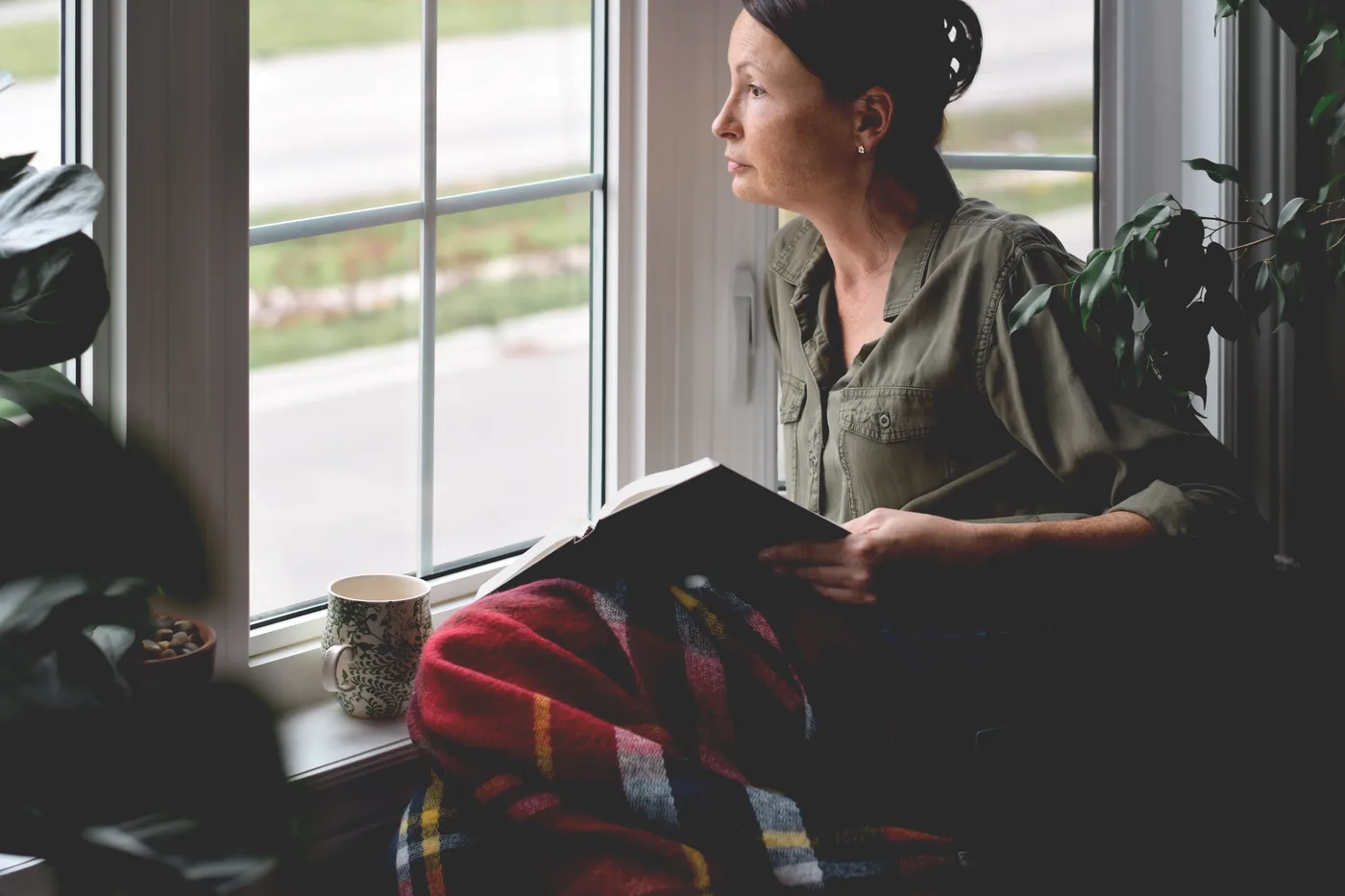
Stand in your kitchen with a poem and read it out loud. Not performed, not projected, just spoken, the way you would read a recipe to someone across the room. The first thing you will notice is that you feel slightly ridiculous. The second thing you will notice, somewhere around the third line, is that the poem has changed. Words you slid past on the page now have weight in your mouth. A line you thought you understood turns out to hinge on a pause you never gave it. The poem was not shy. It was waiting for its instrument, and the instrument is you.
Most of us read poetry the way we read everything else now: silently, quickly, eyes skating down the screen, mining for the point. That style of reading serves a news article well enough. It serves a poem the way a photograph of a violin serves a concerto. Something essential is simply not present, and the frustrating part is that we blame the poem for it. People who say poetry does nothing for them have usually only ever met poems under glass.
A score, not a paragraph
Poems are older than writing. For most of human history a poem existed only when a voice was making it: recited, chanted, sung, passed from mouth to memory to mouth. Rhythm and rhyme were not decoration. They were the technology that let a long story survive without paper, and they only work on the body through the ear. When poems finally settled onto the page, they kept the shape of that inheritance. Meter is a pattern of stresses, and stress is a thing the voice does. A rhyme is an echo, and an echo needs air.
This is why it helps to think of a printed poem the way a musician thinks of sheet music: as a score. The notation is complete and precise, and it is not yet the thing itself. Nobody claims to have heard a symphony because they skimmed the staves. The line breaks in a poem are breathing instructions. A stanza break is a rest. White space is silence, measured out on purpose. Read silently, all of that notation collapses into typography. Read aloud, it starts doing its work on you.
What the voice finds
Reading aloud is slower than reading silently, and the slowness is the point, not the price. At speaking pace you cannot skim, which means you cannot skip the words that seemed unimportant. In a good poem there are no unimportant words, and your voice discovers this before your mind does. You hit a word that resists being said casually, and the resistance is information.
The voice finds sound patterns the eye ignores. Vowels that open and close like a hand. Consonants that make a line feel like gravel or like water. You do not need to know the technical names for any of this to feel it happening in your own mouth. A line about slowness that is genuinely slow to say, crowded with long sounds, is teaching you its meaning through your jaw.
The voice also finds the poem's temperature. Spoken, a poem reveals whether it is intimate or public, wry or grieving, in a way the page keeps ambiguous. You will sometimes discover, mid line, that a poem you took for sad is actually funny, or that a plain little poem carries far more feeling than its vocabulary admits. Your own throat tells you: it tightens on lines the eye had cleared as harmless.
Why we stopped
Silent reading is a fairly recent habit at the scale of history, and a completely dominant one at the scale of a modern day. We read enormous amounts, nearly all of it engineered to be consumed fast: messages, feeds, subject lines, summaries. The skill this builds is extraction, getting the information out and moving on. It is a real skill and a useful one. But it transfers badly to any writing where the experience is the content, where how the thing unfolds in time is what the thing is.
There is also plain self-consciousness. Reading aloud alone feels like being caught singing. It helps to remember that nobody is watching, and that the discomfort fades in roughly the time it takes to read one sonnet. It helps more to notice what the discomfort is made of: the strangeness of using your voice for something other than transaction. We speak all day to arrange things, confirm things, respond to things. Speaking words that exist only to be beautiful or true is so unfamiliar that it registers as embarrassment. That is not a reason to avoid the practice. It is evidence of how much room the practice has to work with.
The practice
Choose one poem. Short is fine; short is probably better. It can be an old friend or a stranger from an anthology, but pick something that snagged you at least slightly, because you are going to live with it for a week.
Once a day, read it aloud. That is the entire practice. Two minutes, maybe three. Same poem all week.
A few notes on doing it well. Read at the pace of speech, not performance: you are saying it, not declaiming it. Honor the line breaks with the smallest hesitation, a breath's worth, and give stanza breaks a full beat of silence. When a line refuses to come out right, read it again; a stumble almost always marks the exact spot where the poem is doing something interesting. And let your voice be quiet. A murmur counts. The poem needs air moving through it, not volume.
By the third day something shifts. The poem stops being a text you are decoding and becomes a shape your body knows, the way a path through a familiar room is a shape your body knows. Phrases begin surfacing on their own while you wait for the kettle. You are not trying to memorize anything, but memory has started on its own, because memory follows the voice in a way it never follows the skimming eye.
Where it goes
Keep the practice small and it will still open doors on its own. One is memory: a poem read aloud daily for a few weeks quietly becomes yours for life, portable, available in waiting rooms and on night drives, no screen required. Another is company. Reading a poem to another person, at the table, at a bedside, is an act of strange and disarming generosity, and almost no one does it, which means almost no one has ever had it done for them. Watch what happens to a room when someone reads twelve good lines out loud and then simply stops.
But the practice needs no destination to justify it. A person standing in a kitchen, speaking a poem to nobody, is doing something humans have done for thousands of years and modern life has almost completely misplaced: giving breath to words that deserve it. The poem on the page is a seed packet. Your voice is the ground. Read it aloud and find out what it actually is.


Loading comments…