
There is a stretch of every year with nothing on it. The holidays are far away in either direction, the milestones are spent or not yet arrived, and the calendar offers week after week distinguished by nothing except their numbers. Most of us treat this stretch as filler, the corridor between the rooms where life actually happens. The old liturgical calendars, interestingly, do the opposite. They give the unmarked weeks a name, and the name is worth borrowing whether or not you ever set foot in a church: Ordinary Time.
What the name actually means
In the Western church calendar, the year is a wheel of seasons. Advent leads to Christmas, Lent leads to Easter, and those festival arcs, with their candles and colors and crescendos, are what most people picture when they picture a religious year. But laid end to end, the festivals cover a minority of the calendar. Everything else, thirty three or thirty four weeks of it, most of the year by a wide margin, is Ordinary Time.
Here is the detail that changes the whole flavor: ordinary, in this usage, does not mean unremarkable. It comes from the same root as ordinal. These are the ordered weeks, the counted weeks, the Second and Ninth and Twenty Third Weeks of the year. The name is not a shrug. It is a ledger. The tradition looked at the long uneventful middle of the year and decided it deserved to be numbered rather than skipped, the way you number the pages of a book because all of them are the book.
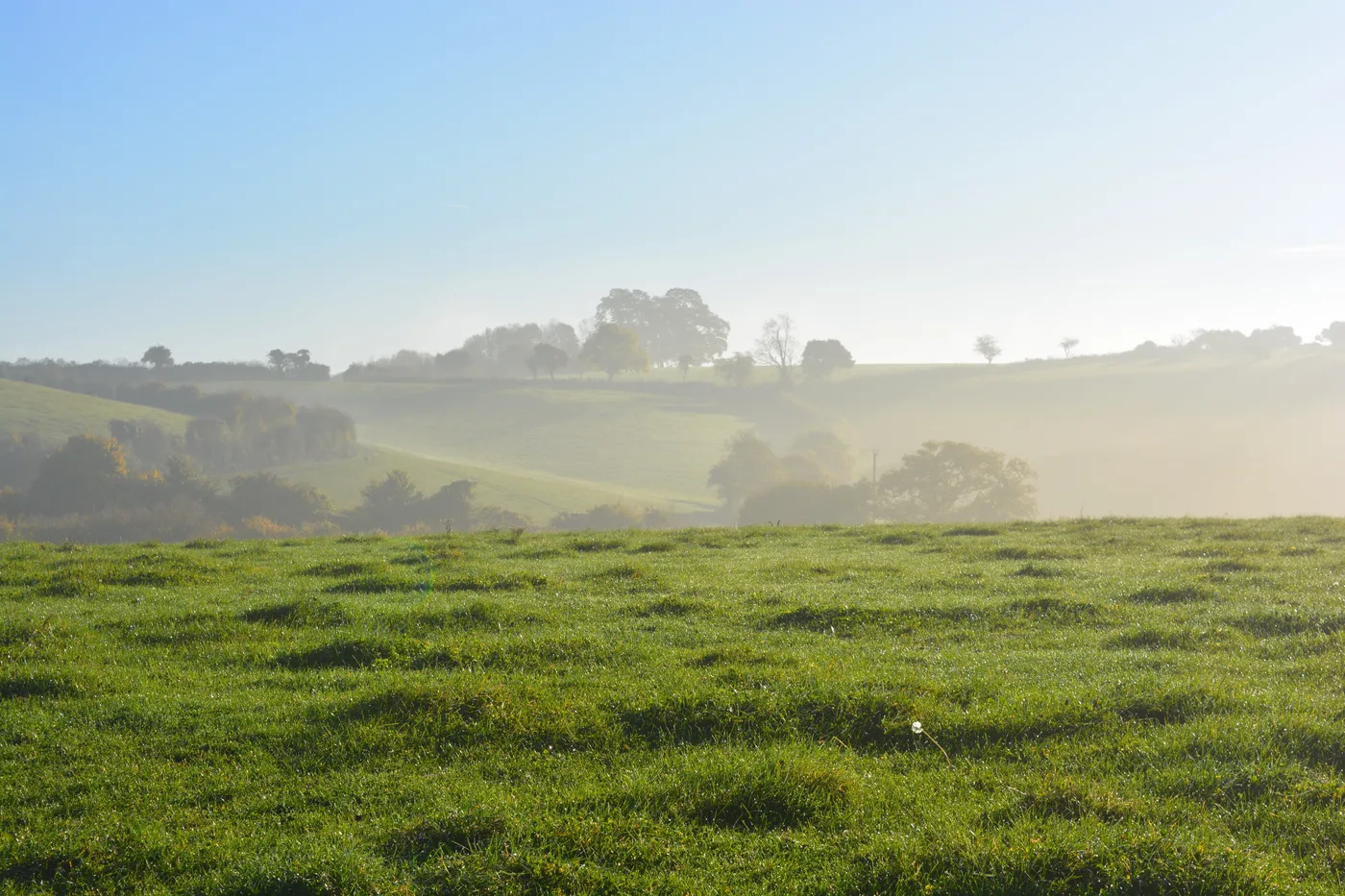
The color assigned to these weeks is green. Not the gold of the feasts or the purple of the preparatory seasons, but the color of a field in July: the color of things that are growing without any visible event taking place.
The proportion problem
Now set the church part aside, because the wisdom here is not doctrinal. It is arithmetic. A life, like a year, is mostly ordinary time. The weddings, the births, the diagnoses, the funerals, the moves, the beginnings and endings: these are the marked seasons, and if you gathered every one of them from an entire life they might fill a few years. Everything else, the overwhelming tonnage of a lifetime, is Tuesdays. It is packed lunches and commutes, dishes and dog walks, weeks whose contents you could not reconstruct a month later.
The trouble is that most of us run our attention on a festival model. We are always either recovering from the last marked occasion or preparing for the next one, and the counted weeks in between get treated as transit. Which means, if you do the arithmetic honestly, that we are treating the majority of our one life as a corridor. Nobody decides this on purpose. It is simply what happens when the only weeks with names are the loud ones.
What growth looks like when nothing is happening
The green of ordinary time is a claim: that the unmarked weeks are not empty, they are where the growing happens. And anyone who has lived a while can verify the claim from their own record. The marriages that hold are not held by anniversaries. They are held by ten thousand ordinary evenings, the ones where nothing happened except that two people were reliably kind to each other. The skills you are proudest of were not acquired at events. They accreted through unphotographed repetition. Even the great turns of a life, looked at closely, usually turn out to have been prepared in secret by a long green season nobody was watching, the way a field in July is quietly becoming a harvest.
Festivals mark growth. They do not produce it. The producing is done in ordinary time, which is exactly why a life aimed only at its festivals feels thin even when the festivals go well.
Keeping ordinary time, a practice
You cannot make the unmarked weeks louder, and you should not try. But you can count them, in the old sense: give them enough form that they register as lived rather than merely elapsed. A few ways in, take any or none.
Give the week one fixed observance. Small and repeatable: the Friday walk to the same point and back, the Sunday pot of soup, the Wednesday call to the same person. Not an event, an axis. A single recurring act does for a week what a spine does for a body; everything else can move because one thing does not.
Keep an ordinary record. One line a day, no more. What the light did, what was said at dinner, what the yard smelled like. The discipline is not literary. It is a counting practice, and its effect shows up months later, when you read back and discover that the weeks you would have sworn were empty were in fact dense with a life, your own, going on the whole time.
And borrow the color. Once a day, deliberately notice something green and growing, and let it stand for everything in your life that is currently in its unmarked season: the friendship thickening slowly, the child getting imperceptibly taller, the practice accumulating, the grief easing at the speed grass grows. None of it will be on any calendar. All of it is the actual year.
A word for the seasons that are not green
None of this romanticizes the hard stretches, and the old calendar does not either. It has seasons for waiting and seasons for grieving, and it does not pretend they are ordinary. If you are in one of those, keep this essay for later; the counted weeks will still be here.
But if you are in the long middle, the stretch with nothing on it, then you are standing in the largest single portion of your life, and you have a choice about what to call it. You can call it the meantime, the in between, the corridor. Or you can adopt the older, stranger, kinder name, and understand yourself to be in ordinary time: the ordered weeks, the counted weeks, the green and growing majority of a human life.
The Twenty Second Week of the year will never get a greeting card. It will not trend and it will not be remembered individually, any more than any single page of a book is remembered individually. But the pages are the book. Number them, keep one small observance in them, notice their color. Nothing is happening, says the festival mind, looking at a week like this one. Everything is growing, says the field.


Loading comments…