
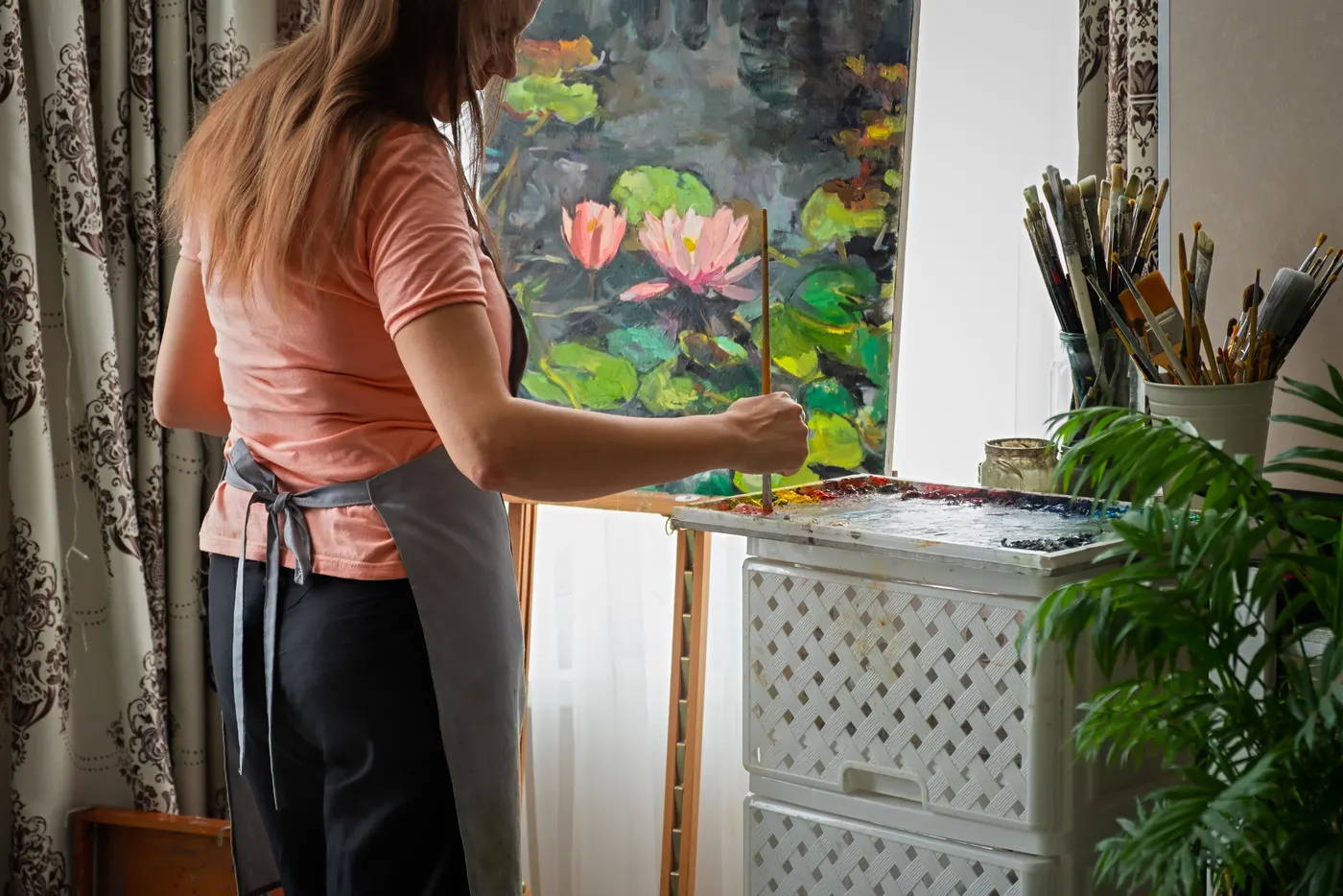
Ask a room of adults who among them is creative and you will get a few hands, raised carefully. Ask the same room who used to draw, or play something, or write, and nearly every hand goes up. Somewhere between those two questions is a thing that happened to most people at around the age of eleven, when the making of things stopped being play and started being judged, and the ones who were not going to be good at it quietly put it down.
The Word Itself Gives It Away
Amateur comes from the Latin amator, a lover. It meant someone who did a thing for love of it, as distinct from someone paid to. Only later did it slide into its current use as a polite word for bad, which is a small linguistic record of a large cultural shift: the assumption that an activity is only worth doing if you are, or might become, good at it.
That assumption costs more than it looks. It removes from most adult lives the entire category of things done purely because doing them is pleasant, and it does so at exactly the age when people have the most need of somewhere to put their attention that is not work and is not a screen.
What the Evidence Actually Says
The most substantial attempt to gather up the research is a scoping review published in 2019 by Daisy Fancourt and Saoirse Finn for the World Health Organization's Regional Office for Europe. It pulled together the findings of more than three thousand studies on the arts and health, across the prevention of illness, the promotion of health, and the management and treatment of conditions from dementia to chronic pain, and concluded that the arts play a meaningful role in all of them.
That is a genuinely large body of work, and it deserves a genuine caveat. A scoping review is a map, not a verdict. The studies underneath it vary enormously in quality, a great many are observational, and observational work on a leisure activity has an obvious problem: the people with the time, money and health to take up painting are already different from the people who do not.
The most quoted single finding has exactly that shape. In 2019 Fancourt and Andrew Steptoe published a fourteen-year follow-up of 6,710 adults over fifty in the English Longitudinal Study of Ageing. Those who engaged with the arts every few months or more, meaning museums, galleries, concerts, the theater, had a 31 percent lower risk of dying during the study than those who never did, after adjusting for wealth, education, health and social contact. Even once a year was associated with a 14 percent lower risk.
It is a striking number and it should be handled with care. That study measured receptive engagement, going to things, not making them. And adjustment is not the same as removing an effect. Still, it held up against a long list of the obvious explanations, which is more than most lifestyle findings manage.
One thing worth not claiming: you will find it said everywhere that forty-five minutes of art-making drops your cortisol. It traces to a single small study, and the wider evidence for hormonal effects of this kind in adults is thin. The case for making things does not need a hormone. It is not improved by resting on one.
Why Making Anything Seems to Work
The more plausible mechanism is less glamorous and more useful. Making something demands a particular quality of attention: enough to occupy you, not so much that it becomes work. Mihaly Csikszentmihalyi spent a career describing this state, in which the task is just difficult enough to hold you and self-consciousness drops away. What it displaces, for the hour it lasts, is rumination, and rumination is the engine underneath a great deal of ordinary low mood.
This is also why the activity has to be a bit demanding. Passive consumption does not do it, because it makes no claim on you. The hobby that works is the one that requires just enough of your hands and eyes that there is no spare capacity left over for the argument you had on Tuesday.
Group singing has a small but consistent literature of its own, and probably works through a second route as well. Singing regulates the breath, in a long slow exhale, and does it in a room full of other people who are doing the same thing. Whatever else it is, that is a well-designed intervention.
Why It Has to Be Allowed to Be Bad
Here is the part that matters most and gets the least attention. The moment the making becomes about the quality of the output, the evaluation comes back into the room, and evaluation is what ended it the first time.
There is a familiar and painful gap, described best by the radio producer Ira Glass, between the taste that made you want to do the thing and the ability you have when you begin. Everyone who has picked up a brush at forty knows the feeling of putting down something markedly worse than the thing in their head. For someone trying to become a professional, closing that gap through years of deliberate practice is the entire job. For someone who just wants an hour on a Sunday, treating the gap as a problem to be solved is the fastest way back to giving up.
Deliberate practice is a technology for getting good. It is not the same activity as making a thing for the pleasure of making it, and running them together has quietly deprived a lot of people of the second one.
How to Start Again
Choose something with no setup cost. The hobby that requires clearing the table, laying out the materials and cleaning up afterward will lose to the phone every time. A sketchbook and a pen on the arm of the chair will not.
Work in short sittings. Twenty minutes, several times a week, beats a heroic Sunday afternoon that never comes.
Finish things. A finished bad thing teaches more than an abandoned promising one, and it gives you the small pleasure of having made an object that did not exist before.
Do not show anyone for a while. Not from shame. Because an audience, even a kind one, turns the activity into a performance, and the point is to have one thing in your life that is not being assessed.
Then find the group anyway. Choirs, life-drawing rooms, writing circles, community pottery. Much of the benefit in the literature attaches to doing this alongside other people rather than alone.
Refuse to monetize it. The most reliable way to lose a hobby is for it to start earning, at which point it becomes a small underpaid job with your leisure time as the office.
The Whole Point Is That It Is Useless
Most of what we do has to justify itself. Work produces income, exercise produces health, sleep produces tomorrow. An hour spent painting a bowl of lemons badly produces a bad painting of some lemons, and this is not a flaw in the arrangement. It is the only part of the week that is not answerable to anything, and a life with none of it in is more brittle than it looks.
You do not need to be good. You need to be a lover of the thing, which is all the word ever meant.



Loading comments…