
How embracing the one thing we fear most can teach us how to truly live.
Love death? It sounds outrageous, until you discover that embracing death may be the key to living life more fully. Most of us spend a lifetime ignoring it, denying it, or avoiding it. Turning away from death does not make it disappear. It only leaves us unprepared for life's greatest certainty.
Despite death being inevitable, it is seldom discussed. We are not taught about death at school, and many families avoid conversations about it. Throughout life, death remains the subject we know is coming but rarely prepare for. Yet when we encounter loss or face our own mortality, we are expected to know how to respond.
This may be because we have learned to see death as a failure rather than a natural part of life. Society celebrates youth, seeks to extend life whenever possible, and often treats death as something to defeat. When death arrives, it can feel like the ultimate loss. If our relationship with death leaves us fearful and unprepared, the problem may not be death itself. Perhaps it is the way we see it.
What if death has a purpose?
We often see death as the end of life; it may be better understood as a transition. Just as birth is our entrance into this physical world, death is our departure from it. The body completes its role, while consciousness continues. From this perspective, death is not the opposite of life but is part of the continuity of life.
Life and death are part of a much larger journey of consciousness. The challenges we face, the different paths we walk, and even life's apparent injustices can be viewed as part of that journey. If consciousness experiences many lifetimes, then each life becomes one chapter in an unfolding story. We come here to learn, to grow, to love, and to share our unique gifts. When that purpose has been fulfilled, death is not an interruption but a passage into another form of existence.
Even with this deeper understanding of death, anxiety may still arise. The emotions surrounding death are often rooted in fear. The fear of death is not one single fear; it is a collection of fears that quietly shapes how we think, the choices we make, and how fully we live. We may fear pain and suffering, leaving loved ones behind, not having lived a meaningful life, or what happens after death. For some, the greatest fear is judgment; for others, it is the possibility that nothing exists beyond physical life.
The first step in overcoming fear is to take action. When it comes to death, this means becoming curious and educating ourselves about all aspects of what death involves. Much of our fear comes from the unknown. Exploring accounts of near-death experiences, out-of-body experiences, meditation, and other altered states of consciousness can provide insights into possibilities beyond our ordinary understanding. Learning about death is a form of preparation. Death preparation is not about becoming obsessed with dying; it is about becoming more familiar with something that is part of the great unfolding of existence. When we become more acquainted with death, our relationship with life often begins to change.
Seeing life as part of something greater changes the questions we ask. Instead of asking, "Why is this happening to me?" we can ask, "What is this moment inviting me to learn?" Every situation offers an opportunity to choose how we respond. We may not be able to control everything that happens, but we can choose whether we meet life from fear or from love.
One of the greatest shifts we can make is to change how we see ourselves. We often become completely identified with the physical body and treat it as something that must be preserved forever. The body is temporary. It is the vehicle through which consciousness manifests during this lifetime.
Many traditions describe this consciousness as the soul, spirit, or life force. From this viewpoint, we are not merely physical beings having a brief existence. We are consciousness expressing itself through human form. We see ourselves as individuals because individuality allows us to learn and evolve. Yet as our awareness expands, we begin to recognize our deeper connection with others and with all of existence.
One of death's teachings is that everything is connected. Those who have had profound experiences beyond ordinary consciousness often share a common message: life is an opportunity to learn to love more deeply and to choose love in every situation. Perhaps death offers our greatest challenge, and our greatest opportunity, to choose love.
If love is the lesson we are here to learn, then embracing even death with love becomes part of that unfolding. Instead of fearing death, we can begin to celebrate it. We can see it not as an ending, but as a magnificent transition. Celebrating death is liberating because it frees us from the belief that our existence is limited to the physical body alone.
This shift in perspective changes the way we live. If you ignore death, you may leave this life without understanding one of its most profound mysteries. If you deny death, you deny an essential part of the human experience. When you embrace death, you gain a deeper appreciation for life itself. Rather than be a victim of death, you can become a conscious participant in your death experience. Death is not a moment at the end of life, but a moment within life. When death is held in love, life becomes more precious.
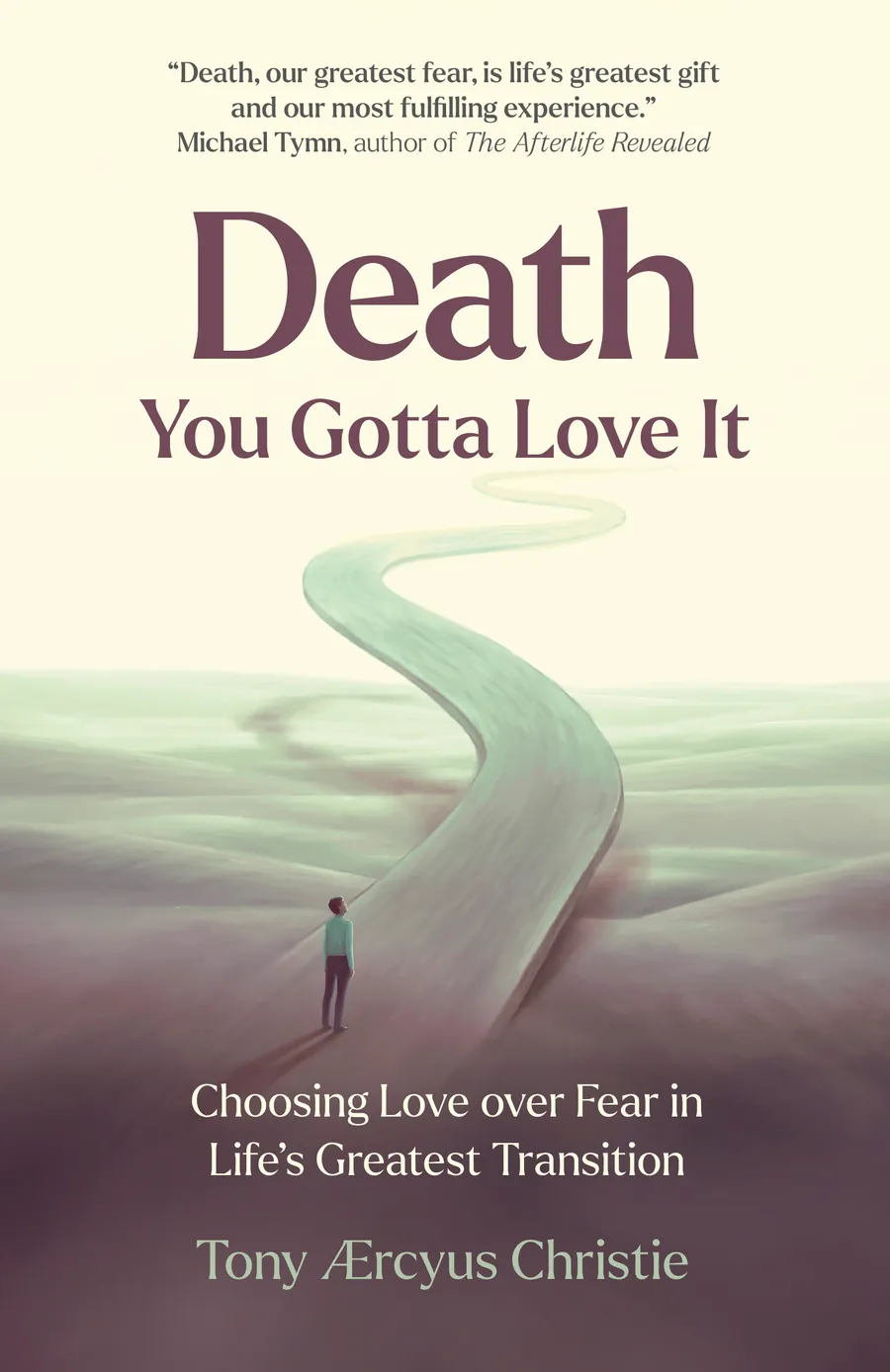
Tony Ærcyus Christie, Messenger of Oneness, Mystic, and Spiritual Teacher. Author of Death — You Gotta Love It, Labyrinth: Your Path to Self Discovery and Labyrinth Wisdom Cards. tonymchristie.com



Loading comments…