
There is a guitar in a closet somewhere in your house, or a sketchbook with four used pages, or a language app you have not opened since March. You are not lazy, and you did not lose interest. You stopped because you were bad at it, and being bad at things is a feeling adults quietly arrange their whole lives to avoid.
Watch how it happens. Through your twenties and thirties, life runs a long, unannounced audition. The things you show talent for get invitations: more work like that, more praise like that, an identity built from them. The things you fumble get gently retired. Nobody decides this. It settles, the way a path settles across a lawn, until by midlife most of us are walking an astonishingly narrow strip of ground: the four or five things we already know we are good at, repeated with small variations, indefinitely.
It feels like maturity. It is actually a trade, and it is worth looking at what got traded away.
What competence costs
Competence is comfortable in a very specific way: it is predictable. When you do the thing you are good at, you know roughly how it will go, and how it will feel, and what people will say. That predictability is pleasant, and it is also why the weeks blur. Novelty is a large part of how time gets its texture. A year with nothing unfamiliar in it is processed, filed, and compressed, which is why the decade between forty and fifty can feel like it took eighteen months.
The beginner has the opposite problem, and it is a better problem. Everything is vivid because nothing is automatic. The first month of anything new is lived at a level of attention the expert has not felt in years: where the fingers go, how the knife angles, what that word meant again. Beginners are awake the way travelers are awake. It is the same mechanism. Unfamiliarity forces the mind out of playback and into the present, and the present, it turns out, is where the aliveness was the whole time.
The apparatus still works
The standard alibi is age: too late to start, brains like concrete, should have begun at nine. The alibi does not hold. Adults learn differently, not worse. A nine-year-old will outpace you at absorbing a language by ear; you will outpace the nine-year-old at seeing structure, connecting the new thing to forty years of pattern, and showing up on purpose. Adult learners bring something children cannot: they know why they are there. What adults actually lack is not plasticity but permission, plus the tolerance for the awkward phase, which children never think to be embarrassed by.
And the awkward phase is not the obstacle to learning. It is the learning. That feeling of effortful clumsiness, of reaching for something not there yet, is what building a skill feels like from the inside. The discomfort is not evidence you are too old. It is evidence the process has started.
Why bad is the point
Here is the part that sounds backwards. The value of taking up something new in adulthood is not that you might eventually get good. It is what being bad does to you right now.
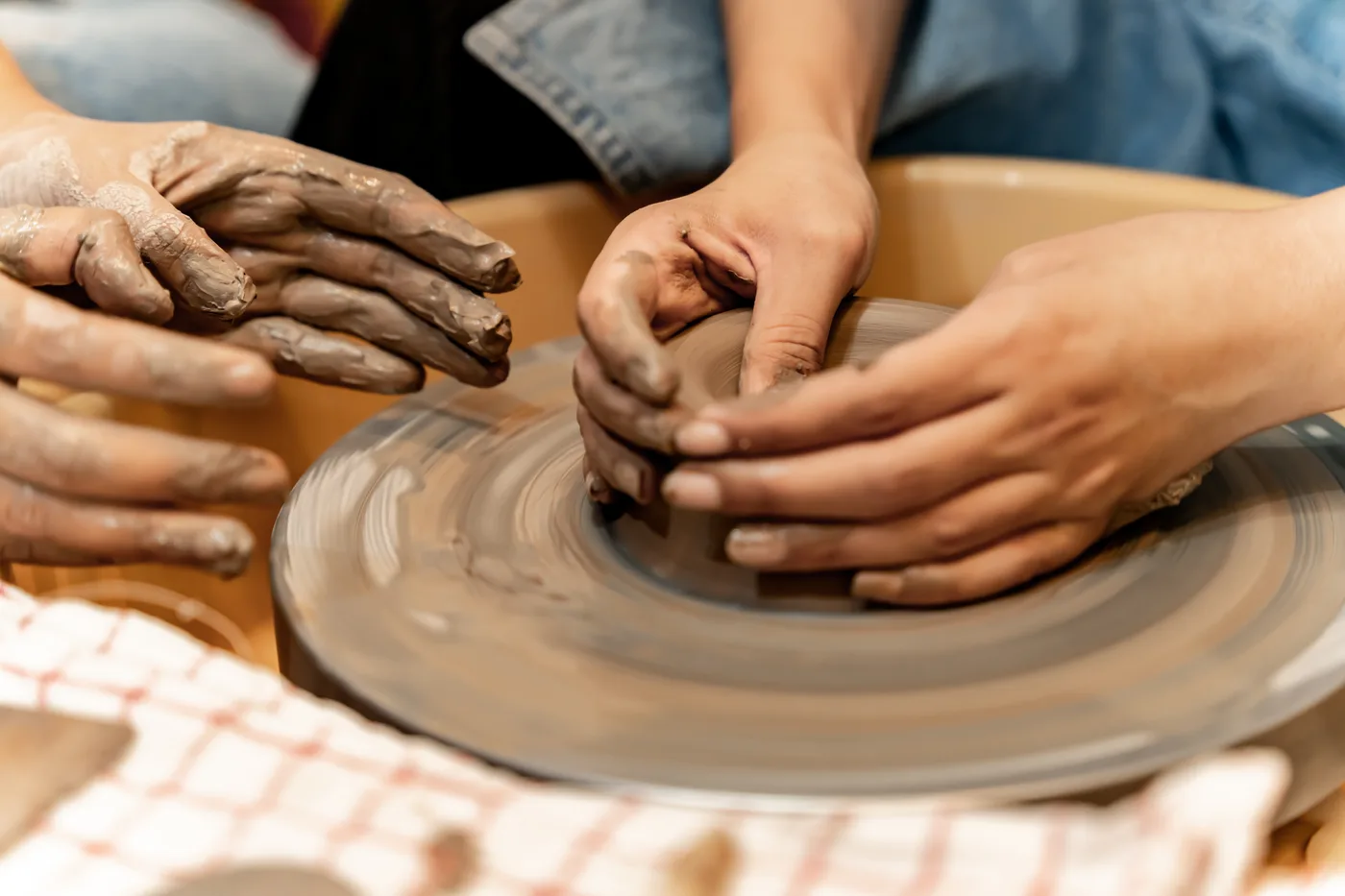
Being a beginner is a humility you cannot fake and cannot skip, and it is strangely relieving. In the rest of your life you are the parent, the manager, the one people ask. In the pottery studio you are just the person whose bowl collapsed, and everyone saw, and it did not matter. Low stakes are a luxury adults almost never grant themselves. A pursuit where nothing rides on the outcome, no income, no reputation, no one depending on you, is a room where a whole layer of self-protection can be set down at the door.
It also quietly renovates your sympathies. Spend six months being slow at something and you become gentler with everyone else who is slow at anything: the new hire, the teenager, the parent learning to text. Expertise breeds impatience. Beginning breeds the opposite, and the people around you will feel the difference before you do.
Choosing your thing
The wrong choice is the grand one. The novel, the marathon, the fluent Italian by summer: these are outcomes, and outcomes are where beginners go to die. Choose instead by appetite and smallness. The test is not what would be impressive. The test is what you find yourself watching other people do with a small ache. The neighbor's garden. The friend who plays. The stranger sketching in the park with no apparent self-consciousness. That ache is information, and most people override it for decades.
Then shrink the commitment until it is almost embarrassing. Not lessons twice a week: one lesson, once, to see. Not an easel and a paint set: a pencil and the backs of envelopes. Twenty minutes, twice a week, is a genuine practice, and it is sustainable in a full life, which the heroic version never is. You are not trying to make progress fast. You are trying to still be doing it in November, because the returns of a new pursuit compound late, and quitting in week three collects none of them.
Privacy helps more than people expect. You do not owe anyone an announcement, a class enrollment, or documentation. A thing can be yours, unwitnessed, done badly in the kitchen after the house is quiet. Some pursuits stay best that way for years.
The plateau, and what it is for
Expect the curve to be lumpy. The first weeks are steep and delightful: everything improves because everything was zero. Then comes the long flat middle, where effort goes in and nothing visible comes out. This is where the closet acquires its guitars. It helps to know that the plateau is not a stall. Skills consolidate below the waterline before they show above it, and the practice sessions that feel useless are usually the ones doing the pouring. The plateau is not the price of the skill. In some honest accounting, the plateau is the skill: the ability to keep faith with a process that is not flattering you.
Which is, you may notice, the same ability every other long thing in your life requires. A marriage, a body, a career, a garden. Adults who are never beginners at anything get no practice at this, because everything they still do pays out on schedule.
The standing invitation
Somewhere in the next few days, the ache will show up: watching someone do the thing, easy as breathing, the way you would like to. That is the invitation, and it does not expire, but you do not have forever either. You do not need a plan. You need one small, slightly ridiculous first session, this week, with nobody watching.
You will be bad at it. That is not the fine print. That is the offer: a chance, rare after forty, to stand at the bottom of something and feel the whole climb still ahead of you, and to discover that the feeling you have been avoiding all these years was aliveness wearing work clothes.


Loading comments…