
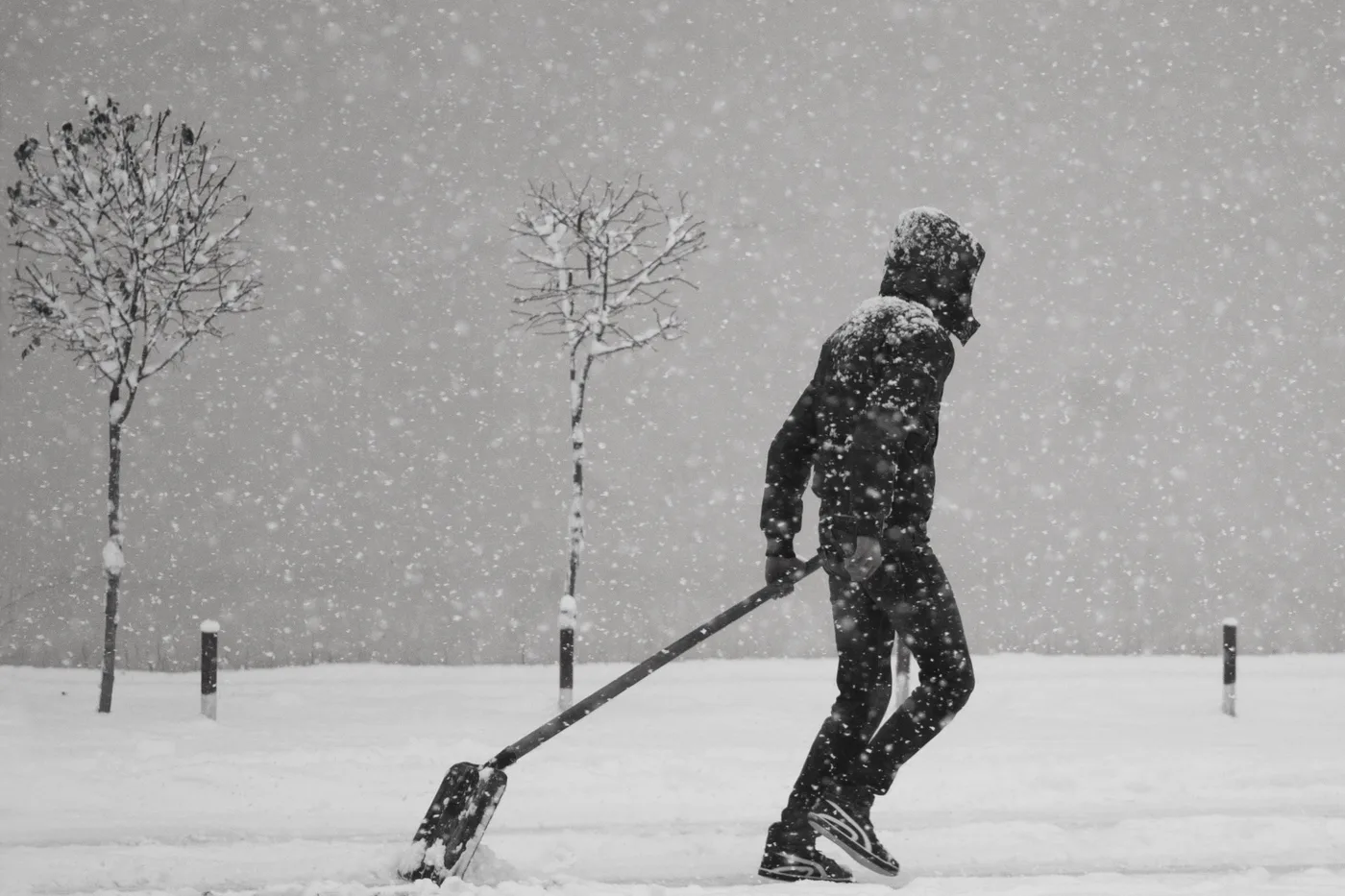
The first real snow comes overnight, and by seven the street is quiet and white and the driveway is buried. You pull on boots, take the shovel from beside the door, and start before you have had coffee, because the car has to get out and the job will not do itself. Twenty minutes later your shirt is damp under your coat, your breath is short, and your heart is going harder than it has all month. Most men treat this as a chore. It is closer to a workout, done cold, done fast, and done by people who may not have worked out in a while.
Why a chore asks so much
Shoveling heavy snow is one of the hardest things many people do all year. Each scoop of wet snow can weigh several pounds, and a driveway asks for hundreds of them. Researchers who measured healthy but out-of-shape men while they shoveled found their heart rates climbing into the range used for a hard treadmill stress test, and staying there.
Three things make it harder on the heart than the same effort in a gym. The first is the cold. Cold air tightens the blood vessels in the skin to hold in heat, and narrower vessels mean the heart pushes against more resistance. The second is the arms. Work done mostly with the arms raises blood pressure more than the same work done with the legs, and shoveling is arm work. The third is the breath. Lifting a heavy load, many people hold their breath and bear down without noticing, which sends blood pressure up sharply for a moment.
Add the timing. Snow tends to get shoveled early, often right after waking, when the body is still stiff and when, for reasons tied to the body's daily rhythm, heart attacks are already more common. And it gets shoveled in a hurry, because there is a train to catch or a shift to start.
Why this is a men's piece
A large study from Quebec, which has no shortage of snow, looked at decades of hospital records and found that heavy snowfall was followed by more heart attack admissions and deaths among men, but not among women. The researchers did not watch anyone shovel, so they could not say for certain why. The likeliest explanation is the plain one: in most households, men are the ones out there with the shovel.
There is a second reason, and it is the one that matters more. Men are good at ignoring the early signals of their own bodies. A tight chest gets called a pulled muscle. Breathlessness gets blamed on the cold. The instinct is to finish the job, then sit down. That instinct is the dangerous part.
Before you go out
If you have heart disease, high blood pressure, diabetes, or a history of smoking, or if you have not exercised regularly in a long time, talk with your doctor before the snow comes about whether you should be shoveling at all. That conversation is worth having in November, not in the middle of a storm. This piece is general information, and it is not a substitute for advice from a clinician who knows your health.
For everyone else, a few things change the job a great deal.
Wait a little after waking. Give yourself time to move around, drink some water, and loosen up before you take on the heaviest work of the day. Avoid shoveling right after a big meal, when blood is busy elsewhere, and skip the drink beforehand, which can blunt your sense of how hard you are working.
Warm up the way you would for anything else. Five minutes of walking, arm circles and a few easy squats before you lift the first scoop makes a real difference to muscles that have been still all night.
Dress in layers you can open. You will heat up faster than you expect. Cover your head and hands, and consider a scarf over your mouth, which warms the air a little before you breathe it.
How to move the snow
Push, do not lift, wherever you can. A wide pusher shovel slides snow to the edge of the driveway without asking you to raise it. Save lifting for the last few feet.
Take smaller scoops. A half-full shovel moved twice is easier on the heart than a full one moved once. A smaller blade forces this on you, which is a good reason to own one.
Breathe out as you lift. Keep the breath moving. If you catch yourself holding it and straining, the load is too heavy.
Bend your knees and keep the shovel close. Lift with your legs, turn your whole body instead of twisting at the waist, and never throw snow over your shoulder.
Go out more than once. In a long storm, clearing a few inches every couple of hours is far gentler than clearing a foot at the end. Fresh snow is also lighter than snow that has settled or been rained on.
Rest on purpose. Stop every ten minutes or so, straighten up, and catch your breath, whether or not you feel you need to. Pace is the whole game. Nobody is timing you.
Know when to stop
Learn the warning signs before the storm, because you will not want to think about them during it. Pressure, squeezing or pain in the chest. Discomfort that spreads to the arm, the back, the neck or the jaw. Shortness of breath that does not settle when you rest. A cold sweat, nausea or sudden lightheadedness.
If any of these appear, stop shoveling right away. Do not finish the last patch, and do not go inside to lie down and see if it passes. Call 911. Emergency crews would much rather arrive for a false alarm than for a man who waited.
Snowblowers help, but they are not effortless. Steering a heavy machine through deep snow is still real work in real cold, and the same signs apply.
The other way to clear a driveway
For a lot of men, the shovel is about more than the snow. It is a small proof of capability, a job you have always done, a thing a man takes care of. That pride is worth respecting. It is not worth a heart attack.
There are other ways to keep the pride and lose the risk. Split the work with a neighbor and do it together, at an easy pace, in turns. Pay the teenager down the street, who has a strong back and wants the money. Clear only a path to the car and leave the rest for the sun. Arrange with a plowing service before the season starts, so the decision is already made when the storm arrives. None of these is giving up. Each is a man deciding how to spend his effort.
Before the next storm, do three small things. Set a lighter shovel or a pusher by the door. Put the warning signs somewhere you will see them, on the fridge or in your phone. And decide now, while it is dry outside, who you will call if the snow is heavy and your body says no. The driveway will still be there in an hour. So should you.



Loading comments…