
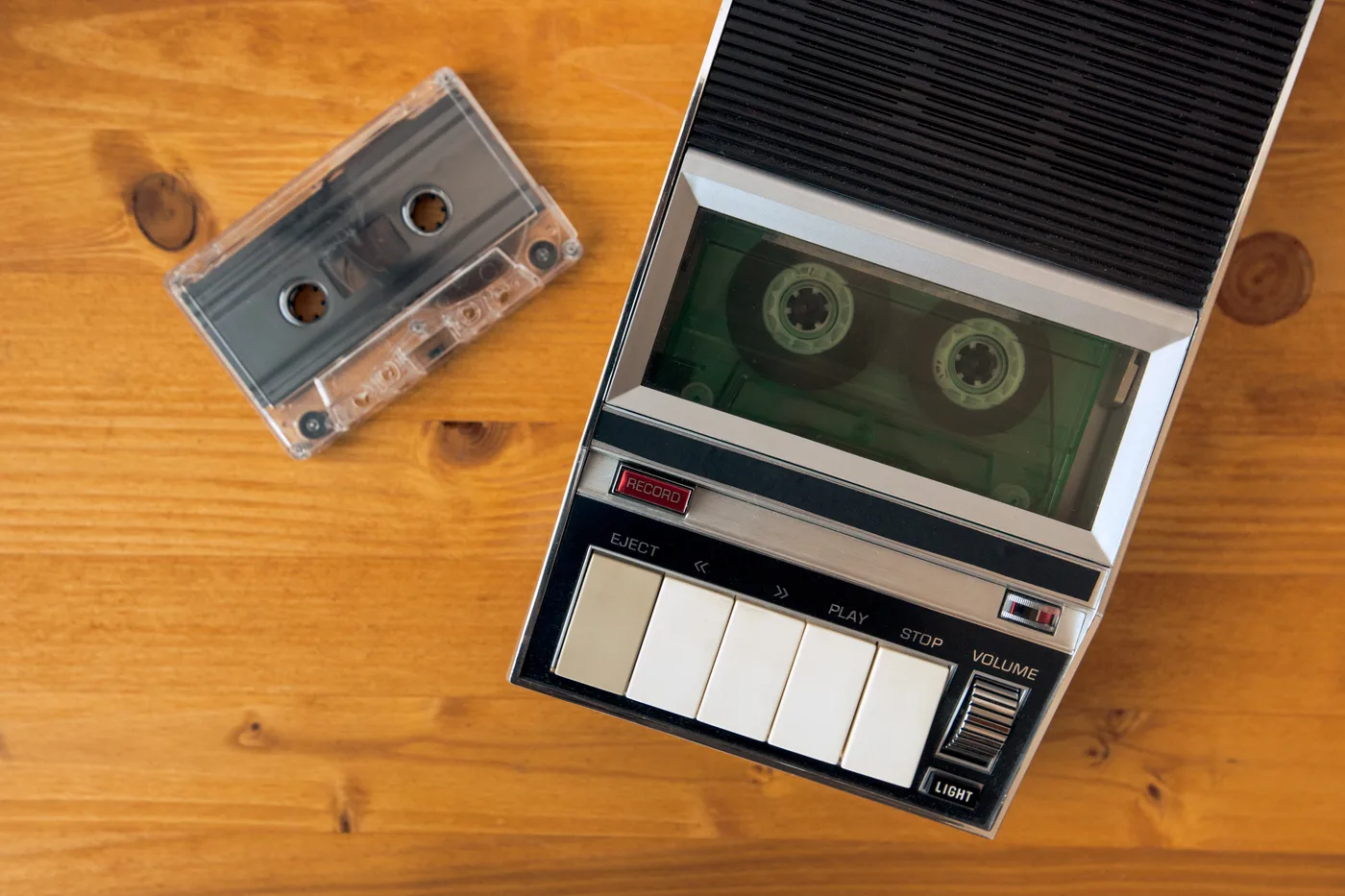
There is a recording you will want someday, and it does not exist yet. It is your mother explaining how she met your father, in her own words, with her own pauses and the laugh she does when she gets to the embarrassing part. It is your grandfather describing the street he grew up on, the names of the neighbors, what the kitchen smelled like on Sundays. You assume you will always be able to ask. Then one day you cannot, and you realize you know the outline of their lives and almost none of the detail.
The stories that go missing
Families keep their history in a strange way. A few stories get told so often they wear smooth: the blizzard, the wedding, the time the car broke down in Pennsylvania. Everything else lives in one person's memory and nowhere else. How they felt the day they left home. What their own grandparents were like. The job they almost took. The person they nearly married. The worst year, and how they got through it.
Nobody hides these things. They simply never come up, because ordinary life does not ask for them. Holiday conversation runs on the present: work, the kids, the traffic, the food. So the deeper stories wait for a question that never arrives.
The fix is simple and slightly awkward. You ask. On purpose, with time set aside, and with your phone recording.
Why it matters more than it seems
Projects like StoryCorps, which has gathered hundreds of thousands of recorded conversations between ordinary people since 2003 and archives them at the Library of Congress, have shown how much people treasure these recordings afterward. The voice matters as much as the facts. A written family tree tells you who someone was. A recording tells you how they sounded when they talked about it.
There is also a benefit to the living. Psychologists at Emory University studied how much children knew about their family's history: where their grandparents grew up, how their parents met, the hard times the family came through. Children who knew more of those stories tended to report a stronger sense of control over their lives and greater confidence. The researchers' explanation was that knowing your family has weathered difficulty before gives you a sense of belonging to something that lasts.
And the person being interviewed often gets something too. Being asked to tell your story, slowly, by someone who genuinely wants to hear it, is rare in adult life. Many older people say it is the first time anyone has asked.
How to set it up
Ask for it plainly. Something like: I would love to hear more about your life and get some of it recorded, would you sit with me for an hour sometime? Most people say yes. Some are shy and will say there is nothing interesting to tell. Gently disagree and set a date anyway.
Pick a calm, familiar place. A kitchen table is ideal. Turn off the television, put the phone flat on the table between you, and use its built-in voice recorder. Check that it is recording, then forget about it. Audio is usually better than video here; a camera makes people perform.
Keep it to an hour. Memory work is tiring. Better to do three good hours over three visits than one exhausting afternoon.
What to ask
Start easy and concrete. Concrete questions unlock memory far better than big abstract ones. Not what was your childhood like, but what did your house look like, walking in the front door?
A few that tend to open things up:
What is your earliest memory? Who lived on your street when you were small? What did your parents do for work, and what were they like at the end of the day? What did you want to be when you were twelve? How did you meet the person you married? What was the hardest year of your life, and what got you through it? What is something you were proud of that nobody really knew about? What did you learn late that you wish you had known young? What do you want your great-grandchildren to know about you?
Then the most important part: follow up. The best material is almost never in the first answer. It is in what happened next, who else was there, what that felt like. Let silences sit. People often fill a pause with the thing they were not sure they wanted to say.
When the story gets hard
Sooner or later, an interview reaches a painful place: a parent who drank, a child who died, a marriage that ended badly, a war. You will feel the urge either to rush past it or to dig in. Do neither. Slow down, and let the person decide how far to go. A simple line helps: you do not have to talk about that, but I would like to hear it if you want to tell me. Then wait.
Some people will close the door, and that is their right. Some will tell you things they have never told anyone, and the recording will become the most precious thing your family owns. Either way, you are a listener here, not a journalist. You are not trying to get the truth out of anyone. You are making room for whatever they want to leave behind.
It also helps to remember that you are hearing one person's version. A sibling or cousin may remember the same events differently. That is not a problem to resolve. It is part of the record, and a family's history is richer for having more than one voice in it.
If the person you wanted to ask is gone
Many people come to this idea a little late. If the grandparent you most wanted to interview has died, turn to the people who knew them: their siblings, their old friends, a neighbor who lived next door for thirty years. Ask them the same concrete questions about the person you lost. You will be surprised how much of someone survives in the memories of others, and how glad those people are to be asked.
What to do with the recordings
Name each file with the date and the person, and back it up somewhere beyond your phone, on a cloud drive and in a second place too. Share copies with siblings and cousins. If you want to go further, a transcript is easy to produce now with ordinary software, and a printed copy tucked into a family album will outlast every device you own.
Do not wait for a perfect moment, a milestone birthday or a reunion. The perfect moment is the one where the person is still here and willing. Some of the families who wish most that they had done this are the ones who planned to, and kept planning.
Bring the phone to the next visit. Ask one real question, and then another. You are not just collecting their story. You are telling them, by sitting there and listening, that it was worth keeping.


Loading comments…