
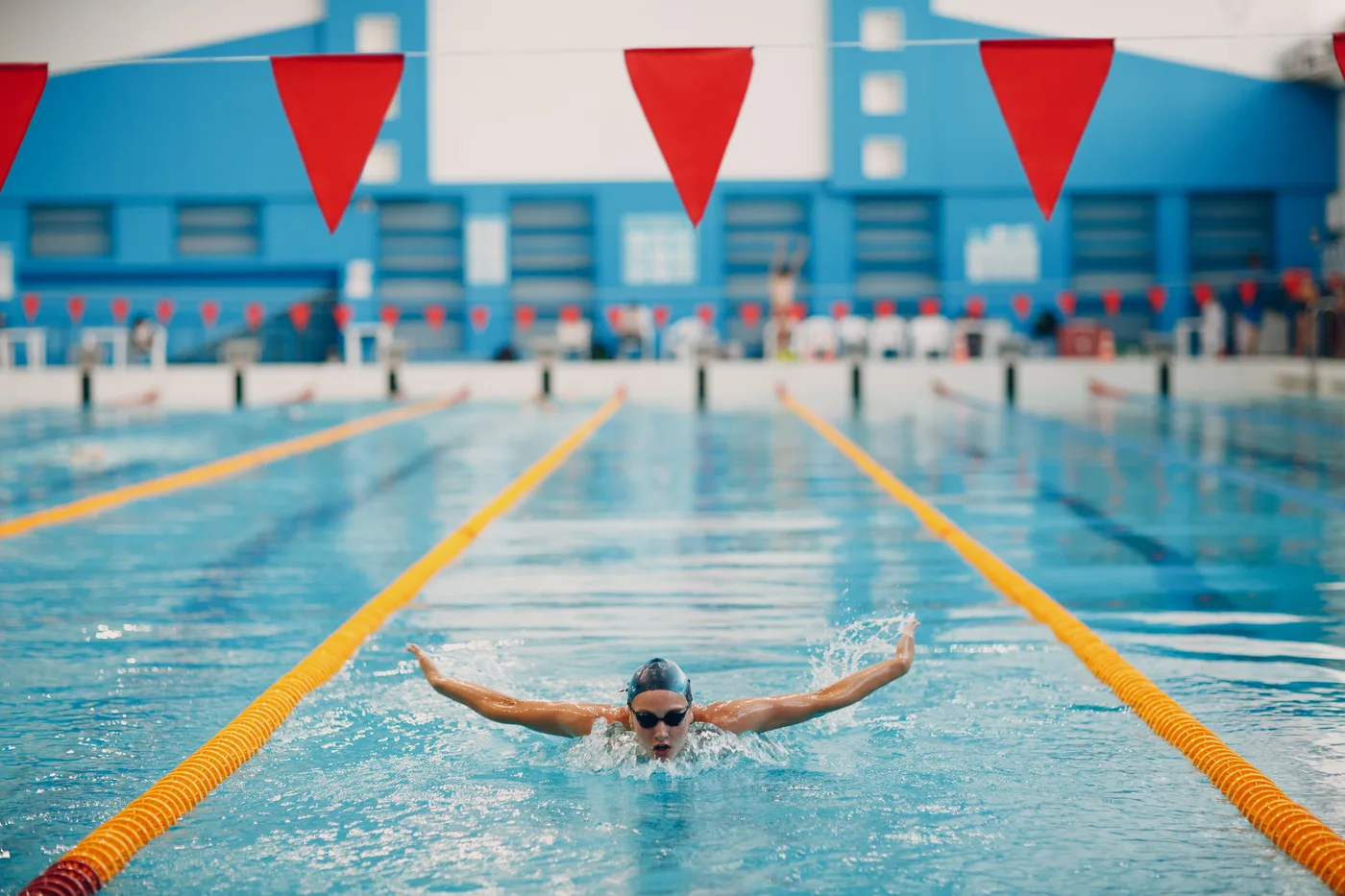
It happened somewhere around the second month. The laps that once left you gasping became laps you could finish, the chords changed under your fingers without being asked, the new language stopped sounding like weather and started sounding like words. And then, with no announcement, the improving stopped. You are still showing up. The practice is the same practice. But the needle that moved every week has gone still, and a voice you thought you had outgrown starts asking whether this is simply as good as you get.
The beginning was steep for a reason
The first weeks of learning anything are a landslide of easy wins. Not because you were talented, and not because the practice was better then, but because a beginner's performance is held back by a handful of large, obvious errors, and removing a large error pays instantly. You stop holding your breath in the water and a whole lap appears. You learn where the fingers of one chord live and a song opens up. Early practice is error removal, and big errors are easy to find.
The curve that describes this has been drawn in learning research for over a century, and it has the same shape for nearly everything: steep at the start, flattening as it goes. Each gain makes the next gain smaller, because what remains to fix is subtler than what you already fixed. The flattening is not a verdict on you. It is the shape of the thing itself, the same for the swimmer in the next lane and for everyone who ever learned what you are learning.
Nobody tells beginners this. So the steep part writes a story, that effort converts to progress at a fixed rate, and when the conversion rate drops, the story offers only two explanations: the method stopped working, or you have hit your ceiling. Both are usually wrong.
Flat is not the same as still
The uncomfortable truth about the plateau is that your own sense of improvement is a poor instrument. Researchers who study skill draw a line between performance, what you can do in this session, and learning, the durable change underneath. The two do not move together. Practice that feels smooth and productive can produce very little lasting change, and practice that feels clumsy and discouraging can produce a great deal. The feeling of getting better and the fact of it are different things, and on the plateau they come apart.
Some of what happens during the flat stretch is not visible from inside at all. Skills consolidate between sessions, not just during them; the nervous system keeps working on a movement after you have showered and gone home, and sleep is part of how a sequence practiced today becomes a sequence owned next week. Progress on a plateau often shows up sideways: the same lap time, but an easier heartbeat at the wall. The same conversation in the new language, but you were not translating in your head. The notes are not faster, but you listened to yourself playing them. These are real gains. They just do not register on the gauge you have been watching.
Good enough is the trap
There is a second thing happening on the plateau, and this one deserves your suspicion. The whole point of practice is to make a skill automatic, to take it out of expensive, deliberate attention and hand it to a part of you that does not have to think. Automation is the gift. It is also the trap, because the body automates the method you gave it, not the best method available. Once your stroke, your pronunciation, your swing is good enough to get through, the revising stops on its own. Comfortable repetition maintains a skill; it rarely improves one.
Typing is the honest example. Most adults type every day, thousands of repetitions a year, and have not gotten faster in decades. Daily use settled at good enough sometime long ago and has been coasting since. Repetition alone was never the engine of improvement. Reaching past the comfortable version of the skill is, and that reaching is exactly what automation quietly retires.
So a long plateau is often not a ceiling. It is a settlement. Somewhere below your attention, a workable version of the skill got locked in, and every easy session since has been practicing the lock.
How to practice through the flat stretch
None of this requires a coach or a system, though both can help. It requires changing what you ask of a session.
Shrink the thing you measure. The lap time is a crowd of a dozen skills wearing one number, and a crowd moves slowly. Pick one member of it, the push-off, the breath on the weak side, the single verb tense that keeps collapsing, and let that be the project for a week. Small things still move on a plateau. Watching one of them move is how you stop believing nothing is moving.
Make one part harder on purpose. Slow the passage down below the speed of your mistakes. Swim a length with closed fists. Write the paragraph without the word you lean on. Difficulty you choose puts the skill back in front of your attention, which is the only place it gets revised. The session will feel worse, and that is not a malfunction. Clumsy is often what relearning feels like from inside.
Vary the conditions. The same drill in the same order lets the automated version sleepwalk through. A different order, a different tempo, a different pool, a conversation with a stranger instead of the patient friend, each forces a small renegotiation, and the renegotiations are where the settled method comes back up for review.
And keep a log, one line per session. Not to be industrious, but because the plateau's real weapon is bad memory. Against the fog of it felt the same as last month, a page that shows the fists drill arriving, the weak-side breath appearing, the verb tense holding, is evidence. Most of what a plateau takes from people it takes by making progress forgettable.
Expect, too, that changing a settled technique often makes things briefly worse. The old method was automated; the better one is not yet. The dip between them has talked many people back into the old stroke a week before the new one was ready. If you have deliberately changed something, a worse fortnight is not the verdict. It is the construction.
The long middle
It helps to say plainly what the flat stretch is: it is most of the time. The steep weeks at the front of a skill are a short overture, and whatever mastery waits at the far end is a place almost no one lives. The middle is the skill. The people you admire at the pool, in the language, on the instrument, are not people who found a way around the plateau. They are people who furnished it and moved in, who learned to take their satisfaction from the quality of the practicing rather than the speed of the arriving.
Which means the question the plateau asks is not really whether you are still improving. It is whether you like the thing itself, the water, the words, the wood of the instrument, enough to keep meeting it after it has stopped paying you weekly. Answer yes and the gains, slower and quieter, keep coming for years. The needle has not stopped. It has moved out of sight, into the stroke, the sentence, the hands. Keep going. You are not stuck. You are in the part where the skill is actually built.



Loading comments…