
You read a sentence that stops you. Maybe it is in a novel, or a recipe card in your grandmother's hand, or something a stranger said on the train that you wrote on the back of a receipt. For a day it hums in you. Then it goes wherever good sentences go when nobody keeps them, and a month later you can remember only that there was something, once, that you meant to hold on to.
An old habit with a plain name
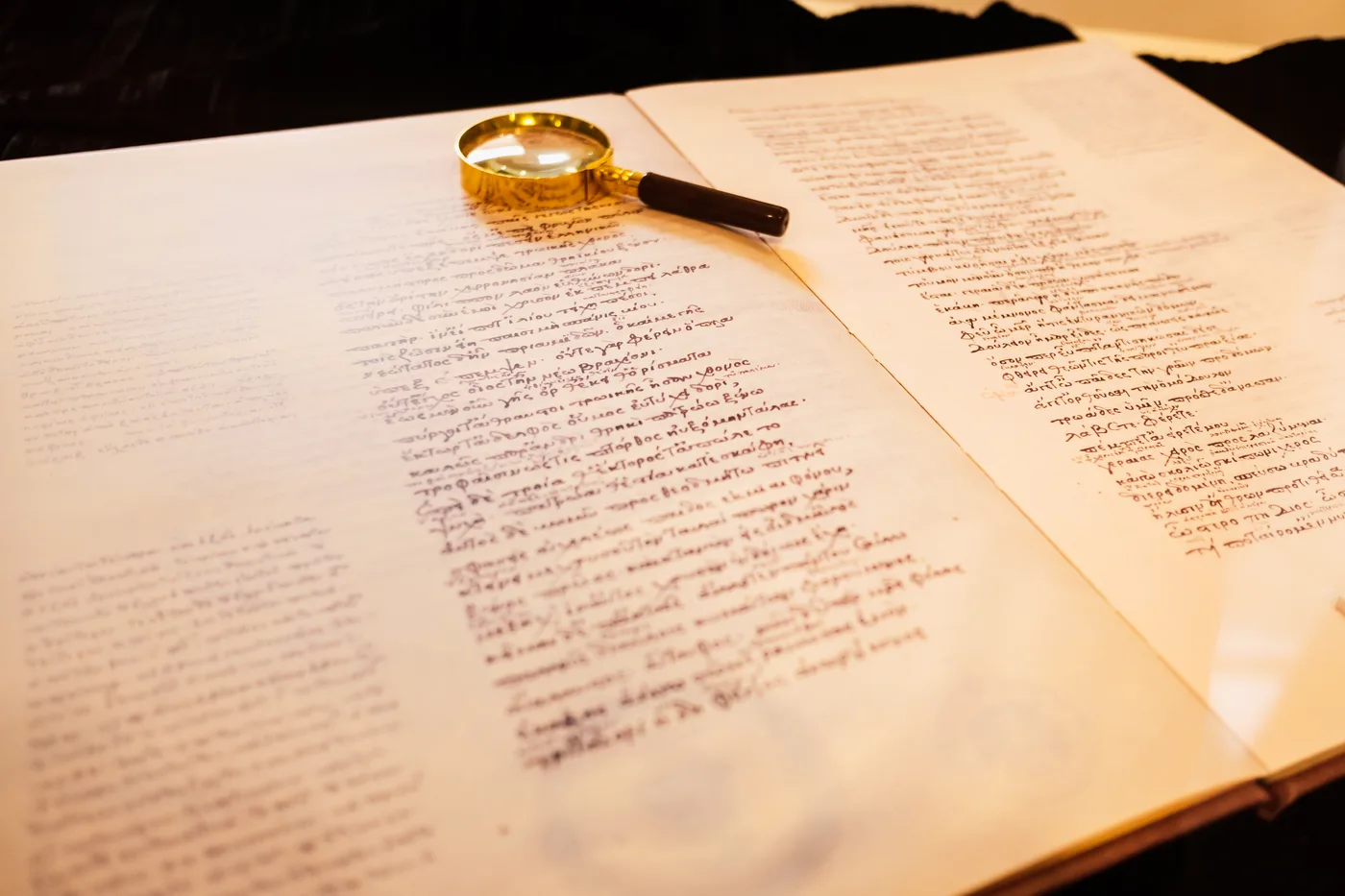
For several hundred years, keeping those things had a name and a method. A commonplace book was a notebook where a reader copied out passages worth remembering, along with their own notes, lists, observations and stray thoughts. Renaissance schools taught students to keep one as a basic part of an education. Writers, ministers, scientists and ordinary readers kept them for life. The philosopher John Locke worked out a careful system for indexing his, and it was printed and copied for generations afterward. Thomas Jefferson kept one as a young man, filled with passages from the books that shaped him.
The name sounds dull now, but it comes from an old idea of the commonplace as a shared ground, a place where useful things are gathered so they can be found again. That is all the book is. It is not a diary, which records what happened to you. It is not a journal of feelings. It is a record of what caught your attention, kept in one place, in your own hand.
Why copying by hand matters
You could, of course, take a photo of the page or save the quote on your phone. Most people already do, and most of those photos are never looked at again. The camera roll is a warehouse, not a book.
Copying a passage out by hand is slower, and the slowness is the point. You have to read each word to write it. You notice the punctuation, the rhythm, the way a sentence turns in the middle. You decide, as you go, whether it is really worth the ink, which means you are already editing, and editing is a kind of thinking. A sentence copied by hand tends to stay with you in a way a screenshot does not.
Then there is the second benefit, which only shows up over time. A commonplace book is a portrait of your attention. Flip back through a year of it and you see what you were hungry for, what kept returning, which ideas you circled without knowing you were circling them. That portrait is useful to anyone who makes things, because the raw material of most creative work is not inspiration arriving from nowhere. It is a well-stocked mind, noticing connections between things it has kept.
What goes in it
Almost anything that makes you pause. A paragraph from a book. A line of a poem. A phrase your child used that was better than anything you could have invented. A fact about tides or bread or birds. The name of a song. A sketch of a doorway. Something you overheard. A question you cannot answer yet.
Your own thoughts go in too, and that is what separates a commonplace book from a scrapbook of other people's words. After you copy a passage, write a line or two about why it caught you, or what it reminded you of, or where you disagree. The response is where the book starts to belong to you. Years later, it is often those small notes, not the quotations, that you are most glad to have.
Always write down where something came from: the book and page, the person, the place, the date. It takes ten seconds, and without it you will one day find a wonderful line and have no idea whose it was.
How to start without making it precious
The fastest way to kill a commonplace book is to buy a beautiful one and wait for something worthy of it. Choose an ordinary notebook, one you will not mind carrying in a coat pocket or leaving on the kitchen counter. Number the pages if you like. Leave the last few pages blank for an index, which you can fill in as you go: a word or topic, and the page numbers where it appears. That is essentially the method people used for centuries, and it still works.
Then make the first entry today, from whatever you are reading now. Do not wait for the perfect passage. The first page should be slightly unremarkable on purpose, so the book stops feeling like an occasion and starts feeling like a habit.
Keep it near where you read. If you read in bed, it lives on the nightstand with a pen clipped to it. If you read on the train, it goes in your bag. A book that is out of reach at the moment of noticing will stay empty.
Reading it back
The collecting is only half the practice. The other half is returning. Once a month, or whenever you feel stuck, read back through what you have gathered. Read it the way you would read someone else's notebook, with curiosity rather than judgment.
You will notice things. Two passages from books twenty years apart that are making the same argument. A word that keeps showing up. A question you asked in March that something in September seems to answer. Mark those connections in the margin, or write a new entry about them. This is where the book stops being storage and starts being a workshop.
Writers use this to find essays. Painters use it to find subjects. Gardeners use it to remember what bloomed when and what the neighbor said about the soil. But you do not have to make anything with it at all. Many people keep one simply because it makes them read more attentively, and because it is a pleasure, on a quiet winter evening, to sit with a record of everything that has struck them as true or beautiful or strange.
The book you will be glad you kept
There is a quiet generosity in it as well. Commonplace books get passed down. A grandchild opens one and finds not a list of events but the inside of a mind: what a person loved to read, what made them laugh, what they were still puzzling over at seventy. Few things we leave behind are as personal.
So the next time a sentence stops you, do not let it go wherever good sentences go. Write it down by hand, write down where it came from, and add one line of your own. That is the whole practice. Do it for a year and you will have a book that nobody else on earth could have written, made entirely of what you chose to keep.



Loading comments…