
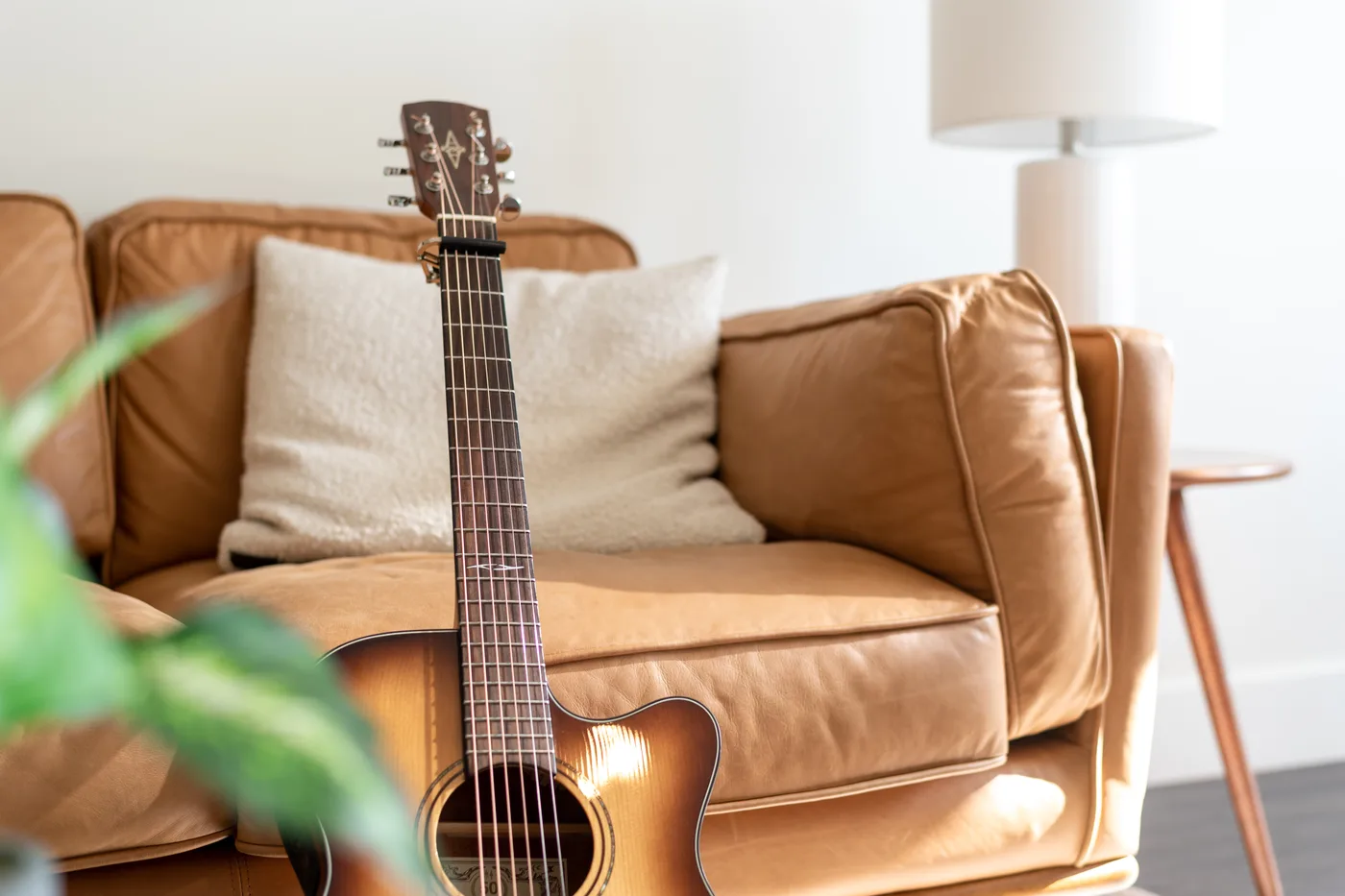
The guitar is in the closet, in its case, behind the vacuum. You love it. You think about it most evenings, usually around the time you sit down. To play it, you would have to move the vacuum, lift the case out, find somewhere to lay it flat, undo the latches, tune six strings that have drifted since last month, and find the pick, which is somewhere. None of that is hard. All of it is a reason, every single evening, to play it tomorrow instead.
The size of the obstacle is not the point
Most people who stop making things do not stop because they lost interest. They stop because starting got slightly harder than not starting, and the difference repeated itself every day. Two minutes of setup is nothing compared with the hour you would spend playing. But the decision is not made by comparing two minutes to an hour. It is made at the moment you are tired, on the couch, weighing the effort right in front of you against the comfort you already have.
At that moment, small frictions loom large. Habit research has shown this many times in many forms: behavior follows the path of least effort far more than it follows our intentions, and even modest changes in how easy something is to reach will change how often we do it. We tend to tell ourselves we need more discipline or more inspiration. Often what we need is fewer latches.
Why the visible thing wins
There is a second force at work, which is that what you can see, you think about. An instrument on a stand in the corner of the living room is a quiet, standing invitation. You walk past it carrying laundry and pick out a few notes. You sit beside it during a phone call and find your hand on the neck. Many of the hours people log on an instrument they love are not scheduled practice at all. They are these unplanned ten minutes, which only happen when the thing is within arm's reach.
The same is true of almost every craft. A sketchbook left open on the kitchen table with a pencil on it gets drawn in while the kettle boils. The one on the shelf gets drawn in on vacation. A sewing machine left threaded on a table by the window gets used for small repairs, which turn into small projects. A half-finished poem pinned above the desk gets a new line on a Tuesday, because you happened to read it again.
The case, the cupboard and the drawer are excellent for protecting things. They are also excellent at keeping them from being used.
Notice, too, how much of the setup is a small ceremony that tells you this is now a serious occasion. Laying out the case, opening it, tuning carefully: it all says that playing is an event, something that needs an evening cleared for it. Leave the instrument out and it becomes something else, an ordinary part of the house you can pick up for a song the way you might pick up a book for a page. Ordinary is exactly what you want a practice to be.
Setting up a room to begin
The practice is simple to describe: take the thing you want to make with out of storage and give it a permanent, visible, ready place. A few details make the difference.
Ready means ready. The goal is to go from noticing to doing in under a minute. A guitar on a stand with a clip-on tuner already attached and a pick tucked in the strings. Paints in a tray that does not have to be unpacked, with a jar of water that stays filled. A notebook open to a blank page, pen in the gutter. Whatever you would have to fetch, find or set up before beginning, do it once, now, and leave it done.
Put it where you already sit. The spare room is where good intentions go to wait. Put the instrument beside the chair where you watch television, the sketchbook where you have your morning coffee, the keyboard in the corner of the room you actually live in. Proximity to your ordinary evening is the whole idea.
Make the start tiny. Tell yourself that picking it up for two minutes counts. Play one song. Draw one cup. Write one sentence. You will often keep going, but the deal has to be honest: two minutes is a complete session. A small start that is genuinely allowed to be small is the one you will make on a tired night.
Protect it sensibly, not completely. There are real reasons for cases. Instruments do not love radiators, direct sun or a dry winter house, and paint dries out. Find the middle: a stand away from the heat, a humidifier for the room in winter if your instrument needs one, lids on the paints but the tray left out. The aim is not to give up on care. It is to stop letting care become a wall.
Move the friction to where it helps
Friction is not only an enemy. It is a tool, and you can move it. If the evenings go to your phone instead of your guitar, notice that the phone has every advantage: it is in your pocket, it starts in a second, and it asks nothing. You can even the contest from both sides. Bring the instrument closer and put the phone farther, in a drawer in another room, charging, for the first hour after dinner. You have not banned anything. You have only changed which one is easier to reach for, and that is often the whole of the choice.
It helps to say this plainly to yourself, because it removes the moral weight. You were not lazy for not practicing. You were responding sensibly to an environment that made practicing harder than not practicing. Change the environment and you will likely respond sensibly to that too.
What to expect
The first week, the thing on the stand will feel slightly conspicuous, as though it were watching you. Then it becomes part of the room, and then something quieter happens: you stop deciding to play. You just play, in small amounts, in odd moments, more often than you have in years. The sessions are shorter than the ones you imagined when you bought it, and there are far more of them, and the total is larger.
Skill builds from that kind of frequent, low-stakes contact, the way a path is made by being walked rather than by being planned. So does the pleasure. You were never short of love for the thing. You were short of a place for it in the room where your life actually happens.
Tonight, open the closet. Move the vacuum one last time. Take it out of the case, tune it, and leave it standing where you will see it on your way to the couch.



Loading comments…