
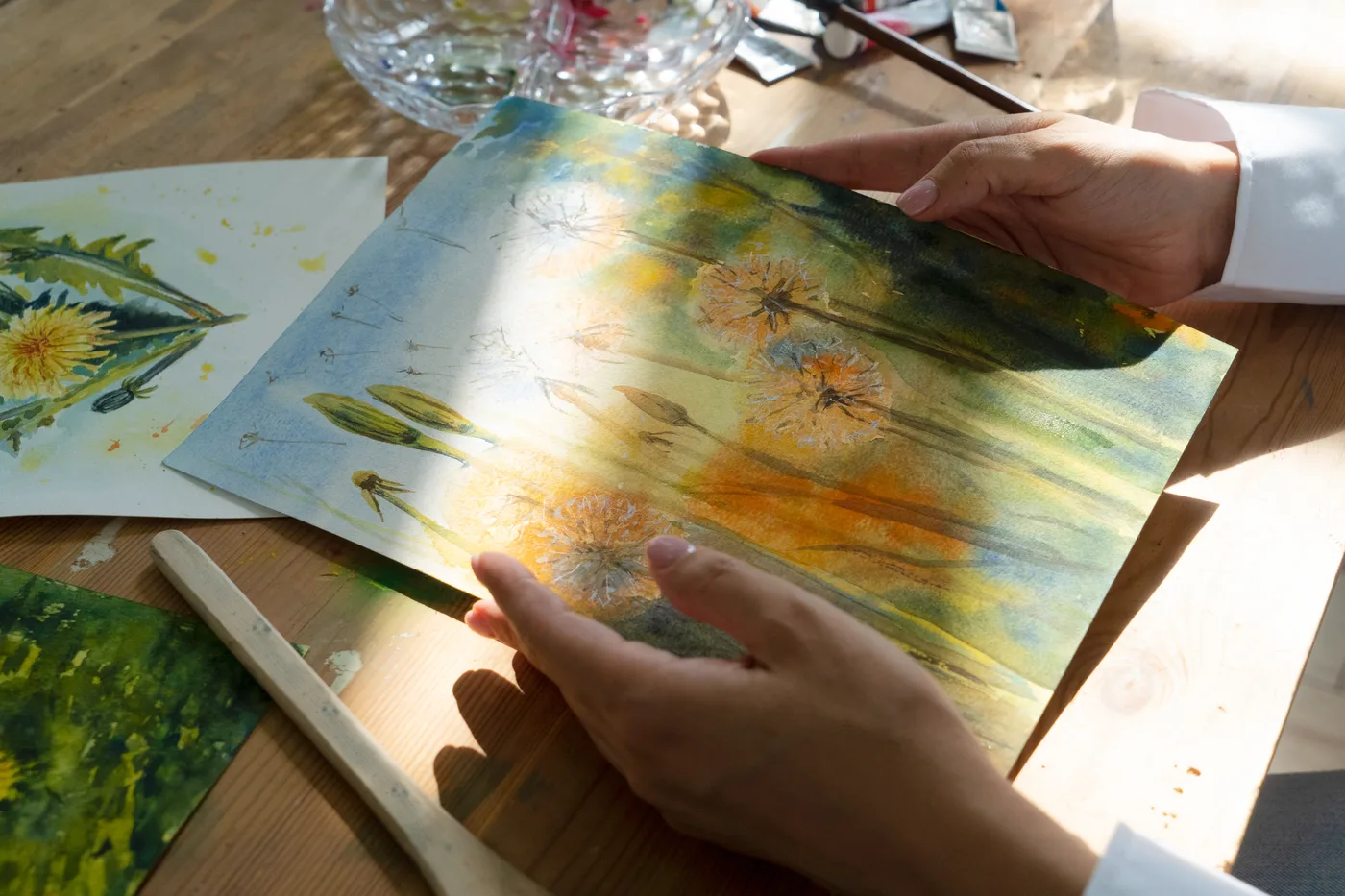
Somewhere in your house there is probably a drawer version of you. The notebook of half-poems, the watercolors from the kit someone gave you, the song recorded once on a phone and never played for anyone. The reflex is to call these abandoned, unfinished, evidence of something that did not work out. But look at them again. Nobody assigned them. Nobody graded them. No one was ever going to see them, and you made them anyway, which means they are evidence of something rarer than talent: a stretch of your life when making was the whole point. Most advice about creativity is about sharing it, building on it, putting it out there. This is about the opposite, and the case for it has quietly gotten stronger every year.
The Audience in the Room
Every maker works in front of an audience, even alone at midnight, because the audience is imagined, and imagined audiences are the most demanding kind. The moment you know a thing will be seen, a second self pulls up a chair: the one who evaluates while you work, drafts the caption, anticipates the reaction, compares the half-made thing on the table to finished things by people who have been at it for decades. Some of this is useful; craft needs a critic eventually. But the critic arrives earlier now than it used to. When every sketch can be posted, every sketch is auditioned, and work that is being auditioned behaves differently from work that is being made. It takes fewer risks. It repeats what was praised last time. It smooths its strangeness out before the strangeness has a chance to become style.
Self-consciousness is expensive in a very practical way: attention spent monitoring how the work will land is attention not spent on the work. Anyone who has watched a child draw has seen the unmonitored version, the total absorption, the tongue at the corner of the mouth, the complete indifference to whether the horse looks like a horse. That state is not childish. It is the state in which making actually happens, and adults lose it not because they age but because they acquire spectators.
What Making Is For
Strip the audience away and what is left is the activity itself, and the activity itself turns out to be the prize. Absorption of the kind a garden or a guitar or a jigsaw of bad watercolors produces, the state where time goes strange and the inner narrator finally shuts up, is one of the most reliably restorative things a person can do with an hour, and it has nothing to do with the quality of the output. The hands are busy, the stakes are nowhere, the problem in front of you is concrete and yields to effort. People come out of an hour like that feeling rinsed, and what rinsed them was not achievement. It was attention with no witness.
There is also the quieter matter of honesty. A private page is the one place a person can find out what they actually think, actually notice, actually find funny or beautiful or unbearable, because nothing on it is positioning. Writers have always known their journals are where the real sentences show up first. The same is true of every medium: the unheard melody, the unseen sketch, the meal cooked elaborately for one. Made things are a way of talking to yourself, and the conversation is franker when no one is listening in.
The Amateur's Privilege
The word amateur has come to mean unskilled, which is a small tragedy, because at its root it means one who does a thing for love. Professionals often look at amateurs with open envy, and not politely: the professional's craft is entangled with rent, reputation and other people's deadlines, while the amateur answers to no one. An amateur can quit a project the day it stops being interesting. An amateur can spend three years getting slowly better at something with no plan to monetize the improvement. An amateur can be mediocre in peace, which is the precondition for ever becoming good, since everyone is mediocre first and the ones who survive that stage are mostly the ones nobody was watching.
A private practice is the amateur's privilege formalized. It is one corner of your making that is permanently off the market: never posted, never entered, never brought out when guests come. Not hidden in shame, just kept, the way some conversations are kept between two people. What people who maintain such a corner report is consistent: the private work is looser, odder and more theirs, and over time the looseness leaks into the public work too, because somewhere in the week there is a room where they remember what their own hand sounds like.
Keeping One Thing for Yourself
Pick the thing, and say so. One notebook, one instrument, one garden bed, one recipe practice. Decide on purpose that this one is private, so the decision does not have to be remade every time the thing turns out well. The temptation to share arrives precisely when the work is good, and that is the moment the corner is either kept or lost.
Let it be bad on purpose. Waste is the point. Fill pages badly, plant things that die, play the song wrong for a month. Nothing here is a draft of something public, so nothing needs defending. Badness that would be embarrassing in front of an audience is, alone, just the sound of practice.
Finish things anyway. Privacy is not an excuse for permanent abandonment; finishing is its own skill and the drawer can hold finished things. Complete the small poem, glaze the lopsided bowl. A drawer of finished secrets feels entirely different from a drawer of stalled starts.
Share by decision, not by default. The rule is not secrecy forever. It is that sharing becomes a choice made about a particular finished thing, occasionally, deliberately, rather than the automatic destination of everything you touch. When you do choose to show something, notice how different that feels from posting it.
The Drawer
Nobody will ever see the thing you make this week, and that sentence is not a consolation. It is the offer. A whole territory of your attention, fenced off from performance, where the horse does not have to look like a horse and the hour answers to no one. The drawer version of you was never the failed version. It was the one working under the oldest and best conditions there are, for love, in private, with no one to please. It is still in there. The kit is probably still in the closet.



Loading comments…