
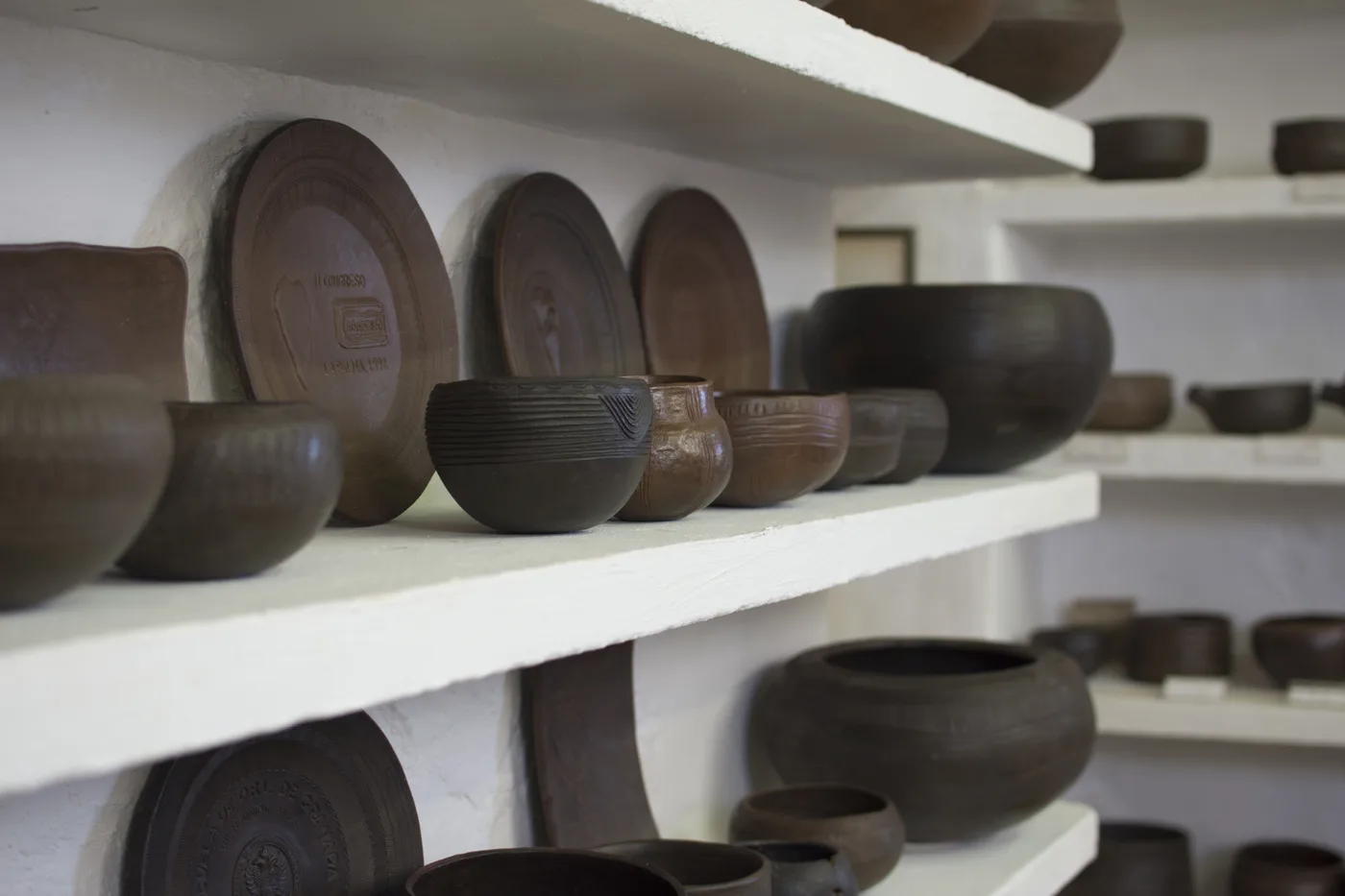
You made one. One loaf, one watercolor, one attempt at the song, one page of the thing you have been meaning to write. And then you did what nearly everyone does with one: you held it up to the light and asked the only question one can answer, which is whether it is any good. The loaf was dense. The sky in the painting went muddy. The verdict came in, the verdict was mixed, and the project quietly closed. This is the usual life cycle of a single attempt, and it is why so many creative lives are a series of beginnings. The problem was never your talent. The problem is that you made one.
One is a verdict, ten is an education
A single attempt can only be judged. There is nothing to set it beside, so the mind sets it beside the imagined version, the finished, glowing one you saw before you started, and the real thing loses that comparison every time. It has to. The imagined version was never going to have a muddy sky.
Ten attempts change the question entirely. Now there is a row of them, and the eye stops asking is it good and starts asking what happened. The third loaf rose better than the second: what changed? The skies in the last two paintings stopped going muddy around the time you quit overworking them. Set side by side, your attempts stop being verdicts on you and become data about the work, and data is something you can actually use. Comparison, which is poison when the other thing is somebody else's work, turns out to be the whole engine when the other thing is your own.
What the series knows
Painters discovered this a long time ago. Monet painted the same haystacks over and over, the same cathedral front, dawn and noon and failing light, and somewhere in the repetition the subject stopped being the point. The stack of wheat was just the thing that held still while his seeing got better. That is what a series does: it holds one variable fixed so that everything else about your attention has room to move.
Photographers used to learn from their contact sheets, those grids of every frame from a roll, and the sheet always knew more than any single picture did. It showed the approach: how you circled a subject, where you hesitated, which instinct you followed six times before it paid off once. A cook making the same soup four Sundays running learns things about salt and patience that no recipe can hand over. In every case the knowledge arrives the same way, not through the triumph of one attempt but through the drift between attempts. Your hands learn what your intentions could never specify. The tenth one differs from the first in ways you could not have planned, because the planning mind does not know those things yet. Only the making mind does, and it only talks while you are making.
Why the stakes collapse
There is a second gift, and for most people it is the bigger one. The moment you commit to ten, the weight pressing on each one drops to a tenth of what it was.
A single attempt has to carry everything: the proof that you can, the justification for the time, the answer to whether this pursuit is worth keeping. No wonder the hand tightens. But the third of ten carries almost nothing. It is allowed to be an experiment, because the series absorbs the risk the way a single piece never can. Perfectionism, which feeds on finality, starves on volume. You cannot agonize over the only one when it is not the only one; there is another chance to get the sky right sitting two attempts away, already scheduled. Some people discover that the freest work of their lives shows up around number four, the point where the inner critic, bored of the repetition, finally wanders off and leaves the hands alone.
How to run a series
Pick something small. This matters more than anything else here, because ten of a big thing is a two-year project and the whole mechanism depends on reaching ten. Not ten novels: ten opening paragraphs. Not ten quilts: ten four-inch squares. A four-line poem each morning, a thumbnail sketch of whatever is on the table, the same photograph of the same corner of the yard at different hours, one bread recipe repeated until the kitchen stops being surprised by it.
Keep the frame fixed and the sessions short. Same size, same materials, same rough time box, twenty minutes or so, because the fixed frame is what makes the attempts comparable, and comparability is the point.
Number them and date them. This sounds fussy and is quietly essential: numbering tells your own mind that each one is an entry in a sequence, not a verdict on a life.
Resist the urge to improve the rules midway. Around the fourth or fifth attempt you will want to change the size, switch materials, try a different subject, and the urge will dress itself up as growth. Mostly it is escape: the series was starting to show you something and the newness offers a way not to look. Finish the ten inside the frame you set. There is no limit on what the next series can be, and the discipline of completing this one is half of what it teaches.
And withhold judgment until ten exist. Not forever, just until then. No discarding number two because it embarrasses you; it is not finished being useful. The review happens once, at the end, with all ten laid out where you can see them. Then ask the only three questions that matter. What drifted on its own? What did I stop doing without deciding to? Which one would I keep, and what does it have that the first one lacks?
The tenth one
Here is what you will likely find, because nearly everyone who tries this finds it. The tenth is better than the first, usually by a margin that startles you, and you cannot fully explain the improvement, because you did not make it on purpose. It accumulated. It came in through the fingers, between attempts, while the judging mind was looking elsewhere.
The ten objects were never really the point. The point is the person at the end of the row, the one whose hands now know something, and who has learned the most renewable secret in creative work: that you do not rise to the occasion of the single precious attempt. You make the occasion ordinary, and rise with it.



Loading comments…