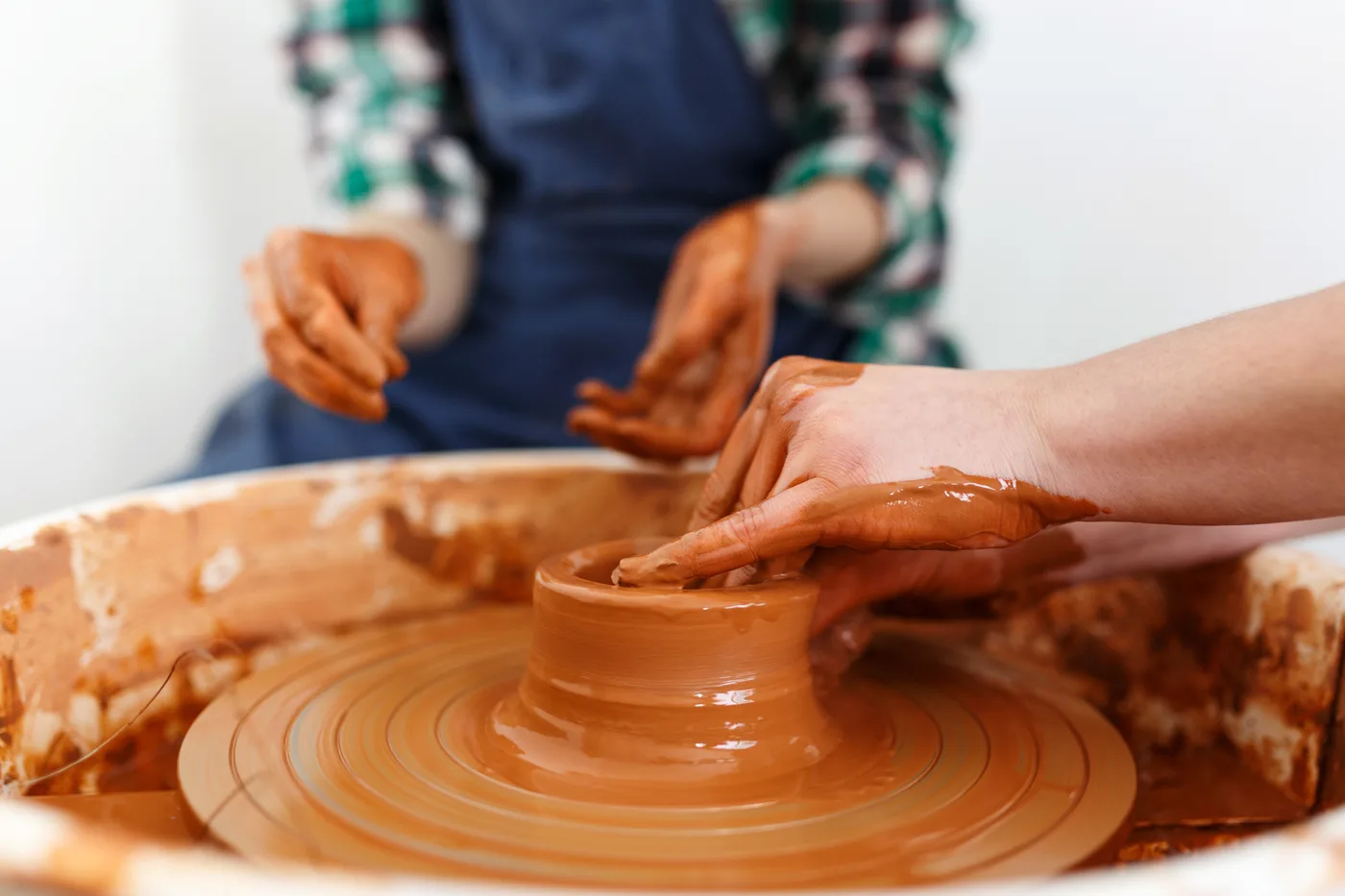
The bowl collapses on the wheel. The chord buzzes where it should ring. The watercolor blooms into mud, the Spanish verb comes out in the wrong decade, the knitting has a hole in it that you cannot explain. If you are an adult standing in the wreckage of a new skill, some part of you is already reaching for the exit, because somewhere along the way you decided that being bad at things was a phase you had finished. It is worth asking what that decision has cost you.
The quiet narrowing
Nobody announces the day they stop being a beginner. It happens by increments, and it happens for reasonable reasons. Work rewards you for doing what you are already good at, so you do more of it. Free time shrinks, and spending an hour being clumsy starts to feel like a luxury you cannot justify. And there is the quieter reason underneath the practical ones: by a certain age, your competence has become part of your identity. You are the one who cooks well, who writes the clear email, who fixes things. Standing at the bottom of a learning curve threatens that story, so you arrange your life, mostly without noticing, to avoid the bottom of learning curves altogether.
The arrangement works. That is the trouble with it. You can pass whole decades inside the perimeter of what you already know how to do, and nothing will go visibly wrong. The days run smoothly. They also begin to run together, and that is not a coincidence. A life spent entirely inside your own competence is comfortable in the exact way that makes the years pour through your hands.
Why the beginner's weeks feel longer
Think back to any stretch of your life when everything was new: the first months in a town, the first season of a job, the year you learned to drive. Those stretches feel enormous in memory, dense with detail, while a recent year of routine can collapse into a single impression. Memory feeds on novelty and effort. When you are learning, you are paying the kind of attention that gets recorded, and the record is what a year is made of when you look back at it.
This is not only about memory feeling richer. Researchers who study aging have repeatedly found that taking up demanding, unfamiliar skills, rather than repeating comfortable pastimes, is the kind of activity most consistently associated with staying sharp. The operative word is demanding. The benefit seems to live in the struggle itself, in the weeks when you are genuinely not good yet. Which means the phase you have been avoiding is not the price of learning something. It is the point.
Choosing your one thing
The practice is simple to describe: choose one thing you are bad at and stay with it long enough to be slightly less bad. But the choosing has rules, and the rules matter more than the thing.
Pick something with no career logic. The moment a new skill might plausibly become a side income or a resume line, the old machinery of performance switches on and the practice is spoiled. You want something whose only defense is that you wanted to try it: an instrument, a language, a wheel, a garden, a dance, a dovetail joint.
Pick something with real resistance. An app you tap at idly does not count, because it is engineered to keep you from ever feeling lost, and feeling lost is the active ingredient. You want a skill that pushes back, where the gap between what you intend and what you produce is wide enough to be humbling.
And pick one. Not three. The beginner's mind is renewable, but the beginner's calendar is not, and a person who takes up three new things is usually arranging to quit all of them.
Protecting the badness
Once you have chosen, your main job is to protect the badness, because everything in you and around you will try to optimize it away.
Do not measure. No streaks, no progress charts, no filming yourself to track improvement. Measurement drags the performance machinery back in through the side door.
Do not perform. You need no audience for this, and for the first long while you should not have one. The work is between you and the material.
Keep the appointment small and regular. Twenty minutes, a few times a week, beats the heroic Saturday session that leaves you sore and resentful. Little and often is how a skill actually enters the hands.
And expect the dip. Somewhere around the third or fourth week, the novelty burns off and what remains is you, being bad at something, on an ordinary Tuesday. This is the moment adults quit, and it is worth knowing in advance that the dip is not a verdict. It is a stage, the same one every skilled person you admire once stood in.
What it does to the rest of you
The strange part is what happens away from the practice. People who take up beginner status again tend to report the same set of side effects, and none of them have anything to do with the skill.
Patience, first. Once you have recently been bad at something yourself, other people's fumbling stops looking like carelessness and starts looking familiar. You become gentler with the new hire, the teenager, the parent learning the phone. You remember from the inside what the bottom of the curve feels like.
Proportion, second. A day where the sourdough failed or the chord finally rang has a texture that a day of pure competence does not. The stakes are real to you and invisible to the world, which is a healthy arrangement, and a rare one.
And a loosened grip on the story of yourself. The identity that said you were finished, formed, done becoming: it turns out to have been a wall, not a fact. Being bad at something on purpose is how you find the door in it.
Where to stand while you begin
None of this requires a class, though a class helps, mostly because it puts you in a room with other adults who have also agreed to be bad at something, which is one of the more quietly moving sights available. A library, a community center, a church basement with folding chairs: Long Island is full of rooms like this on weekday evenings, full of grown people holding instruments and paintbrushes wrong.
If a room is not possible, a kitchen table is enough. The materials for most beginnings are cheap. What is expensive is the willingness, and you cannot buy that anywhere. You can only decide it, and then defend the twenty minutes in which it lives.
So choose the thing. Choose it this week, while the impulse is warm, and let the first attempt be as bad as it is going to be. The collapsed bowl is not the opposite of the finished one. It is the first draft of your hands learning, and hands, it turns out, go on learning for as long as you keep giving them something they do not already know.



Loading comments…