
TMD: Causes and Cures
ADVERTORIAL - by Jimmy Kilimitzoglou, DDS
Stress is a major component of many health problems. Oftentimes stress can directly influence these adverse health events and is, almost always, a contributing factor.
There are a myriad of oral health issues that are directly and indirectly associated with stress. These include dry mouth which can increase the risk of cavities, periodontal disease, canker sores and infections. Stress distracts our immune system and makes us more vulnerable to disease.
One major oral health problem is Temporomandibular Disease or TMD. It is a list of issues that revolve around the Temporomandibular joint (TMJ) which connects the lower jaw to the skull on both sides. Stress can cause disharmony in the muscles, the disk between the bones, ligaments and the jaw itself. Temporomandibular Disorders affect between 10 and 35 million Americans.
If you place your two fingers right in front of your ears and slowly open and close, you will feel your joint first rotate and then slightly pop outwards. This is a normal rotation and translation of the bulbous head of the lower jaw. The joint is very sophisticated and beautifully complex. Normally the joint should glide evenly and smoothly without a loud pop or any clicking. There also should be no pain. When the muscles are hyperactive they burden the joint and can cause temporary or, in time, permanent damage due to the unnecessary wear and tear. Some symptoms can include pain or tenderness in the jaw, face, temple, neck, or shoulders.
Stress is the major cause of TMD. We see patients have flare ups when there are stressful events in their lives. When the stress decreases, the symptoms often disappear. Some of these stressors could be loss of a family member, changes at work, midterm or final exams for students, trauma from an injury such as a car accident, a fall, or a blow to the face. Other triggers of TMD are physical habits such as biting on fingernails, chewing on objects, chronic teeth grinding or clenching (bruxism), often during sleep.
The disharmony and hyperactivity can lead to movement issues such as limited mouth opening, stiffness, or the jaw "locking" in an open or closed position. Clicking, popping, or grating sounds when chewing or talking can also be evident. Referred Pain is also very common. It can be in the form of earaches, ringing in the ears (tinnitus), dizziness, or even tooth sensitivity without dental issues.
So how do we manage and treat TMDs? Most TMJ issues are temporary and respond to conservative, non-invasive treatments. Simply being aware of clenching and discontinuing the habit will speed up the resolution of these symptoms. Resting the jaw, eating soft foods, and applying moist heat or ice packs can go a long way. Muscle massage can break up the muscle spasms. Reducing habits like gum chewing or nail biting, and practicing relaxation techniques to manage stress are remarkably effective.

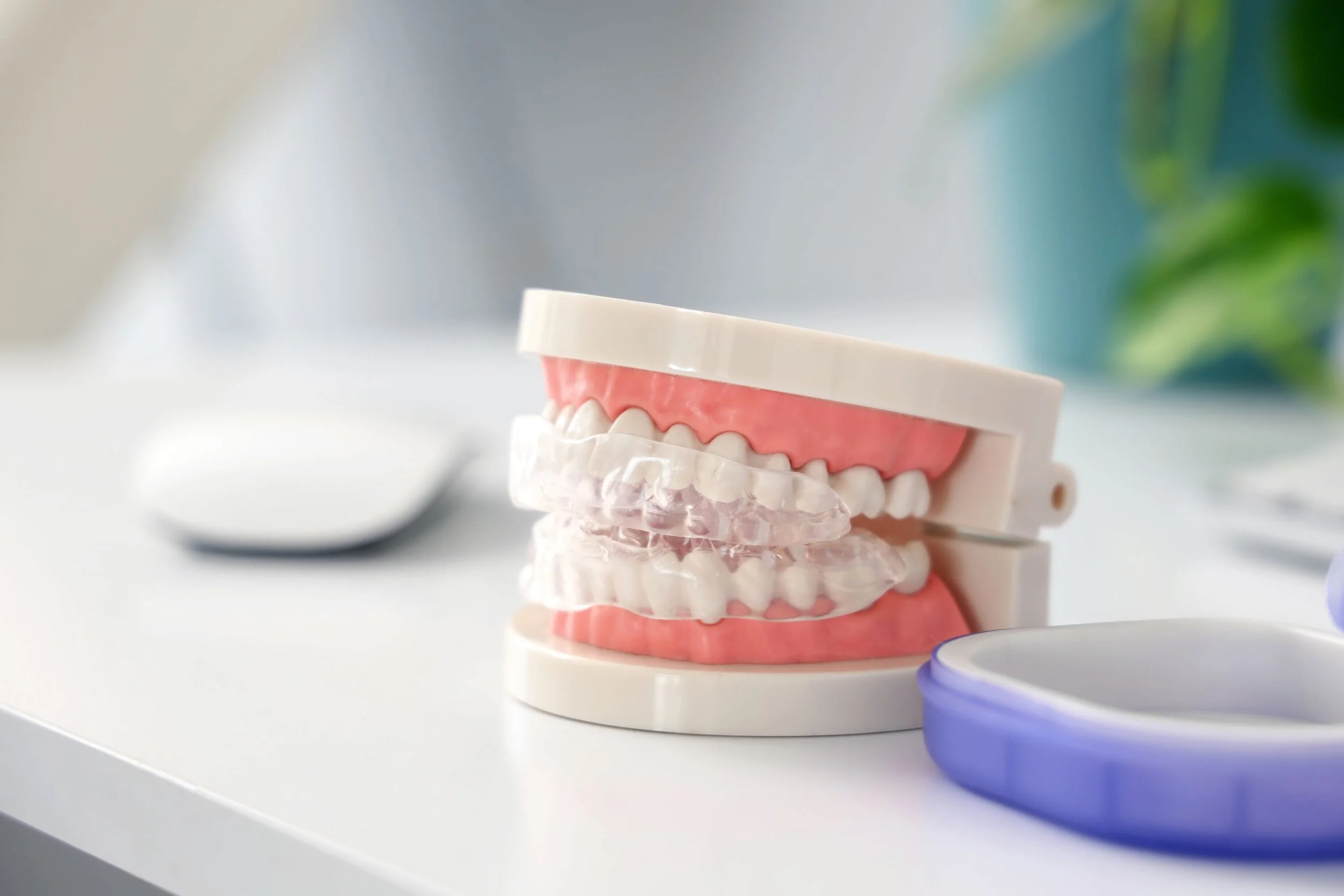
One thing that can be very effective is an oral appliance. Custom night guards or stabilization splints are great for protecting teeth from grinding. They act as orthotic appliances and place the joint into its happy place.
We have something called an incisive reflex. Our lower teeth are innervated or wired in such a way that if you bite on a fork, they send a message to the brain which in turn activates our jaw opening muscles and deactivates the closing muscles. It’s like the brain is telling the muscles “don’t bite hard or you will break the teeth.” The oral appliance acts as a deprogrammer to neutralize the muscle hyperactivity.
Sometimes physical therapy for jaw-strengthening exercises are indicated. Other options are trigger point injections (such as Botox) for severe muscle spasms. Although we prefer to avoid medications, including over-the-counter NSAIDs like ibuprofen, for a short term they can reduce the inflammation and help the healing process.
Jimmy Kilimitizoglou, DDS, FACD, FPFA, DABOL, MAGD, FAAID, FICOI
e.s.i. Healthy Dentistry
42 Terry Rd, Smithtown, NY 11787
Tel. 631.979.7991
