
Reframing Valentine’s Day on Your Twin Flame Journey
by Theresa Cheung, UK
What does Valentine’s Day truly mean to you? Before you answer automatically, pause for a moment. Place your hand gently over your heart. Close your eyes if you wish. Notice the feeling that rises, subtle or strong, and let your heart speak first.
If a word, image, or sensation surfaces, write it down. Keep it somewhere safe. As you continue along your path of self-discovery and spiritual awakening, returning to these early notes will reveal how far you’ve travelled emotionally and energetically. But for now, stay present with whatever truth your heart offered.
Does Valentine’s Day fill you with joy, passion, and romantic longing? Or does it stir something far more complex – perhaps dread, nostalgia, sadness, anger, disappointment, guilt, anxiety, or loneliness? Perhaps your reaction feels contradictory or unclear.
There is no right or wrong response. There is only the truth of what you feel right now. And that truth matters enormously, because your current emotional landscape becomes the launch point of your Twin Flame journey. It shows you where you stand and quietly points you toward where you are being called to go next.
The Valentine’s Day Paradox
Whether you adore it or avoid it, Valentine’s Day is, in Western culture, inescapable. Like taxes, it arrives each year with unwavering predictability. For some, it brings enchantment. For others, it brings pressure. And for many, it is a cringe-worthy reminder of idealized love that feels out of reach.
Everywhere you look, the imagery repeats: heart-shaped chocolates, balloon bouquets, glitter-covered cards promising devotion, roses arranged in perfect symmetry, candlelit dinners, and restaurants overflowing with hand-holding couples. Social media becomes a stage for romantic storytelling—photo-perfect proposals, lavish gifts, curated declarations of love.
It’s almost impossible not to compare your own experience with these representations. If you are single, these cultural messages can leave you feeling unlovable or “less than,” even if you genuinely enjoy your independence. If you are partnered, the day may come with unspoken expectations to perform romance perfectly, to meet external standards, to spend in ways that don’t feel authentic. Tension brews. Arguments start. Overspending happens. And you may be left feeling strangely empty despite good intentions.
In this way, Valentine’s Day becomes paradoxical: a day intended to celebrate the joy of romantic love often stirs loneliness, resentment, or disappointment. Breakups spike around February 14th for this very reason because external expectations suddenly magnify the fractures already present in relationships. It is as if the collective weight of the holiday drags the heart down, even as it claims to lift it up.
And when you look more deeply into the origins of the day itself, this emotional dissonance begins to make sense.
Tainted Love: The Truth Behind the Tradition
Valentine’s Day, despite its modern sparkle, has a history that is far from romantic. Its origins trace back to ancient Roman rituals, including practices that were violent, chaotic, and deeply misaligned with the energy of genuine love. In the third century,
wo men both named Valentine were executed in mid-February, adding another dark layer to the story.
Only later did the church attempt to repurpose these events into something symbolic. And it wasn’t until the Renaissance and Shakespearean era that Valentine’s Day began to shift toward an idealized expression of romantic love.
The commercial version we know today, shop windows overflowing with pink and red, aisles packed with cards and chocolates, emerged with the Industrial Revolution. Companies like Hallmark took the lead, transforming February 14th into an annual display of romantic consumerism. Billions are now spent every year in the name of love, driven not by genuine emotion but by marketing, tradition, and the subtle pressure to participate.
And deep down, you may have always sensed this truth: Valentine’s Day is a manufactured experience. A business. A cultural construct that uses romantic love as a hook.
Valentine’s-Day-Proofing Your Heart
But once you see the mechanics behind the holiday, you gain a powerful freedom — the freedom to reclaim your heart. This is one of the gifts of the Twin Flame journey: the ability to step back from external narratives and tune into the wisdom of your own soul. As you walk this sacred path, it becomes increasingly clear that no holiday, not even one so widely celebrated holds any power over your relationship with love.
Valentine’s Day becomes neutral. A checkpoint rather than a verdict. A moment to observe your progress, to notice your emotional alignment, and to recognize the next loving step the journey is asking you to take. It no longer dictates your feelings, controls your thoughts, or pressures your bank account. Whether you choose to celebrate it, ignore it, or treat it like any other day, you do so from a place of inner truth rather than cultural conditioning.
The Freedom to Define Love on Your Own Terms
In time, you will realize that the most loving gift you can give yourself on Valentine’s Day or any other day is the permission to define love according to your own heart’s wisdom. Not according to tradition. Not according to marketing. Not according to society’s expectations.
Your inner guidance, when you listen deeply, will lead you toward a love that is authentic, unwavering, transformative, and aligned with your soul’s highest path. A love that no romantic “holiday” could ever contain. A love that flows from within you.
A love that never ends and can only ever expand you.
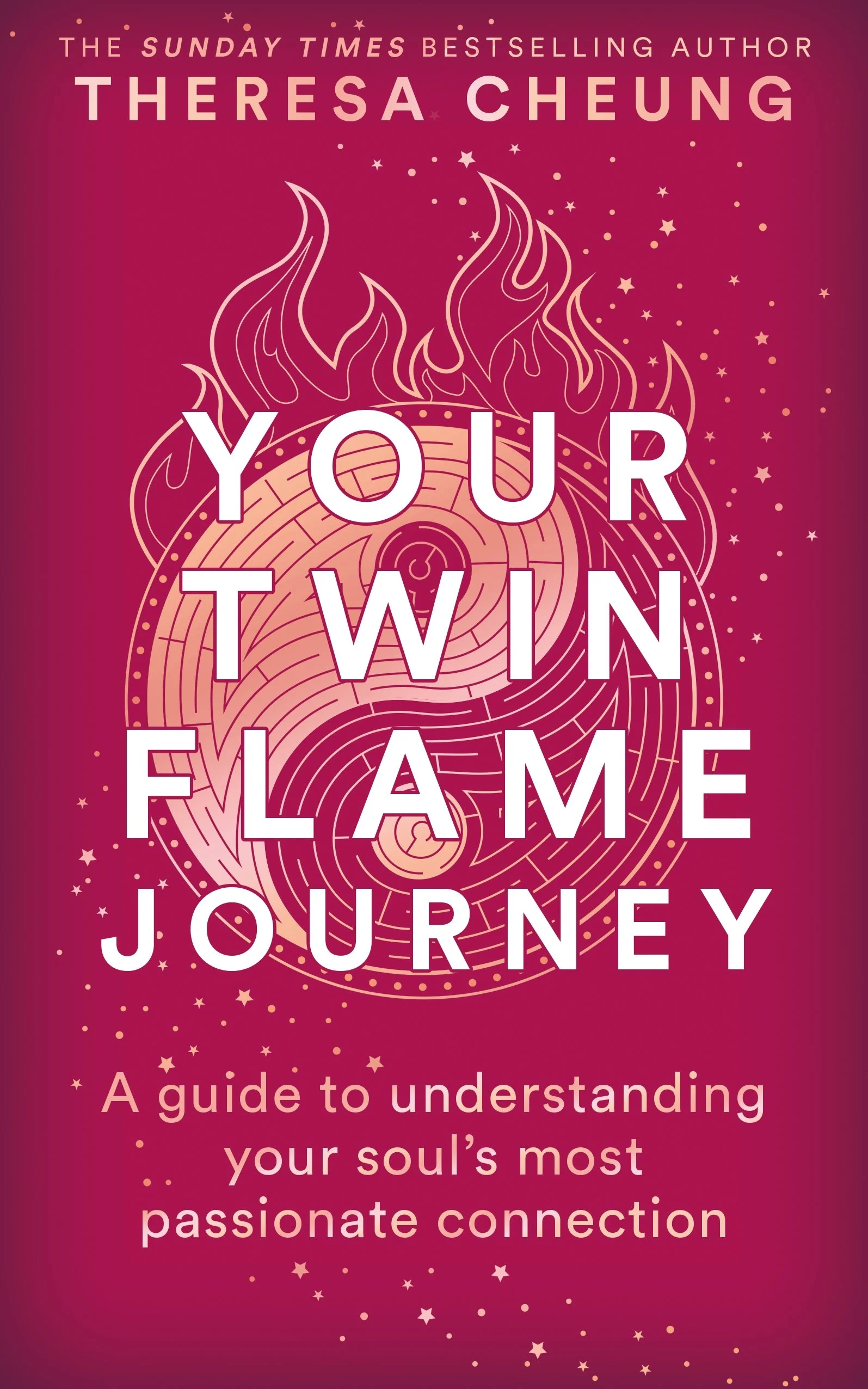
Extracted from Your Twin Flame Journey: A Guide to your Soul’s Most Passionate Connection, by Theresa Cheung (Godsfield, Octopus, March 2026.)
Theresa Cheung is an internationally bestselling author and public speaker. She has been writing about spirituality, dreams and the paranormal for the past 25 years, and is listed by Watkins Mind Body and Spirit magazine as one of the 100 most spiritually influential living people. She has a degree in Theology and English from Kings College, Cambridge University, frequently collaborating with leading scientists and neuroscientists researching consciousness. Theresa is regularly featured in national newspapers and magazines, and she is a frequent radio, podcast and television guest and ITV: This Mornings regular dream decoder and spiritual expert. She hosts her own popular spiritual podcast called White Shores and weekly live UK Health Radio Show: The Healing Power of Your Dreams.
www.theresacheung.com
