
Letters to Sophia
by Craig Roberts
When I was finishing my master’s degree in education, I found myself facing an unexpected roadblock: in order to be granted my teacher certification, I needed to complete foreign language coursework. Spanish, specifically. A language requirement had never been part of my undergraduate degree, and now here I was—a full-time middle school teacher by day, student by night—scrambling to meet this new demand. I enrolled in evening Spanish classes at Mercy College, trudging into the classroom after long, exhausting days teaching in the Bronx.
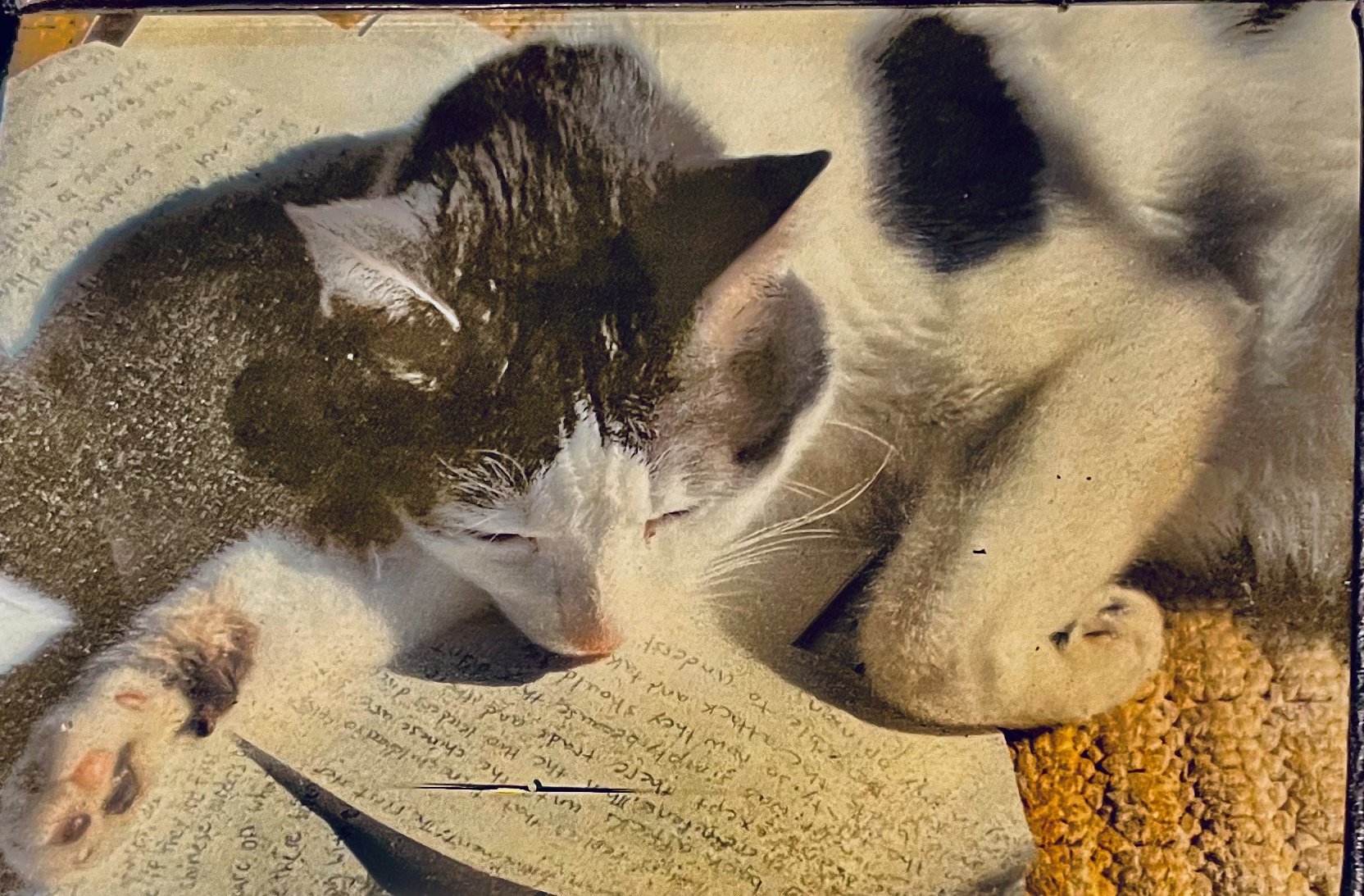
Those early years as a teacher were trial by fire. I was new, energetic, and throwing everything I could at the wall to see what stuck. Teaching in the Bronx was no small feat—it required creativity, patience, and a touch of magic. I tried music, movement, even puppets. Some lessons soared; others fell flat. But then came an idea that started as nothing more than a silly classroom diversion and turned into something extraordinary.
“Letters to Sophia”—that was the name of the project. Sophia, you see, was my cat. A rather elegant, aloof feline who ruled my apartment with quiet authority and piercing green eyes. One day, in the midst of a casual class discussion, I told my students about her—how she watched me grade their papers, how she seemed to pass judgment on their handwriting with a single flick of her tail. I joked that they should write her a letter if they had something they wanted to say. It was meant as a lighthearted exercise, a safe, playful way for students to express themselves without fear of judgment.
But what began as a humorous aside took on a life of its own.
Soon, letters to Sophia flooded my desk. At first, they were simple: “Dear Sophia, do you like tuna?” or “Do you sleep all day like Mr. Roberts says?” Then, the tone shifted. “Dear Sophia, what should I do if my friend is ignoring me?” “Sophia, how do I tell my mom I want to switch schools?” “Sophia, Mr. Roberts gave me detention. Do you think he’s evil or just misunderstood?”
Each letter came with its own flavor—some funny, some heart-wrenching, and many with a familiar P.S.: *“It’s our little secret. Don’t tell Mr. Roberts.”* I wrote back as Sophia, offering gentle, sometimes sassy, always thoughtful responses. Somehow, the cat became their confidante, their therapist, their Dear Abby.
When we were asked to share anecdotes in Spanish about our teaching experiences during our evening class at Mercy College, I couldn’t resist. In my best beginner Spanish, I stood up and said (with deliberate pronunciation),
“Soy el Sr. Roberts. Mis estudiantes le escriben cartas a mi gato, Sophia. Le piden ayuda para lidiar con sus problemas de adolescencia y Sophia responde con sabios consejos.” (I'm Mr. Roberts. My students write letters to my cat, Sophia. They ask her for help to deal with their teenage problems and Sophia responds with wise advice.)
A fellow student furrowed his brow, looked at our professor, and asked in a slightly panicked voice, “¿Puedo hablar en inglés, por favor? ” (Can I speak in English please?)
The professor chuckled and gave him the floor. He turned to me, dead serious, and said, “What the hell are you talking about?”
The room erupted in laughter. I explained the project in English, and by the following week, I brought in a binder filled with letters and responses. The class was captivated. They passed the binder around, marveling at the wisdom of Sophia the Cat. Spanish verbs and conjugations were promptly forgotten. Our professor was not amused.

Craig Roberts
But I was.
That moment affirmed what I had started to suspect: *Letters to Sophia* wasn’t just a quirky classroom project—it was something more. The students had found a way to express things they couldn’t say aloud. The letters gave them a voice, and Sophia gave them validation. She was never judgmental, never dismissive. Her words carried compassion, clarity, and just enough attitude to keep it real.
I still have that binder. Each letter is a time capsule, a snapshot of young lives trying to make sense of the world. Sophia, with all her feline grace, offered them comfort.
It turns out her advice transcended the walls of my classroom. It resonated in Spanish class, with my colleagues, and, I suspect, would resonate just about anywhere. Because everyone—student, teacher, adult, child—needs someone who listens without judgment. Someone who answers with wisdom and a touch of humor.
